If you have spent any time reading about modern web infrastructure, you have almost certainly encountered the term "serverless" and felt a flicker of confusion. The word itself sounds like a contradiction — how can you run a website or application without a server? The short answer, and the one that cuts through the marketing haze, is that serverless cloud hosting explained properly means servers absolutely still exist. You simply never see them, configure them, patch them, or worry about their capacity. The cloud provider owns and operates every piece of physical hardware, every operating system update, every security patch, and every scaling decision. You bring your code; they handle everything else. This distinction — between managing servers and merely using them — is the conceptual foundation upon which the entire serverless movement is built.
For over fifteen years at Hosting Captain, we have watched the hosting industry evolve through distinct eras: the shared hosting boom of the early 2000s, the VPS and dedicated server era that powered the first wave of e-commerce growth, the cloud hosting revolution that decoupled infrastructure from physical machines, and now the serverless paradigm that abstracts infrastructure away almost entirely. Each shift represented a step toward letting developers and businesses focus on what they actually care about — building features, serving customers, generating revenue — rather than babysitting servers. Serverless computing is the logical endpoint of that progression, at least for certain categories of workloads. It is not a replacement for every type of hosting, and understanding where it excels versus where it falls short is precisely what this guide unpacks.
What makes this topic urgent in 2026 is that serverless has crossed the chasm from "interesting experiment" to "production default" for a growing number of use cases. Major platforms have matured their offerings. Documentation has improved dramatically. Pricing models have stabilized and become more predictable. And yet, the fundamental concepts remain poorly explained in terms that make sense to founders, marketing leads, project managers, and the technically curious who do not live inside a terminal window. This guide aims to fix that. By the time you finish reading, you will understand exactly what serverless means, how it compares to every other hosting model, which platforms lead the market, what it costs, what it cannot do, and whether your next project belongs on a serverless architecture or on something more traditional. No computer science degree required.
What "Serverless" Actually Means — Yes, Servers Still Exist
Let us address the elephant in the room immediately: the name is misleading. Serverless computing does not mean computing without servers any more than wireless internet means internet without wires. The wires are still there — running underground, stretched across ocean floors, connecting data centers to backbone networks. You simply do not have to plug your laptop into one anymore. Similarly, serverless computing means servers are still very much present in air-conditioned data centers consuming electricity and executing code. The difference is that their existence is entirely somebody else's problem. The cloud provider — Amazon, Google, Microsoft, Cloudflare, Vercel — provisions the servers, maintains the operating system, applies security patches at 3 AM, monitors for hardware failures, and scales capacity up and down without ever notifying you that any of this is happening. You write functions. They execute. That is the contract.
This abstraction represents a genuine paradigm shift in how we think about hosting infrastructure. In a traditional model — whether shared hosting, a VPS, a dedicated server, or even a cloud VM — you are ultimately responsible for a server instance that exists whether or not it is receiving traffic. That server runs an operating system that you chose (or your hosting provider chose for you), listens on specific ports, and consumes resources continuously. With serverless, there is no persistent server instance waiting for requests. Instead, the cloud provider maintains a fleet of warm containers ready to execute functions on demand. When a request arrives — an HTTP call to your API, a file uploaded to a storage bucket, a timer firing on a schedule — the provider routes that event to an available execution environment, runs your code, returns the result, and either recycles or reuses the container for the next request. When no requests are arriving, nothing is running and nothing is billing. This event-driven execution model is the defining characteristic of serverless cloud hosting and the source of both its greatest strengths and its most significant limitations.
The mental model shift required to understand serverless is similar to the shift from owning a car to using a ride-hailing app. When you own a car, you pay for it continuously — the loan, the insurance, the parking spot — regardless of how much you drive. You are responsible for maintenance, oil changes, and tire replacements. When a friend needs a ride during rush hour, your single car can only be in one place at a time. With ride-hailing, you pay per trip, the fleet operator handles maintenance, and during surge demand the platform dispatches as many cars as needed. Serverless applies this same logic to compute: you pay per execution, the provider handles infrastructure maintenance, and the platform scales horizontally to match demand without any action on your part. Just as ride-hailing did not eliminate cars but rather eliminated the need for individuals to own and manage them, serverless does not eliminate servers — it eliminates the need for developers and businesses to provision, manage, and pay for idle server capacity.
Functions as a Service — The Engine of Serverless
The technical mechanism that powers serverless computing is called Functions as a Service, universally abbreviated as FaaS. A function in this context is a self-contained piece of code that performs a single, well-defined task — process an uploaded image, validate a form submission, send a notification email, query a database and return JSON. Unlike a traditional web application that might handle dozens of different request types within a single monolithic codebase, serverless functions are intentionally small and single-purpose. You write a function in the language of your choice — JavaScript, Python, Go, Rust, C#, and Java are all widely supported — upload it to the cloud provider, and configure what event should trigger its execution. The provider handles everything else: receiving the event, initializing a runtime environment, executing your code, capturing the output, and returning it to whoever or whatever made the request.
This architecture enforces a discipline that many experienced developers have come to appreciate even as it initially feels constraining. Because each function exists independently, it must be stateless — it cannot rely on data stored in memory from a previous invocation. Any persistent state must live in an external service: a database, an object store like S3, a Redis cache, or a queue service. This statelessness is what enables the elastic scaling that makes serverless so powerful. If a thousand requests arrive simultaneously, the provider can spin up a thousand instances of your function, run them all in parallel, and tear them down when finished. No single server could handle that burst, but a fleet of ephemeral containers can, and you pay only for the compute time actually consumed rather than maintaining a cluster sized for peak load 24/7. Understanding this trade-off — you give up persistent local state in exchange for near-infinite horizontal scalability — is central to making informed decisions about when serverless is the right architecture for your workload.
How Serverless Computing Works Under the Hood
The Event-Driven Execution Model
Every serverless function begins with an event. An event is simply a signal that something has happened — an HTTP request arrived at your API gateway, a new file was uploaded to cloud storage, a row was inserted into a database, a timer reached its scheduled moment, or a message appeared in a queue. The cloud provider's event-routing infrastructure detects this event, matches it against the trigger configurations you have defined, and dispatches it to the appropriate function. This event-driven architecture is fundamentally different from the request-response loop of a traditional web server, which sits in memory waiting for connections, consuming resources even during idle periods. A serverless function has no idle state. It springs into existence when an event fires and disappears when the response is delivered.
The practical implications of this model ripple through every aspect of application design. Because functions are ephemeral — typically living for seconds or at most minutes — they force developers to externalize everything that would traditionally live in server memory. User sessions cannot be stored in local variables; they must be written to a shared cache like Redis or encoded in signed cookies. File uploads cannot be saved to a local filesystem; they must be streamed to object storage. Database connections cannot be kept alive in a persistent connection pool; each function invocation must either establish a new connection or use a connection proxy service provided by the platform. These constraints are not bugs — they are features that enable the platform to scale your function horizontally across thousands of containers without worrying about which container handled which previous request. The Cloudflare cloud guide provides an excellent primer on the underlying cloud infrastructure that makes this distributed execution model possible.
Auto-Scaling Without Configuration
Traditional cloud auto-scaling — the kind we explored in detail in our cloud cost optimization guide — requires configuration. You set CPU thresholds, define cooldown periods, specify minimum and maximum instance counts, and monitor scaling behavior to ensure it responds correctly. Serverless auto-scaling requires none of this. Because functions are stateless and independent, the platform can scale them horizontally without any configuration from you. If one request arrives, one function instance handles it. If ten thousand requests arrive in the same second, the platform provisions ten thousand concurrent execution environments — subject to account-level concurrency limits that you can adjust — and each request gets its own isolated instance. When the burst subsides, everything scales back down automatically.
This zero-configuration scaling is genuinely transformative for use cases with unpredictable or spiky traffic. Consider a form-handling function on a marketing landing page. Most days it processes a few dozen submissions. But when a promotional email goes out or a social media post goes viral, submissions might spike to thousands per minute. In a traditional hosting setup, you would either over-provision for the peak (wasting money during normal operation) or accept that the site might slow down or error out during surges. With serverless, the platform absorbs the spike automatically. Each submission triggers a function execution, and because functions are independent, a thousand concurrent submissions mean a thousand parallel executions with no resource contention between them. The pricing model aligns perfectly with this usage pattern — you pay only for the executions that actually happen, whether that is five or fifty thousand.
Cold Starts and Warm Containers
No discussion of serverless mechanics is complete without addressing cold starts — the latency penalty incurred when a function is invoked for the first time or after a period of inactivity. When a serverless platform receives an event for a function that has no warm execution environment available, it must perform several initialization steps: allocate a container, load the language runtime, import your code and its dependencies, and execute any initialization logic before it can begin processing the actual request. This process typically takes anywhere from tens of milliseconds (for lightweight runtimes like JavaScript or Go) to several seconds (for heavier runtimes like Java or .NET, or for functions with large dependency trees). Once the function completes, the platform typically keeps the container warm for a period — often 5 to 15 minutes — so that subsequent requests can reuse it without the initialization overhead. A warm container executes in single-digit milliseconds, which is why production serverless applications often use techniques like scheduled warming pings or provisioned concurrency to minimize cold start frequency for latency-sensitive endpoints.
In 2026, cold starts matter much less than they did in 2019. Platforms have invested heavily in reducing initialization times. AWS Lambda now supports SnapStart for Java functions, which pre-initializes the runtime and snapshots the memory state, reducing cold starts from seconds to sub-second. Cloudflare Workers use V8 isolates rather than containers, achieving cold starts measured in single-digit milliseconds. Vercel and Netlify deploy functions to a global edge network, keeping execution environments geographically close to users and further reducing perceived latency. For the vast majority of web applications — APIs, form handlers, content processing pipelines — cold starts are a solved problem at this point. The edge cases where they still matter (real-time gaming servers, high-frequency trading systems, sub-millisecond streaming applications) are precisely the workloads that were never a good fit for serverless in the first place.
Pay-Per-Use: The Billing Model that Changed Everything
The economic innovation of serverless computing is at least as significant as the technical innovation. Traditional hosting bills you for server capacity — a fixed resource allocation that you pay for regardless of utilization. If your VPS has 4 GB of RAM and 2 CPU cores, you pay for those resources 24/7, even at 3 AM when your site receives zero traffic. Serverless billing flips this model entirely: you pay for execution time (measured in gigabyte-seconds or gigabyte-milliseconds) and number of invocations. If your function runs for 100 milliseconds and is invoked 10,000 times in a month, you pay for 1,000 seconds of compute time — and nothing for the remaining 2,591,000 seconds in the month when nothing was executing.
This pricing model creates an enormous cost advantage for sporadic or bursty workloads. A scheduled task that runs once per day for 30 seconds costs essentially nothing — fractions of a cent per month. An API endpoint that serves a few hundred requests per day costs dollars per month at most. The cost curve rises with usage, but it rises in direct proportion to actual work performed, not to reserved capacity. This alignment between cost and value delivered is what makes serverless particularly attractive for startups, side projects, and enterprise applications with variable utilization patterns. It also creates a different kind of cost discipline: because every millisecond of execution time shows up on the bill, developers have a direct financial incentive to write efficient code — an incentive that is entirely absent when running on a fixed-price server where additional CPU cycles cost nothing at the margin. We explore this cost optimization dynamic more extensively in the pricing section below, but the principle is worth stating up front: serverless cloud hosting makes infrastructure costs transparent and granular in a way that traditional hosting models simply cannot match.
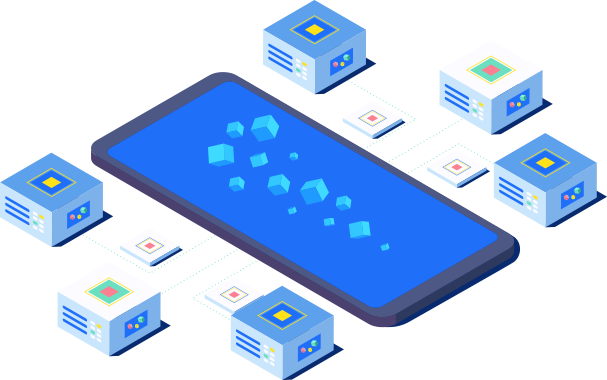
Illustration: Cloud Hosting Serverless Computing: A Beginner-Friendly ExplainerServerless vs Traditional Hosting vs VPS vs Containers
Placing serverless in context requires understanding where it sits on the spectrum of hosting abstraction. At one end lies physical infrastructure — the dedicated server model where you lease an entire machine and control every layer from the BIOS up. One step removed is the VPS, where virtualization partitions a physical server into isolated instances that you configure and manage independently. Further along sits managed cloud hosting, where the provider handles the hypervisor and hardware but you still manage operating systems, runtimes, and scaling configurations. Containers — Docker, Kubernetes — add a layer of application packaging on top of cloud VMs, providing consistency across environments but still requiring you to manage clusters, orchestration, and capacity planning. Serverless sits at the far end of this spectrum: maximum abstraction, minimum operational responsibility, and a billing model based purely on usage rather than reservation.
The decision between these models is not about which one is "best" in absolute terms — it is about which abstraction level matches your team's capabilities, your application's requirements, and your budget constraints. A dedicated server offers predictable performance and full control at a fixed monthly cost, making it ideal for steady-state, high-throughput workloads where utilization is consistently high. A VPS or cloud VM provides similar control with more flexible provisioning and easier scaling, suitable for growing applications that need more than shared hosting but less than a full physical machine. Containers offer environment consistency and efficient resource packing for teams running microservices or needing reproducible deployments across development, staging, and production. Serverless offers zero-operations scaling and pay-per-use billing for event-driven, variable-traffic workloads. The art of modern infrastructure architecture lies in knowing which tool to reach for in which situation — and increasingly, production systems use a combination: containerized services for steady baseline workloads, serverless functions for bursty event processing, and managed databases tying everything together.
When Serverless Beats Traditional Hosting
Serverless delivers its strongest advantage in scenarios characterized by three attributes: variable traffic, event-driven triggers, and tolerance for slight startup latency. A REST API that serves user profile data fits this profile perfectly — most hours of the day it handles a trickle of requests, but during product launches or marketing campaigns it may spike tenfold. Running this API on a fixed-capacity server means either overpaying during normal operation or degrading during peaks. Running it on serverless means costs track usage and peaks are absorbed automatically. Similarly, any workload triggered by external events — file uploads, database changes, scheduled timers, incoming webhooks — maps naturally to the serverless execution model because the function only runs when there is work to do.
Development velocity is another dimension where serverless often wins, particularly for small teams. Deploying a serverless function typically requires nothing more than uploading code — no server provisioning, no operating system configuration, no load balancer setup, no scaling policy configuration. Platforms like Vercel and Netlify reduce this to a git push. For startups and lean teams where engineering time is the scarcest resource, the operational simplicity of serverless can translate directly into faster feature delivery. A two-person team can build and deploy a production API with authentication, database integration, and file processing entirely on serverless infrastructure in a fraction of the time it would take to provision, configure, and secure traditional servers — even with modern Infrastructure as Code tools. This speed advantage diminishes as teams grow larger and more specialized, but for early-stage companies and side projects, it is often the deciding factor.
When Traditional Hosting Still Makes Sense
Traditional hosting — whether dedicated servers, VPS instances, or container clusters — retains clear advantages for workloads with consistent, predictable traffic patterns. If your application serves a steady stream of 500 requests per second around the clock, every day of the year, the economics flip: paying for reserved capacity is cheaper than paying per-request at that sustained volume. Serverless pricing is designed to reward sporadic usage; at high, consistent throughput, the per-request costs accumulate and exceed what you would pay for equivalent reserved capacity. This is why large SaaS platforms, streaming services, and high-traffic content sites rarely adopt pure serverless architectures for their core serving infrastructure — the math simply does not work in serverless's favor at scale.
Control and predictability represent another domain where traditional hosting maintains an edge. When you operate your own server, you can inspect everything: kernel parameters, network configuration, filesystem details, process lists, memory allocation. You can run any software, open any port, configure any cron schedule, and install any monitoring agent. Serverless platforms necessarily restrict what you can do — they limit execution duration, memory allocation, available runtimes, and filesystem access — because the shared infrastructure must be hardened against abuse and resource contention. For most web applications, these restrictions are perfectly acceptable. For specialized workloads involving custom networking, GPU access, real-time streaming, or regulatory compliance requirements that demand full stack visibility, traditional hosting remains the correct choice. Government agencies evaluating hosting options should specifically review our government cloud hosting guide, which covers the compliance and control dimensions that often make dedicated or private cloud infrastructure the preferred architecture in regulated environments.
Popular Serverless Platforms in 2026
AWS Lambda — The Market Pioneer
AWS Lambda is the original serverless platform, launched in 2014, and it remains the market leader by a substantial margin in terms of both adoption and ecosystem depth. Lambda supports runtimes including Node.js, Python, Java, Go, .NET, Ruby, and custom runtimes via the Runtime API, and it integrates with over 200 AWS services as event sources — API Gateway for HTTP requests, S3 for file uploads, DynamoDB Streams for database changes, SQS for queue messages, EventBridge for scheduled triggers, and many more. The breadth of this integration is Lambda's strongest competitive advantage: if your infrastructure already lives in AWS, adding a Lambda function to handle a new event type is trivially easy. Lambda functions can run for up to 15 minutes per invocation, allocate up to 10 GB of memory, and scale to thousands of concurrent executions — though account-level concurrency limits default conservatively and should be raised for production workloads.
Lambda's pricing model charges $0.20 per million invocations plus compute time billed in gigabyte-seconds at $0.0000166667 per GB-second — numbers that mean little in the abstract but translate to approximately $0.03 per million requests for a 128 MB function averaging 100 ms execution time. The real cost drivers are not the per-invocation charges but the memory allocation (higher memory tiers cost proportionally more per millisecond) and the integration with other AWS services (API Gateway, in particular, adds a per-request charge that can exceed the Lambda cost itself for high-traffic APIs). For teams already comfortable with the AWS ecosystem, Lambda is the default choice. For teams new to cloud infrastructure, the sheer breadth of AWS services and IAM policy configurations can be overwhelming, and simpler platforms may offer a gentler onboarding experience. If your workload involves AI model inference, our AI hosting guide explores platforms that combine serverless execution with GPU acceleration for machine learning workloads.
Cloudflare Workers — The Edge-Native Challenger
Cloudflare Workers represent a fundamentally different technical approach to serverless. Rather than running functions in containers, Workers execute in V8 isolates — the same JavaScript engine that powers the Chrome browser — distributed across Cloudflare's global network of over 300 data centers. This architecture delivers cold starts measured in single-digit milliseconds and routes every request to the nearest edge location, dramatically reducing the latency between users and execution. Workers support JavaScript, TypeScript, and via WebAssembly, compiled languages including Rust, Go, and C++. The platform also includes Durable Objects for stateful workloads, KV for eventually-consistent key-value storage, D1 for SQLite-compatible relational data, R2 for object storage, and Queues for asynchronous message processing — a rapidly expanding ecosystem that competes directly with AWS's broader service catalog.
Workers' pricing is aggressively competitive: the free tier includes 100,000 requests per day, and the paid tier starts at $5 per month for 10 million requests, with additional requests at $0.30 per million. Compute time is billed in gigabyte-milliseconds, but because V8 isolates are substantially lighter than containers, per-request costs are often lower than equivalent Lambda functions. The trade-off is a more limited runtime environment — Workers run a Service Worker-compatible API, not a full Node.js environment, which means many npm packages that depend on Node.js built-in modules require adaptation or are simply incompatible. For greenfield projects built with this constraint in mind, Workers offer arguably the best combination of price, performance, and global distribution in the serverless market today.
Vercel Functions and Netlify Functions — Frontend-First Serverless
Vercel and Netlify approach serverless from the frontend developer's perspective, and in doing so, they have captured a massive segment of the market that AWS and Google never fully addressed. Both platforms started as static site hosting services and progressively added serverless capabilities tightly integrated with frontend frameworks like Next.js, SvelteKit, Astro, and Remix. Vercel Functions (built on AWS Lambda infrastructure but abstracted behind Vercel's deployment experience) and Netlify Functions (also Lambda-backed) require essentially zero configuration: write a function in the designated directory, push to your git repository, and the platform handles deployment, routing, scaling, and monitoring automatically. For frontend developers who need an API endpoint, a form handler, or a server-side rendered page without learning infrastructure concepts, this experience is genuinely transformative.
The limitation of both platforms is that they are optimized for the frontend use case. Function execution duration and memory limits are lower than what AWS Lambda or Cloudflare Workers offer, and the available event triggers are focused on HTTP requests rather than the broad ecosystem of cloud service integrations that AWS provides. For a Next.js application that needs API routes, server-side rendering, and image optimization, Vercel is almost certainly the best serverless platform available. For a backend-heavy application that needs to process streaming data, integrate with dozens of AWS services, or run long-duration batch jobs, Vercel and Netlify functions are likely the wrong tool. The industry has settled into a comfortable division of labor: frontend-centric serverless on Vercel or Netlify, backend-centric serverless on AWS Lambda or Google Cloud Functions, and edge-centric serverless on Cloudflare Workers.
Google Cloud Functions and Azure Functions — The Enterprise Contenders
Google Cloud Functions and Azure Functions round out the major serverless platform landscape, each deeply integrated into their respective cloud ecosystems. Google Cloud Functions (now in its second generation, built on Cloud Run) supports Node.js, Python, Go, Java, .NET, Ruby, and PHP, with triggers spanning HTTP, Cloud Storage, Pub/Sub, Firestore, and Firebase. Google's serverless offering differentiates itself through its networking architecture — functions run within a Virtual Private Cloud by default, making it easier to connect serverless workloads to existing cloud infrastructure without exposing internal services to the public internet. Azure Functions offers similar language support with particularly strong .NET integration (unsurprisingly, given Microsoft's ownership), plus a durable functions extension that adds stateful workflow orchestration — a capability that competes with AWS Step Functions for coordinating complex serverless workflows.
For enterprises already committed to Google Cloud or Azure, the choice of serverless platform is effectively predetermined by the broader vendor relationship. The functions themselves are comparable in capability to AWS Lambda, and the decision comes down to ecosystem fit: which cloud already hosts your data, your identity management, your monitoring infrastructure, and your existing application services. This vendor gravity is one reason why the serverless market has not consolidated around a single dominant platform despite AWS Lambda's early lead — cloud provider lock-in, for better or worse, extends to serverless as thoroughly as it does to any other cloud service category.
What Serverless Is Great For
REST APIs and Backend Services
API development is perhaps the single most natural fit for serverless architecture. Each API endpoint maps cleanly to a discrete function — one function handles GET requests to /api/users, another handles POST to /api/orders, and so on. An API gateway routes incoming HTTP requests to the appropriate function based on path and method, handling authentication, rate limiting, and request validation at the gateway layer before the function ever executes. This architecture scales each endpoint independently: if your user profile endpoint receives heavy traffic while your order-history endpoint is rarely called, each scales precisely to its own demand with no coupling between them. Serverless APIs are also trivially versionable — you can deploy a v2 of an endpoint alongside the existing v1, route a percentage of traffic to the new version for testing, and cut over fully when you are confident in the new implementation, all through gateway configuration changes with zero production risk.
Image and Media Processing
Media processing pipelines are where serverless truly shines because they combine two serverless-friendly characteristics: event-driven triggers and bursty, CPU-intensive workloads that run to completion and then stop. A typical serverless image processing pipeline works as follows: a user uploads an image to cloud storage (S3, R2, Cloud Storage), the upload event triggers a function that reads the original image, generates multiple resized variants (thumbnail, medium, large, WebP, AVIF) for responsive delivery, writes those variants back to storage, and optionally updates a database record with the new image metadata. The entire pipeline executes in response to the upload and then terminates. During normal operation, a handful of uploads trickle through. During a product launch or a user migration, thousands of uploads might fire simultaneously — and the platform handles the burst without any intervention. The same pattern applies to video transcoding, PDF generation, audio processing, and any other workload where a file arrives, some computation happens, and output files are produced.
Scheduled Tasks and Cron Jobs
Serverless functions triggered by scheduled events replace what traditionally required a cron daemon running on a server that had to stay powered on 24/7 to execute perhaps 30 seconds of actual work each day. Need to generate a daily sales report, clean up expired database sessions, sync data between two services, or send a digest email every Monday morning? A serverless function triggered by a CloudWatch Event, a Cloud Scheduler job, or a Cron Trigger fires at the specified time, executes for however long the task requires, and stops. The cost is essentially zero — a function that runs for 10 seconds once per hour executes for 240 seconds per day, which at typical serverless pricing costs fractions of a cent. Compare this to running even the smallest VPS ($5/month) for the same purpose, and the economic efficiency is obvious. The reliability advantage is also significant: the cloud provider's scheduler is distributed and fault-tolerant in ways that a single server's cron daemon is not. If a data center has an outage at the moment your cron job is scheduled to fire, the provider's scheduler retries or routes to an alternative region — behavior that requires significant engineering effort to replicate with self-managed infrastructure.
Chatbots and Webhook Handlers
Slack bots, Discord integrations, Telegram bots, Stripe webhook handlers, GitHub webhook processors — all of these share a common pattern that maps perfectly to serverless. They receive an HTTP POST from an external service, process the payload, optionally call an external API, and return a response — typically within a few hundred milliseconds. The traffic pattern is event-driven by definition (the function only runs when a webhook fires), the execution duration is short, and the volume is unpredictable (you cannot control how many users interact with your bot or how many Stripe events fire during a billing cycle). Running these on a persistent server means paying for a server that spends the vast majority of its time waiting. Running them as serverless functions means paying pennies for actual usage. The barrier to entry is also dramatically lower: deploying a Slack bot as a serverless function takes minutes with modern frameworks, whereas provisioning, configuring, and securing a traditional server for the same purpose might take hours — an absurd mismatch between effort and outcome for what is often a small internal tool or a proof-of-concept integration.
What Serverless Is Bad For
Long-Running Processes
Every serverless platform imposes a maximum execution duration, and while that limit has increased over time — AWS Lambda now permits 15 minutes, up from the original 5 — it remains a hard ceiling. Any workload that genuinely requires longer continuous execution — training a machine learning model, processing a multi-gigabyte dataset, rendering an hour-long video, running an exhaustive test suite — is fundamentally incompatible with the serverless model. You can sometimes decompose long-running work into smaller units processed by multiple sequential function invocations, orchestrated by a step function or a queue, but this adds complexity and may not be suitable for every workload. If your application includes components that need to run for hours, serverless is simply the wrong abstraction. Provision a virtual machine, a container cluster, or a dedicated server for that component and use serverless for the surrounding event-driven logic — a hybrid architecture that is increasingly common in production environments.
WebSockets and Persistent Connections
WebSocket connections are stateful, long-lived, and bidirectional — characteristics that are fundamentally at odds with the ephemeral, stateless nature of serverless functions. While platforms have introduced serverless WebSocket support — AWS API Gateway WebSocket APIs and Cloudflare Durable Objects are the most notable examples — the abstraction remains leaky and the developer experience is significantly more complex than the simple request-response model of standard serverless HTTP functions. A chat application that needs to maintain thousands of concurrent WebSocket connections to deliver real-time messages is better served by a traditional server or container running a WebSocket-optimized framework (Socket.IO, Phoenix Channels, or raw WebSocket libraries in Go or Rust) that maintains persistent connections in memory. The serverless WebSocket solutions require routing every message through a function invocation, which adds latency and cost that a persistent server avoids. For occasional WebSocket usage — a dashboard that pushes occasional updates to a handful of connected clients — serverless WebSockets are viable. For anything approaching real-time at scale, traditional hosting is the correct foundation.
Consistent High-Volume Traffic
Serverless pricing is optimized for variable, sporadic workloads. At consistent, high throughput, the per-request cost model becomes significantly more expensive than reserved capacity. As a rough heuristic, if your API consistently serves more than approximately 10 requests per second around the clock, you should run the numbers comparing serverless pricing against reserved VPS or container instances. The crossover point varies by platform and by function configuration (memory allocation, average execution duration, and whether you use provisioned concurrency all affect the calculation), but the principle holds universally: serverless charges a premium for the flexibility of pay-per-use, and that premium becomes uneconomical when your usage pattern makes that flexibility unnecessary. Many growing applications start on serverless for its convenience and low entry cost, then migrate specific high-traffic components to containers or VMs once traffic patterns stabilize and the cost crossover becomes apparent. This is not a failure of serverless — it is a rational architectural evolution that the platform model explicitly accommodates.
Workloads Requiring Full Infrastructure Control
Some applications genuinely need access to infrastructure details that serverless platforms intentionally abstract away. Custom kernel modules, specific Linux distributions, non-standard networking configurations, GPU hardware access, or compliance regimes that require audit logs at the operating system level — all of these push you toward traditional hosting or managed container platforms. Serverless providers limit what you can do to protect the shared infrastructure, and while those limits are generally reasonable, they are real constraints. If your application requires a specific version of a system library that is not included in the platform's runtime, or needs to open arbitrary outbound network connections to integrate with legacy internal systems, or must store data with specific filesystem permissions, serverless may not be viable. Recognizing these constraints early — during architecture planning rather than during implementation — prevents the painful experience of discovering that your chosen platform cannot support a hard requirement after significant development effort has already been invested.
Serverless Pricing — How Pay-Per-Use Adds Up
Understanding serverless pricing requires thinking like a cloud provider's billing algorithm rather than like a traditional hosting customer. In conventional hosting, you pay a fixed amount for a fixed set of resources, and your monthly bill is identical regardless of how much or how little traffic you serve. In serverless, your bill is the sum of three variables: the number of function invocations, the duration of each invocation, and the memory allocated to each function. Each platform expresses these variables differently, but the underlying arithmetic is consistent across the industry.
AWS Lambda charges $0.20 per million requests plus compute time at $0.0000166667 per GB-second. For a function allocated 256 MB of memory averaging 100 ms execution time, the cost per million invocations works out to approximately $0.63 — $0.20 for the invocations plus roughly $0.43 for the compute time. That is remarkably inexpensive for a million API calls. But the math changes when you adjust the parameters. Bump the memory allocation to 1 GB (because your function imports a large library) and the execution time to 500 ms (because it queries a database), and the same million requests now cost approximately $8.53. Scale to 100 million requests per month — plausible for a moderately popular API — and the Lambda bill alone approaches $853, not including API Gateway charges, data transfer fees, database costs, and other ancillary services. This is still often cheaper than maintaining equivalent reserved capacity, but it is not the "essentially free at scale" narrative that serverless marketing sometimes implies.
Cloudflare Workers simplify the pricing substantially. The $5/month paid plan includes 10 million requests and charges $0.30 per additional million requests. Compute time is billed separately in gigabyte-milliseconds, but the included amount is generous enough that most use cases stay within it. For the same 100 million requests per month workload, Cloudflare Workers would cost $5 plus approximately $27 in additional request charges ($0.30 × 90 million additional) — $32 total compared to Lambda's $853 plus API Gateway fees. The difference reflects fundamentally different infrastructure economics: Cloudflare's V8 isolate architecture is dramatically cheaper to operate than AWS's container-based approach, and that cost advantage is passed through to pricing. The trade-off, as noted earlier, is a more constrained runtime environment.
The practical pricing advice for anyone evaluating serverless in 2026 is straightforward. First, estimate your expected invocation volume and average execution duration using conservative numbers — better to be surprised by a lower bill than by a higher one. Second, price out at least two platforms for your specific workload parameters rather than relying on general comparisons, because the optimal platform depends heavily on your language choice, memory requirements, and traffic distribution. Third — and this is the advice we give most frequently at Hosting Captain — implement billing alerts on day one. Every major serverless platform allows you to set spending thresholds that trigger notifications, and you should configure these before deploying your first production function. A misconfigured recursive function invocation or an unexpected traffic spike can generate a surprising bill, and alerts give you the opportunity to intervene before the charges accumulate. For broader cost management strategies that apply across cloud hosting environments, our cloud cost optimization guide covers techniques that remain relevant even in serverless architectures.
Getting Started with Serverless — A Practical Roadmap
If you have read this far and are considering serverless for your next project, the path from curiosity to production deployment is shorter and smoother in 2026 than it has ever been. The following roadmap is designed for someone with basic programming knowledge — you can write JavaScript or Python and understand HTTP concepts — but no prior cloud infrastructure experience. Each step builds on the previous one, and by the end, you will have deployed a working serverless function and understood the core concepts well enough to build upon them independently.
Step one: Choose a platform based on your starting point. If you are a frontend developer building a Next.js or SvelteKit application, start with Vercel Functions or Netlify Functions — the deployment experience is integrated into the framework you already use, and you can have a function running in production within minutes of creating a new project. If you are comfortable with AWS and want maximum ecosystem breadth, AWS Lambda with the Serverless Framework or AWS SAM provides the deepest integration with other cloud services. If you want the simplest possible getting-started experience and the lowest cost, Cloudflare Workers with the Wrangler CLI offers a development loop that runs entirely on your local machine before deploying globally in seconds. The platform choice matters less than you might think at the beginning — the concepts transfer readily, and you can always migrate or add another platform later.
Step two: Deploy a hello-world function. Every platform provides a quickstart guide that walks through creating an account, installing the CLI, writing a minimal function (typically returning a JSON response or echoing back a query parameter), and deploying it to a live URL. Do not skip this step in favor of reading more documentation. The experience of seeing your own code execute on a globally distributed serverless platform, accessible from any browser, is what transforms the abstract concepts in this article into tangible understanding. The entire process — from account creation to live deployed function — should take under thirty minutes on any major platform.
Step three: Add a real trigger and external service. Once your hello-world function works, make it do something useful. Connect it to a database (most platforms offer managed database services, or you can use a serverless-friendly database like PlanetScale, Neon, or Turso), call an external API, process a webhook, or respond to a file upload. The goal at this stage is not to build a complete application but to understand the development loop: write code, test locally with the platform's emulator or dev server, deploy, observe logs and metrics, fix issues, and repeat. Pay attention to how the platform surfaces errors, how long deployments take, and whether the local development experience accurately reflects production behavior.
Step four: Understand the monitoring and debugging tools. Serverless functions fail in ways that are different from traditional server applications, and you cannot SSH into a serverless container to inspect its state. Every platform provides logging and monitoring tools — CloudWatch for AWS Lambda, Wrangler tail for Cloudflare Workers, the Vercel and Netlify dashboards for frontend functions — and learning to use these effectively is essential before you depend on serverless for anything important. Set up structured logging from the start (JSON-formatted log entries rather than plain text), configure error alerting (most platforms can notify Slack, email, or PagerDuty when function error rates spike), and familiarize yourself with the distributed tracing tools that help you follow a request as it passes through API gateways, multiple functions, and external services.
Step five: Apply sensible production safeguards. Set a budget alert at an amount you are comfortable with. Configure concurrency limits to prevent runaway scaling from generating unexpected costs. If your function handles sensitive data, ensure environment variables — not hardcoded values — store API keys and database credentials, and use the platform's secrets management service rather than storing secrets in plain text configuration files. Implement a deployment process that includes at minimum a staging environment where you can verify changes before they reach production users. Serverless makes it easy to deploy rapidly, which is a feature — but rapid deployment without verification is a bug, regardless of the underlying infrastructure.
Frequently Asked Questions
Is serverless actually cheaper than traditional hosting?
It depends entirely on your traffic pattern. For sporadic, bursty, or low-volume workloads — a side project API, a scheduled task, a webhook handler — serverless is dramatically cheaper, often costing pennies or single-digit dollars per month. For consistent, high-volume workloads processing millions of requests daily, traditional hosting (VPS, dedicated server, or container cluster) is typically less expensive because you pay for capacity rather than per-request. The crossover point varies by platform and workload characteristics, but the general rule is that serverless rewards variable usage and penalizes steady-state throughput. Run the numbers for your specific expected volume before committing to an architecture, and consider a hybrid approach where steady components run on reserved capacity and bursty components run on serverless.
Do I need to learn a specific programming language for serverless?
No. All major serverless platforms support multiple languages, with JavaScript (Node.js) and Python being the most universally available and best-documented options. Cloudflare Workers support JavaScript, TypeScript, and via WebAssembly, Rust, Go, and C++. Go itself is natively supported on AWS Lambda, Google Cloud Functions, and Azure Functions. Java and .NET are available on the major cloud providers but suffer from longer cold starts due to JVM/CLR initialization overhead — a consideration that matters for latency-sensitive applications. Choose the language you and your team already know; the platform support is broad enough that language familiarity should drive the decision, not the other way around.
What happens if my serverless function fails or times out?
Serverless platforms provide configurable retry and error-handling behavior. By default, functions that fail due to an unhandled exception or timeout are retried (typically twice for asynchronous invocations, not at all for synchronous HTTP invocations where the caller is waiting for a response). You can configure dead-letter queues or failure destinations that capture failed invocation payloads for later inspection and manual reprocessing. For critical workloads, implement idempotency in your function logic — meaning the function can safely be called multiple times with the same input without producing duplicate side effects — because retries are a normal part of serverless operation, not an exceptional event. Monitoring error rates and setting up alerts for unusual failure patterns should be part of your standard production deployment checklist.
Can I use serverless with a traditional database?
Yes, but with important caveats. Traditional databases like PostgreSQL and MySQL maintain persistent connection pools, and serverless functions — which create a new execution environment for each invocation — can overwhelm these pools if each function instance opens its own database connection. The solution is to use a connection pooler or proxy (PgBouncer for PostgreSQL, AWS RDS Proxy, PlanetScale's connection pooling, or Neon's serverless driver) that sits between your functions and the database, multiplexing many short-lived function connections into a smaller number of persistent database connections. Alternatively, use a serverless-native database designed for this access pattern — DynamoDB, Cloudflare D1, Turso, or Fauna — which handle connection management internally. If you are evaluating database options alongside serverless, consider connection pooling requirements as part of your architecture decision rather than discovering the limitation in production.
How do I handle file uploads in a serverless environment?
Serverless functions cannot reliably receive large file uploads directly because API gateways typically limit request body sizes (AWS API Gateway's default limit is 10 MB, though it can be increased) and function execution environments have temporary storage that does not persist between invocations. The standard pattern is to generate a pre-signed upload URL that allows the client to upload the file directly to cloud storage (S3, R2, Cloud Storage), bypassing the function entirely. The storage service then emits an event that triggers a serverless function to process the uploaded file — generate thumbnails, extract metadata, trigger a virus scan, or update a database record. This architecture keeps the function focused on processing logic rather than transport, and it scales far better than proxying uploads through a function would.
Is vendor lock-in a real concern with serverless?
It is real, but it is often overstated relative to the practical alternatives. Every serverless platform has proprietary aspects — the specific event trigger syntax, the deployment mechanism, the monitoring and logging integration — that would require changes if you migrated to a different provider. However, the core of a serverless function — the business logic written in your chosen programming language — is largely portable. Frameworks like the Serverless Framework, SST, and Terraform support multiple cloud providers and reduce (though do not eliminate) the migration effort. For most projects, the operational advantages of deep platform integration outweigh the theoretical cost of future migration. If multi-cloud portability is a hard requirement for your organization, invest in abstraction layers and avoid platform-specific services for critical path functionality, but recognize that this adds development complexity and may limit your ability to use the most powerful features of any single platform.
How does serverless relate to edge computing?
Serverless and edge computing are complementary but distinct concepts. Serverless describes the execution model — functions that run on demand without managed servers. Edge computing describes the deployment location — running code close to end users on a globally distributed network rather than in a centralized data center. Cloudflare Workers and Deno Deploy are both serverless and edge-native: functions execute in V8 isolates at the edge, close to users, with cold starts measured in milliseconds. AWS Lambda@Edge and Google Cloud Functions (when deployed behind a global load balancer) bring serverless execution closer to users but typically run in regional data centers rather than at the true edge. The combination — serverless execution at the edge — is the direction the industry is moving, because it minimizes both operational burden (serverless) and latency (edge). For globally distributed applications with latency-sensitive users, edge-native serverless platforms offer a compelling combination that neither traditional hosting nor regional serverless can match.
Arjun Mehta is a cloud infrastructure consultant specializing in bare-metal architectures, network routing, and high-traffic database clustering.
Frequently Asked Questions
This guide covers the practical decision points — pricing, performance, and when it makes sense for your situation — based on current 2026 data.
Pricing varies by provider and plan tier; see the cost breakdown section above for current ranges and what's actually included at each price point.
Look closely at uptime guarantees, renewal pricing (not just the first-year discount), and how responsive support actually is — all covered in detail in this article.
Hosting Captain has been exceptional for my e-commerce store in Pune. The NVMe SSD speed is
noticeable, and their support team responds within minutes. Highly recommended for any
Indian business!
Ryan John, Pune
Great Value for Money
Switched from a US-based host to Hosting Captain and my website loads 3x faster for Indian
visitors. The free SSL and cPanel are great, and the pricing is unbeatable. Very satisfied
customer!
Priya Mehta, Mumbai
Reliable VPS Hosting
I've been using their VPS plan for 2 years now. 99.9% uptime is not just a claim — it's
reality. My client projects run without interruption. The KVM virtualization gives me full
control I need.
Amit Kumar, Bangalore
Excellent 24/7 Support
The support team helped me migrate my entire WordPress site at 2 AM without any downtime.
This level of service is rare in Indian hosting. Worth every rupee!
Sunita Patel, Ahmedabad
Perfect for Startups
As a startup, budget matters. Hosting Captain's Business plan covers everything we need —
multiple websites, free SSL, daily backups — at a fraction of what international hosts
charge.
Vikram Singh, Delhi
Professional Dedicated Server
Our high-traffic news portal needed a dedicated server. Hosting Captain's DS Business plan
handles 100K+ daily visitors effortlessly. Their team provisioned everything within 4 hours!
Meena Krishnaswamy, Chennai
Trusted Technologies & Partners
Start Your Website with Hosting Captain
From personal blogs to enterprise solutions, we've got you covered!