Cloud hosting vendor lock-in is the scenario where an organization becomes so dependent on a single cloud provider's proprietary services, APIs, data formats, and operational tooling that migrating to another provider — or repatriating workloads to on-premise infrastructure — becomes prohibitively expensive, technically complex, or operationally disruptive. The term is often invoked as a boogeyman — a vague threat that justifies multi-cloud architecture decisions and Kubernetes adoption — but the reality of vendor lock-in is more nuanced and more actionable than the fear-driven discourse suggests. Lock-in is not a binary condition; it is a spectrum that ranges from mild inconvenience (your team knows one provider's IAM system well and would need a week to learn another's) to existential business risk (your application is built on a proprietary serverless platform with no open-source equivalent, making migration a ground-up rewrite). Understanding where your workloads fall on this spectrum, what mechanisms create lock-in at each layer of the cloud stack, and what practical steps reduce lock-in without sacrificing the productivity benefits that make cloud platforms valuable in the first place — that is the difference between a cloud strategy that serves the business and one that constrains it. HostingCaptain works with organizations across the lock-in spectrum, from startups making their first cloud infrastructure decisions to enterprises managing complex multi-provider deployments, and the consistent finding is that lock-in risk is manageable when it is measured and addressed at the architecture level rather than treated as an abstract threat.
The lock-in conversation has become particularly urgent in 2026 as cloud provider differentiation has intensified. The major providers — AWS, Google Cloud, and Microsoft Azure — have each invested billions in proprietary AI services, managed database engines, and serverless platforms that offer genuine productivity advantages over self-managed open-source alternatives but that bind applications more tightly to the provider's ecosystem with each integration. At the same time, cloud costs have risen for many organizations as workloads have scaled, making the financial case for provider mobility more compelling. The tension between leveraging cloud-native services for speed and maintaining the optionality to switch providers is the central strategic challenge of cloud architecture, and it demands a more sophisticated framework than "always use open-source" or "never use proprietary services." Our guide to dedicated server hosting explores the on-premise and colocation alternatives that represent the ultimate lock-in exit strategy, while Cloudflare's foundational explainer on cloud computing provides helpful context on the infrastructure model that creates lock-in dynamics in the first place.
The Five Layers of Cloud Vendor Lock-In
Cloud vendor lock-in operates at five distinct layers of the technology stack, and understanding each layer's lock-in mechanisms — and the relative difficulty of breaking free from each — is the foundation of an effective lock-in mitigation strategy. The bottom layer is infrastructure lock-in: the dependence on a provider's specific compute instance types, storage volume types, network topologies, and data center geography. Infrastructure lock-in is the easiest layer to escape because infrastructure primitives — virtual machines, block storage, virtual networks — have standardized interfaces across providers. An EC2 instance running Ubuntu with an EBS volume attached can be migrated to a Google Cloud Compute Engine instance with a Persistent Disk or to an on-premise KVM hypervisor with local NVMe storage, and while the migration requires data transfer and configuration adaptation, it does not require application code changes. Infrastructure lock-in becomes problematic only when organizations build elaborate infrastructure-as-code investments (thousands of lines of CloudFormation or Terraform with provider-specific resources), custom AMI pipelines, or network architectures that depend on provider-specific features like AWS Transit Gateway or Azure ExpressRoute configurations that lack direct equivalents elsewhere.
The second layer is platform lock-in: dependence on managed services that abstract away infrastructure management — managed Kubernetes (EKS, GKE, AKS), managed databases (RDS, Cloud SQL, Azure SQL), managed caching (ElastiCache, Memorystore), and managed message queues (SQS, Pub/Sub, Service Bus). Platform lock-in is more substantial than infrastructure lock-in because while the underlying technology may be open-source (PostgreSQL, Redis, Kafka), the management interface, backup mechanisms, monitoring integration, and access control are provider-specific. Migrating a PostgreSQL database from RDS to a self-managed PostgreSQL instance on a VPS or dedicated server requires not just moving the data but recreating the automated backup schedule, the read replica configuration, the parameter group settings, and the IAM authentication integration — work that is measurable in engineering weeks rather than hours. The data gravity effect compounds platform lock-in: as the volume of data stored in a managed service grows, the time, bandwidth cost, and operational complexity of migrating it increase, creating a financial disincentive to move that strengthens over time.
The third layer is application lock-in: dependence on provider-specific application services that have no open-source equivalent or that are integrated into the application code at a level that makes extraction a development project rather than an operations task. Examples include AWS Lambda with its specific event source mappings and execution environment, DynamoDB with its proprietary query language and consistency model, Google BigQuery with its SQL dialect and storage format, and Azure Functions with its binding ecosystem. These services deliver genuine productivity advantages — Lambda eliminates server management for event-driven workloads in a way that self-managed alternatives like Knative or OpenFaaS can approximate but not match — and that productivity advantage is the currency that the cloud provider is trading for lock-in. Escaping application lock-in requires either rewriting the application components that depend on the proprietary service to use an open-source alternative (Kubernetes with KEDA for event-driven scaling instead of Lambda, Cassandra or ScyllaDB instead of DynamoDB) or finding a compatible service on the target provider and adapting the integration layer — neither of which is trivial. For readers evaluating the infrastructure foundation that supports both managed and self-managed approaches, our guide to dedicated server hosting for AI and ML workloads examines how high-compute workloads navigate the lock-in trade-off between managed AI services and self-managed GPU infrastructure.
The fourth layer is data lock-in: the difficulty of extracting data from a provider's ecosystem — not just the technical challenge of transferring bytes, but the cost of data egress, the format compatibility issues, and the operational challenge of maintaining data consistency during migration. Cloud providers charge data egress fees — typically $0.05 to $0.12 per GB — to transfer data out of their networks, and for organizations with terabytes or petabytes of data, these fees can accumulate into five-figure or six-figure line items that make migration financially prohibitive even when it is technically feasible. Data formats introduce a subtler form of lock-in: a data warehouse built on BigQuery using its nested and repeated fields and its specific SQL functions cannot be migrated to Snowflake or Redshift without rewriting queries, redesigning schemas, and re-engineering ETL pipelines. The backup and archival data stored in S3 Glacier Deep Archive or Azure Archive Storage cannot be retrieved without paying restoration fees and waiting hours to days for data to become available — making large-scale data extraction from archival tiers a multi-month, multi-thousand-dollar project. Data lock-in is the stickiest form of cloud lock-in because data has mass — it accumulates over time, it is harder to move the more there is, and losing it during migration can be catastrophically damaging to the business in a way that losing a serverless function configuration is not.
The fifth and most insidious layer is operational lock-in: the investment in provider-specific operational knowledge, certification paths, monitoring tooling, incident response procedures, and organizational processes that make the cloud provider's way of doing things "the way we do things." A team that has spent five years building expertise in AWS — knowing which of the seventeen ways to run a container is appropriate for each workload, understanding the IAM policy evaluation logic intuitively, having CloudWatch Logs Insights queries memorized — faces a meaningful productivity penalty when asked to operate in Azure or Google Cloud. The operational tooling that the team has integrated into its workflow — Terraform modules that reference AWS-specific resources, CI/CD pipelines that assume AWS IAM roles, monitoring dashboards that pull from CloudWatch metrics — cannot simply be pointed at a different provider. Operational lock-in is real, it is expensive to overcome, and it is the reason that multi-cloud strategies that aim for workload portability across providers often fail in practice: the operational overhead of maintaining expertise and tooling for multiple cloud platforms exceeds the lock-in risk reduction benefit for all but the largest organizations. HostingCaptain's consulting experience suggests that for organizations below the Fortune 500 scale, investing in deep expertise on a single cloud platform and managing lock-in risk through data portability and exit planning is more cost-effective than maintaining shallow expertise across multiple platforms in pursuit of theoretical portability.
The Lock-In Spectrum: From Acceptable to Existential
Not all lock-in is bad, and the useful framework for thinking about lock-in is not "how do I eliminate it" but "what level of lock-in is appropriate for this workload's business criticality and migration likelihood." For a startup building an MVP that may or may not find product-market fit, aggressive use of managed services that accelerate development — even at the cost of significant lock-in — is often the correct decision, because the startup's existential risk is not vendor lock-in but failing to ship a product before running out of money. If the startup succeeds and achieves scale, the cost of migrating off proprietary services is a high-quality problem to have, and the migration can be funded by the revenue that the proprietary services helped generate. For a Fortune 500 company building a core business system expected to operate for a decade, the calculus is different: the likelihood of eventually wanting provider flexibility is high, the cost of migration at enterprise data scale is enormous, and the architectural investment in lock-in avoidance — using portable, open-source components where feasible — is justified by the expected future value of optionality.
The lock-in that should concern organizations is not the presence of a proprietary service in the architecture but the absence of an exit strategy for each proprietary dependency. An exit strategy does not mean having a fully implemented, continuously tested multi-cloud failover; for most workloads, that level of investment is a poor allocation of engineering resources. An exit strategy means having a documented, understood, and periodically verified plan for what would be required to migrate a workload off a proprietary dependency — which components would need to change, approximately how much engineering effort would be involved, what the data transfer timeline and cost would be, and what business risk would be incurred during the migration. This plan does not need to be a 50-page document; it can be a one-page summary that forces conscious acknowledgment of the lock-in that has been accepted. The act of writing the exit plan often reveals that the lock-in is either more acceptable than feared (the migration would take two weeks of one engineer's time) or more dangerous than assumed (the migration would require a ground-up rewrite of the application's data layer), and either revelation is valuable. For organizations building mobile backend infrastructure — where lock-in decisions have compounding effects as user bases grow — our guide to cloud hosting for mobile app backends covers the architecture patterns that preserve provider flexibility.
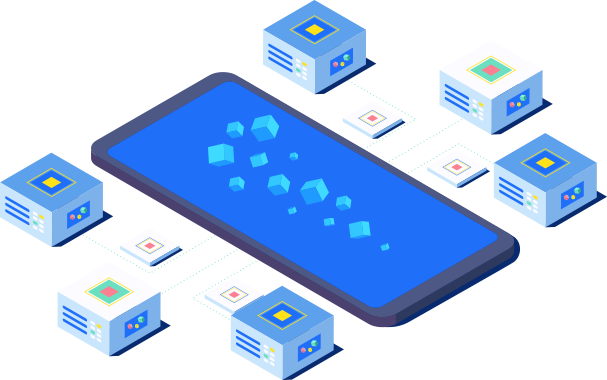
Illustration: Cloud Hosting Vendor Lock-In: How to Avoid Getting StuckPractical Lock-In Mitigation Strategies
The most impactful lock-in mitigation strategy is not architectural — it is contractual and operational: understand your data egress costs and negotiate them before they become a migration barrier. Cloud providers publish data egress pricing, but large customers can negotiate reduced or waived egress fees as part of their enterprise agreements, and organizations that anticipate eventual migration should negotiate egress terms during the initial contract rather than during the migration, when their negotiating leverage is diminished by the urgency to move. The second contractual strategy is to own your data in a portable format: ensure that your agreement with the cloud provider specifies that your data will be provided to you in a standard, documented format upon request, and periodically exercise that right by exporting a data snapshot to verify that the export process works and that the data is usable. Organizations that discover during a migration attempt that their data can only be exported in a proprietary format with undocumented internal structure have learned this lesson the hard way; the cost of a periodic export test is negligible compared to the cost of discovering the export problem during a time-sensitive migration.
The second layer of lock-in mitigation is architectural: use abstraction layers at the boundaries between your application logic and the cloud provider's services. This does not mean wrapping every cloud API call in a custom abstraction (which creates its own maintenance burden and often results in a least-common-denominator interface that sacrifices the very cloud-native features that justified using the cloud in the first place). It means identifying the specific integration points where a provider switch would be most painful — the database, the blob storage, the message queue, the identity provider — and ensuring that the application interacts with these services through well-defined interfaces that could be reimplemented against a different backend. A Django application that uses the django-storages library to abstract object storage can switch from S3 to Google Cloud Storage to MinIO by changing a configuration string, without modifying application code. A Go application that uses the database/sql interface with a PostgreSQL driver can migrate from RDS to Cloud SQL to a self-managed PostgreSQL instance with the same application code. These abstraction layers are not free — they require discipline to maintain and they may prevent the use of provider-specific features that offer performance or capability advantages — but they are the most cost-effective lock-in insurance available for the services that are most likely to be migration pain points.
The third strategy is to prefer managed open-source services over proprietary alternatives when they meet the workload's requirements. Managed PostgreSQL, MySQL, Redis, and Kafka services are available from every major cloud provider and from third-party managed service providers, meaning that an application built on managed PostgreSQL has a broad range of hosting options. Managed cloud-native equivalents — Amazon Aurora, Google Cloud Spanner, Azure Cosmos DB, Amazon ElastiCache Serverless — offer performance, scalability, or operational advantages that open-source managed services may not match, but they bind the application to a single provider. The decision framework is not "always choose open-source" but "evaluate the proprietary service's additional value against its lock-in cost." If Aurora's performance advantage over standard PostgreSQL is necessary to meet the application's latency requirements, the lock-in may be justified. If the application would function equivalently on standard PostgreSQL, choosing standard PostgreSQL preserves optionality at no meaningful cost. This framework — conscious lock-in acceptance rather than lock-in avoidance by default — produces infrastructure architectures that leverage cloud-native innovation where it delivers differentiated value while maintaining portability where it does not.
The fourth and most organizationally challenging strategy is to invest in provider-agnostic operational tooling. Infrastructure-as-code should be written in Terraform or Pulumi rather than CloudFormation or ARM templates, not because Terraform is inherently better but because Terraform providers exist for every major cloud platform, meaning the operational skill of writing Terraform is portable. Monitoring should use Datadog, Grafana, or another third-party observability platform rather than CloudWatch or Azure Monitor exclusively, so that operational visibility persists across provider boundaries. CI/CD pipelines should use GitHub Actions, GitLab CI, or CircleCI rather than AWS CodePipeline or Azure DevOps, preserving deployment automation portability. These investments in provider-agnostic tooling have real costs — third-party observability platforms are more expensive than native cloud monitoring, and Terraform's abstraction layer introduces its own complexity — but for organizations that anticipate operating across multiple providers or that value the option to switch providers, the investment is justified by the operational continuity it provides. For organizations exploring how AI infrastructure decisions intersect with cloud strategy, our comprehensive guide to AI hosting covers how GPU cloud services create their own lock-in dynamics distinct from traditional cloud services.
The Multi-Cloud Trap: When Lock-In Avoidance Becomes Its Own Problem
Multi-cloud — deploying workloads across two or more public cloud providers — is frequently presented as the antidote to vendor lock-in, but for most organizations, multi-cloud introduces operational complexity, cost overhead, and talent requirements that exceed the lock-in risk it mitigates. True multi-cloud — where a workload can run on any of multiple providers with equivalent performance and operational characteristics — requires the organization to maintain expertise in multiple cloud platforms' IAM systems, networking models, managed service configurations, cost management tools, and security compliance frameworks. For an organization with a 20-person engineering team, maintaining deep expertise in even two cloud platforms is impractical; the team will develop shallow competence in both rather than deep competence in one, and shallow competence is what produces misconfigurations, security gaps, and operational incidents. The organizations that successfully operate multi-cloud environments are those with engineering teams large enough to support platform-specific expertise silos (hundreds of engineers, not dozens), or those that have adopted Kubernetes as a workload abstraction layer that insulates applications from provider differences — and even Kubernetes multi-cloud introduces storage, networking, and operational complexity that should not be underestimated.
A more practical approach for most organizations is single-cloud with exit preparedness: operate primarily on one cloud platform, develop deep expertise in that platform's services and operational patterns, and maintain the architectural and contractual provisions described above to ensure that migration is feasible if it becomes necessary. This approach captures the productivity benefits of deep cloud platform expertise while managing lock-in risk through preparation rather than through continuous multi-provider operation. The preparation — data exports, abstraction layers at key integration points, provider-agnostic tooling, documented exit strategies — has a cost, but that cost is substantially lower than the cost of maintaining production readiness across multiple cloud platforms. HostingCaptain's infrastructure consulting practice has observed that single-cloud with exit preparedness is the optimal strategy for organizations below approximately 500 engineers, and that multi-cloud strategies pursued by smaller teams tend to produce fragile, expensive infrastructure that delivers neither the lock-in protection that motivated the strategy nor the operational excellence that deep single-cloud expertise enables.
Cloud Repatriation: The Ultimate Lock-In Escape
Cloud repatriation — moving workloads from public cloud infrastructure back to on-premise servers, colocated hardware, or dedicated hosting — is the nuclear option of lock-in escape, and it has become an increasingly viable strategy in 2026 as dedicated server pricing has remained stable while cloud costs have risen for many scale-stage workloads. The repatriation calculus is fundamentally a utilization economics question: cloud infrastructure is cost-effective for variable, unpredictable workloads where the ability to provision and deprovision capacity on demand is valuable, while dedicated hardware is cost-effective for stable, predictable workloads with sustained utilization above approximately 50% to 60%. An organization spending $15,000 per month on cloud compute and storage for stable production workloads could purchase equivalent dedicated server capacity from HostingCaptain for approximately $4,000 to $6,000 per month — a 60% to 73% cost reduction that accumulates to $100,000+ in savings per year. The trade-off is that dedicated hosting requires the organization to manage hardware procurement, capacity planning, and infrastructure scaling without the cloud's elastic provisioning capabilities — operational burdens that are manageable for stable workloads but problematic for highly variable ones.
Repatriation does not eliminate lock-in; it transfers it. Moving from AWS to on-premise servers eliminates AWS-specific dependency but creates dependence on the specific hardware configuration, the data center facility, the networking provider, and the system administration team that manages the infrastructure. The lock-in merely changes form — from a contractual and service-level dependency to a hardware and operational expertise dependency. The organizations that repatriate successfully are those that recognize this and plan for the new dependencies as deliberately as they managed the old ones: documenting hardware configurations, avoiding proprietary hardware management interfaces, maintaining relationships with multiple hardware vendors, and cross-training team members so that infrastructure expertise is distributed rather than concentrated in a single administrator. Repatriation is not the absence of lock-in; it is a deliberate trade of one lock-in profile for another that the organization has judged to be more favorable for its specific workload characteristics and risk tolerance. For organizations evaluating repatriation as part of their cloud strategy, HostingCaptain's dedicated server and colocation services provide the hardware, networking, and operational support infrastructure that makes repatriation operationally feasible without requiring the organization to build its own data center.
Frequently Asked Questions
What is cloud vendor lock-in and why does it matter?
Cloud vendor lock-in refers to the condition where an organization becomes dependent on a specific cloud provider's proprietary services, APIs, and operational tooling to the extent that migrating to another provider or to on-premise infrastructure becomes prohibitively expensive, technically complex, or operationally disruptive. It matters because it constrains the organization's ability to negotiate pricing, adopt better technology from competing providers, respond to service degradation or outages, or adapt its infrastructure to changing business requirements. Lock-in is not inherently bad — using differentiated cloud services can accelerate development and improve reliability — but unmanaged lock-in, where the organization has accepted dependencies without understanding their migration cost or having an exit strategy, represents an unmanaged business risk. The goal is not to eliminate lock-in but to make conscious, informed decisions about which lock-in to accept and to ensure that the lock-in accepted is proportional to the business value received.
How do I avoid cloud vendor lock-in when choosing hosting?
The most effective lock-in avoidance strategies are architectural and contractual, not operational. Architecturally: use portable, open-source technologies (standard SQL databases, standard message queues, standard container orchestration) for the components that are most likely to require migration flexibility; create abstraction layers at the boundaries between your application and provider-specific services so that switching backends does not require application code changes; and avoid building application logic directly against proprietary APIs that have no open-source equivalent unless the proprietary service delivers unique value that justifies the lock-in. Contractually: understand your data egress costs and negotiate them before they become a migration barrier; ensure your agreement specifies data portability in standard formats; and periodically test your ability to export and restore your data to verify that the exit path is real, not theoretical. Operationally: invest in provider-agnostic tooling for infrastructure-as-code, monitoring, and CI/CD, using tools like Terraform, Grafana, and GitHub Actions that work across providers rather than provider-specific alternatives. HostingCaptain recommends that organizations evaluate these strategies with the specific business requirements of their workloads rather than applying them as universal rules.
Is it worth running a multi-cloud setup to prevent lock-in?
For organizations with engineering teams larger than approximately 500 people, multi-cloud can be a viable lock-in mitigation strategy, though the operational overhead of maintaining expertise and tooling across multiple cloud platforms is substantial. For organizations with smaller engineering teams — which describes the majority of businesses — the operational complexity and cost of true multi-cloud typically outweigh the lock-in risk reduction benefit. A more practical approach for most organizations is single-cloud with exit preparedness: operate primarily on one cloud platform, develop deep expertise in that platform, and maintain the architectural provisions (data portability, abstraction layers, documented exit strategies) that make migration feasible if it becomes necessary. This captures the productivity benefits of deep platform expertise while managing lock-in risk through preparation. Multi-cloud should be adopted when the business genuinely needs the differentiated capabilities of multiple providers or when geographic presence requirements demand multiple cloud regions that no single provider can satisfy — not as a default lock-in avoidance strategy.
Arjun Mehta is a cloud infrastructure consultant specializing in bare-metal architectures, network routing, and high-traffic database clustering.
Frequently Asked Questions
This guide covers the practical decision points — pricing, performance, and when it makes sense for your situation — based on current 2026 data.
Pricing varies by provider and plan tier; see the cost breakdown section above for current ranges and what's actually included at each price point.
Look closely at uptime guarantees, renewal pricing (not just the first-year discount), and how responsive support actually is — all covered in detail in this article.
Hosting Captain has been exceptional for my e-commerce store in Pune. The NVMe SSD speed is
noticeable, and their support team responds within minutes. Highly recommended for any
Indian business!
Ryan John, Pune
Great Value for Money
Switched from a US-based host to Hosting Captain and my website loads 3x faster for Indian
visitors. The free SSL and cPanel are great, and the pricing is unbeatable. Very satisfied
customer!
Priya Mehta, Mumbai
Reliable VPS Hosting
I've been using their VPS plan for 2 years now. 99.9% uptime is not just a claim — it's
reality. My client projects run without interruption. The KVM virtualization gives me full
control I need.
Amit Kumar, Bangalore
Excellent 24/7 Support
The support team helped me migrate my entire WordPress site at 2 AM without any downtime.
This level of service is rare in Indian hosting. Worth every rupee!
Sunita Patel, Ahmedabad
Perfect for Startups
As a startup, budget matters. Hosting Captain's Business plan covers everything we need —
multiple websites, free SSL, daily backups — at a fraction of what international hosts
charge.
Vikram Singh, Delhi
Professional Dedicated Server
Our high-traffic news portal needed a dedicated server. Hosting Captain's DS Business plan
handles 100K+ daily visitors effortlessly. Their team provisioned everything within 4 hours!
Meena Krishnaswamy, Chennai
Trusted Technologies & Partners
Start Your Website with Hosting Captain
From personal blogs to enterprise solutions, we've got you covered!