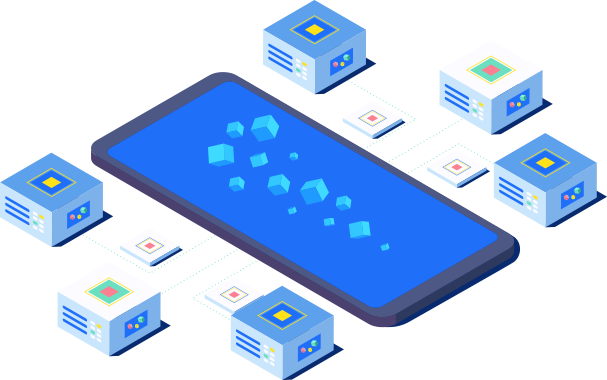
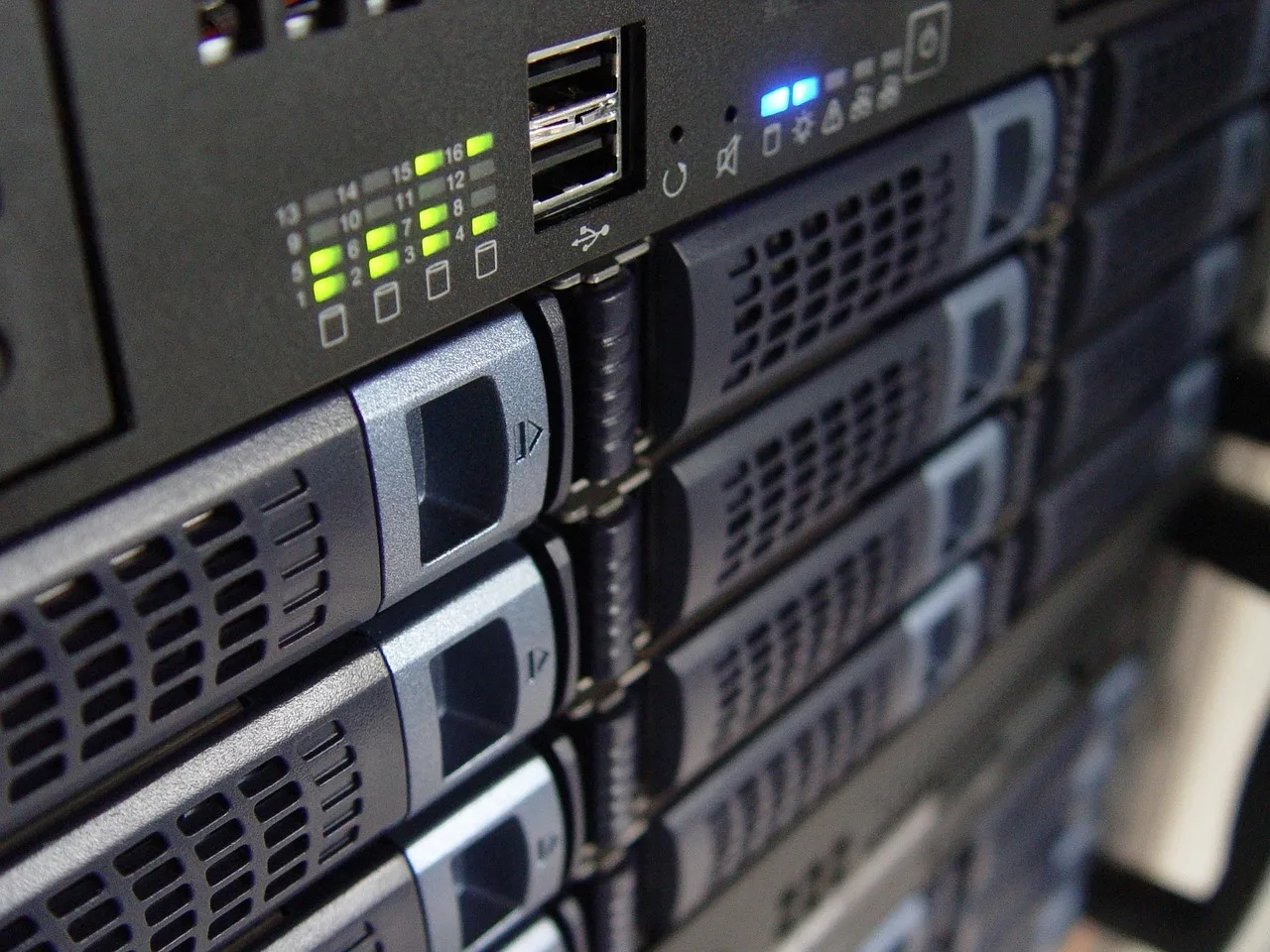
GPU cloud hosting refers to cloud infrastructure that provides access to Graphics Processing Units as a scalable, on-demand service — rather than requiring you to purchase and maintain physical GPU hardware in your own data center or office. Unlike traditional CPU-only cloud servers that rely on general-purpose processors designed for sequential task execution, GPU instances harness thousands of smaller cores optimized for massive parallel processing. This architectural difference means that while a high-end server CPU might have 64 or 96 cores, a single NVIDIA H100 GPU contains over 16,000 CUDA cores capable of handling tens of thousands of simultaneous calculations. The fundamental value proposition of GPU cloud hosting is simple: you get access to supercomputing-class parallel processing power without the six-figure capital expenditure, provisioning delays, or ongoing maintenance that owning physical GPU servers demands.
The distinction between GPU cloud hosting and CPU-only cloud hosting becomes dramatically apparent when you examine how each handles certain computational patterns. A CPU excels at tasks that require complex branching logic, low-latency single-threaded performance, and operations where each step depends on the result of the previous one — think database queries, web server request handling, or running a content management system. GPUs, by contrast, thrive on workloads that can be decomposed into thousands or millions of independent, identical operations — matrix multiplications, pixel transformations, physics simulations, and cryptographic calculations all fall into this category. This is why your standard WordPress site or e-commerce store runs perfectly on CPU-based cloud hosting, but training a large language model or rendering a 4K animation sequence would crawl to a near-standstill on the same hardware. For a deeper understanding of how cloud infrastructure fundamentally works, the Cloudflare cloud computing guide provides an excellent foundation, and our own dedicated server guide explores the full spectrum of hosting options available to growing businesses.
Modern GPU cloud platforms have evolved significantly beyond simply renting a server with a graphics card installed. Today's GPU cloud offerings include fully managed environments with pre-configured deep learning frameworks, optimized storage tiers for high-throughput data loading, inter-GPU communication fabrics like NVLink and InfiniBand for multi-GPU workloads, and orchestration layers that let you spin up clusters of dozens or even hundreds of GPUs with a single API call. The cloud delivery model also brings the familiar benefits of elasticity — you can provision GPU resources for a two-hour training run and then immediately release them, paying only for what you actually used rather than letting expensive hardware sit idle between projects. This combination of raw computational capability and operational flexibility is what has made GPU cloud hosting the default choice for AI startups, research labs, visual effects studios, and increasingly, enterprise data science teams that need to scale their compute resources dynamically.
Workloads That Require GPU Servers
Machine Learning Training and Inference
Machine learning remains the dominant driver of GPU cloud adoption, and for good reason — training modern neural networks involves performing billions of floating-point operations on massive matrices, which maps almost perfectly to the GPU architecture. When you're training a transformer model with hundreds of billions of parameters, the difference between a CPU-only cluster and a GPU-accelerated one isn't measured in percentage improvements but in orders of magnitude: what takes weeks on CPUs often completes in hours on a well-configured multi-GPU setup. Inference workloads, while less computationally intensive than training, still benefit enormously from GPU acceleration when you need to serve predictions at scale — a single GPU instance can handle thousands of inference requests per second for models that would saturate dozens of CPU cores trying to keep up. The rise of generative AI, from text generation to image synthesis to video creation, has only intensified this demand, as these models are among the most compute-hungry ever deployed in production environments.
Frameworks like PyTorch and TensorFlow have been optimized to distribute work across multiple GPUs, and cloud providers now offer purpose-built machine learning instances that bundle the right GPU specifications with high-bandwidth memory configurations and fast interconnects specifically tuned for distributed training. For organizations exploring this space, our AI hosting infrastructure guide provides additional context on how dedicated AI hardware fits into the broader hosting ecosystem.
3D Rendering and Visual Effects
The visual effects, animation, and architectural visualization industries have been GPU-dependent for over a decade, and cloud GPU instances have transformed how rendering pipelines operate. Traditional CPU-based rendering using engines like Arnold or RenderMan can take hours per frame for complex scenes with global illumination, volumetric effects, and high-polygon-count assets. GPU renderers such as OctaneRender, Redshift, and Blender's Cycles with CUDA acceleration can reduce those frame times to minutes — a critical advantage when a studio needs to deliver thousands of frames on a production deadline. Cloud GPU rendering also solves the "render farm bottleneck" problem: instead of every artist competing for a limited pool of in-house rendering nodes, each artist can spin up their own render instances on demand, parallelize their work, and shut everything down when the job completes.
Architectural firms, product designers, and game developers likewise leverage GPU cloud instances for real-time visualization workloads using engines like Unreal Engine and Unity, where the ability to stream photorealistic interactive experiences to clients anywhere in the world has become a competitive differentiator. The elasticity of cloud GPU resources means a small firm can produce output that previously required a multi-million-dollar on-premises render farm, democratizing access to high-end visualization capabilities across the industry.
Video Transcoding and Streaming
Video transcoding — converting raw footage into distribution-ready formats at various resolutions and bitrates — is an inherently parallel workload that GPUs accelerate dramatically through hardware video encoders and decoders. NVIDIA's NVENC and NVDEC engines, built directly into their GPU silicon, can process multiple 4K or 8K video streams simultaneously with minimal CPU overhead, making GPU instances the preferred platform for video platforms, broadcasters, and content delivery networks that need to process large libraries of content. A single GPU instance can transcode hours of footage in minutes, handling format conversions, resolution scaling, HDR tone mapping, and codec optimization (including the computationally expensive AV1 codec) in a fraction of the time that CPU-only transcoding would require.
Live streaming platforms face an even more demanding requirement: real-time transcoding with latency measured in milliseconds rather than minutes. GPU cloud instances, particularly those with access to GPUs equipped with multiple hardware encoder pipelines, can ingest a single source stream and simultaneously produce multiple output renditions at different quality levels — known as adaptive bitrate ladder generation — without introducing perceptible delay to the viewer experience. When combined with a properly configured content delivery network, the result is a seamless streaming experience that scales to audiences of any size. Our article on CDN integration with cloud hosting explains how CDN architecture complements these GPU-accelerated processing pipelines for optimal global delivery.
Scientific Computing and Simulation
From computational fluid dynamics and molecular dynamics to weather modeling and genomic analysis, scientific computing has embraced GPU acceleration as a transformative technology. Many scientific simulations involve solving systems of partial differential equations over discretized grids, and the regular, parallel nature of these computations maps naturally to GPU architectures. A climate model that would require a dedicated supercomputing cluster to run on CPUs can often be executed on a single eight-GPU cloud instance with comparable wall-clock time. Protein folding simulations, drug discovery pipelines, and finite element analysis for engineering design all see order-of-magnitude speedups when ported to GPU-accelerated code using frameworks like CUDA, OpenCL, or the more recent SYCL abstraction layer.
The cloud delivery model is particularly attractive for scientific workloads because computational demand is often bursty — a research team may need massive parallel compute for a two-week simulation run but very little in between projects. GPU cloud instances enable research institutions to access cutting-edge hardware without the grant-writing cycle and procurement delays associated with building on-premises clusters, accelerating the pace of scientific discovery across disciplines.
Cloud Gaming and Game Streaming
Cloud gaming services like NVIDIA GeForce NOW, Xbox Cloud Gaming, and Amazon Luna represent a growing segment of GPU cloud utilization where the GPUs render gameplay frames in real time on remote servers and stream the video output to players' devices. This use case demands GPUs with strong rasterization performance, hardware video encoding capability, and extremely low pipeline latency — a game rendered at 60 frames per second has only 16 milliseconds per frame, including network transmission time. Providers operating cloud gaming infrastructure typically deploy GPU instances in edge locations close to population centers to minimize round-trip latency, making it a specialized but rapidly expanding GPU cloud workload category. Game developers also use GPU cloud instances for automated testing, build processing that involves shader compilation and asset baking, and running dedicated game servers that offload physics calculations from client devices.
Illustration: GPU Cloud Hosting Explained: When You Need GPU ServersMajor GPU Cloud Providers in 2026
AWS GPU Instances
Amazon Web Services offers the broadest portfolio of GPU instance types across its global infrastructure footprint, spanning multiple GPU generations and form factors. The P5 instance family, featuring NVIDIA H100 GPUs with 640 GB of GPU memory per instance and 3,200 Gbps of Elastic Fabric Adapter networking between nodes, represents AWS's flagship offering for large-scale distributed training workloads. For inference and more moderate training jobs, the G6 instances with NVIDIA L4 GPUs and the G5 instances with A10G GPUs provide more cost-effective entry points that still deliver substantial GPU acceleration for smaller models and batch processing workflows. AWS also offers the G5g instances with Arm-based Graviton processors paired with NVIDIA T4G GPUs, delivering compelling price-performance for inference workloads that don't require the full x86 ecosystem compatibility.
What distinguishes AWS from competitors is the depth of integration with the broader AWS ecosystem — GPU instances can directly access S3 for data storage, leverage SageMaker for managed machine learning pipelines, connect to EFS for shared file systems across distributed training clusters, and use AWS Batch or EKS for containerized GPU workload orchestration. Organizations already invested in the AWS ecosystem often find that the operational consistency and mature tooling outweigh slightly higher per-hour GPU pricing compared to specialized GPU-only providers. For production workloads that demand data redundancy and resilience, our cloud hosting data redundancy guide covers the storage strategies that pair effectively with GPU compute infrastructure.
Google Cloud GPU
Google Cloud Platform's GPU offerings are tightly integrated with Vertex AI and the broader Google AI ecosystem, making them particularly attractive for teams building on TensorFlow, JAX, or other Google-originated frameworks. GCP provides access to NVIDIA H100, L4, and A100 GPUs across multiple machine families, with the a3-highgpu-8g instances delivering eight H100 GPUs connected via NVIDIA NVSwitch and 200 Gbps of dedicated networking per GPU — a configuration specifically optimized for the largest foundation model training runs. Google's Dynamic Workload Scheduler provides reserved GPU capacity with guaranteed start times, addressing the availability challenges that have historically plagued GPU cloud procurement.
Google's multi-instance GPU technology, which allows a single A100 or H100 GPU to be partitioned into up to seven isolated GPU instances, provides fine-grained resource allocation for inference workloads where a full GPU would be underutilized. The GKE autopilot integration also enables teams to run containerized GPU workloads with cluster autoscaling that adds GPU nodes to the cluster as queued jobs demand them, minimizing idle GPU costs while maintaining responsiveness to workload spikes.
Azure N-Series and AI Infrastructure
Microsoft Azure's N-series virtual machines, particularly the ND H100 v5 instances, deliver eight NVIDIA H100 GPUs per VM with 400 Gbps of NVIDIA Quantum-2 InfiniBand networking between nodes, positioning Azure as a serious contender for enterprise AI workloads. Azure's deep partnership with OpenAI means that the infrastructure patterns proven at the largest scale of GPT model training are reflected in the platform's design decisions — the ND H100 v5 instances support up to 32,000 GPUs in a single InfiniBand-connected cluster, targeting the frontier model training market. For less extreme requirements, the NC A100 v4 series and NCas T4 v3 series provide graduated performance tiers.
Azure's hybrid deployment model, which allows GPU workloads to span on-premises Azure Stack HCI deployments and cloud instances, addresses data sovereignty and latency requirements for industries like healthcare and financial services that may need to keep sensitive training data within specific geographic or regulatory boundaries. The Azure Machine Learning service provides a managed environment that abstracts away much of the infrastructure complexity for data science teams that want to focus on model development rather than GPU cluster administration.
Specialized GPU Cloud Providers: Lambda Labs, CoreWeave, and RunPod
The shortage of high-end GPU availability through traditional cloud providers during the AI boom of 2023-2024 created space for a new generation of specialized GPU cloud companies that have matured into significant market participants by 2026. Lambda Labs has built a reputation for straightforward pricing, instant provisioning of NVIDIA H100 and GH200 clusters, and a development-focused experience that includes pre-configured deep learning environments accessible via both CLI tools and a clean web dashboard. Their cluster offerings scale from single-GPU instances to thousands of interconnected GPUs, with transparent per-GPU-hour pricing that avoids the complexity of AWS's instance-family matrix.
CoreWeave, originally a cryptocurrency mining operation that pivoted to GPU cloud services, has emerged as one of the largest operators of NVIDIA H100 infrastructure outside the hyperscale cloud providers. Their Kubernetes-native platform, built on top of their own data center footprint, offers both on-demand and reserved GPU capacity with high-speed InfiniBand interconnects and integration with popular MLOps tools. RunPod has carved out a different niche, focusing on the individual developer and small-team market with a serverless GPU offering that charges per second of actual GPU utilization rather than per hour of instance uptime — a model particularly well-suited for inference endpoints, fine-tuning jobs, and experimentation workflows where GPUs would otherwise sit idle between bursts of activity.
GPU Pricing Models and Cost Considerations
On-Demand GPU Pricing
On-demand pricing is the most straightforward model: you pay a fixed rate per GPU-hour with no upfront commitment and the ability to provision and release instances at any time. As of mid-2026, on-demand pricing for a single NVIDIA H100 GPU typically ranges from $2.50 to $4.50 per GPU-hour across major providers, though rates vary based on the accompanying CPU, memory, storage, and network configurations bundled with the instance. NVIDIA A100 instances generally run between $1.50 and $3.00 per GPU-hour on-demand, while L40S instances — popular for inference and fine-tuning workloads that don't require H100-class performance — are available from around $0.90 to $2.00 per hour. The specialized providers like Lambda Labs tend to cluster at the lower end of these ranges due to their focused operational models and purpose-built infrastructure, while the hyperscalers command premiums that reflect their broader service integration and global availability zones.
On-demand pricing is ideal for unpredictable workloads, development and experimentation phases, short-term projects, and teams that are still characterizing their GPU utilization patterns before committing to longer-term contracts. The trade-off is straightforward: you pay a premium for flexibility, and that premium can be substantial if your GPU usage is consistent and predictable. Organizations running production inference endpoints that serve traffic continuously, for example, will almost always find that on-demand pricing becomes uneconomical compared to reserved capacity, often by a factor of two or more.
Reserved and Committed-Use GPU Pricing
Reserved GPU instances operate on the same principle that has governed cloud economics for over a decade: commit to a one-year or three-year term in exchange for a significant discount over on-demand rates. For GPU instances, these discounts typically range from 30% to 55% depending on the term length, upfront payment structure, and the specific GPU type. A three-year all-upfront reservation for an eight-H100 cluster might reduce the effective per-GPU-hour cost to around $1.60 to $2.50, compared to $3.00-$4.00 on-demand — potentially saving hundreds of thousands of dollars annually for GPU-intensive organizations. Some providers also offer committed-use discounts that apply across an organization's entire GPU spend rather than being tied to specific instance types, providing flexibility to change GPU generations within the commitment window as hardware evolves.
The reservation model works best for production inference serving, recurring training pipelines, and any workload with predictable baseline GPU requirements. The primary risk is technological obsolescence: committing to three years of H100 capacity when NVIDIA's next-generation Rubin platform is expected in 2026 means potentially paying for hardware that is no longer state-of-the-art by the contract's end. Sophisticated buyers often layer reserved capacity for baseline production workloads with on-demand burst capacity for research and development spikes, creating a blended rate that balances cost predictability with flexibility.
Spot and Preemptible GPU Instances
Spot GPU instances — also called preemptible instances by some providers — represent the most cost-aggressive GPU acquisition strategy, offering discounts of 60% to 80% off on-demand pricing in exchange for the risk that your instance may be reclaimed with as little as 30 seconds' notice. Spot GPU availability fluctuates with overall demand in each availability zone, and during periods of GPU scarcity, spot capacity for the most desirable GPU types may be virtually nonexistent. However, when spot capacity is available, the economics can be transformative: H100 spot instances at $0.80-$1.20 per GPU-hour make frontier-model experimentation accessible to startups and academic labs that couldn't justify on-demand pricing.
Spot instances are best suited for fault-tolerant, checkpointable workloads — distributed training jobs that save model state periodically and can resume from the last checkpoint on new instances, batch inference jobs where individual task failure can be retried without user impact, and rendering workloads where frames are independent and can be distributed across a dynamic pool of ephemeral workers. Workloads requiring continuous uptime, strict latency guarantees, or stateful processing that cannot be cleanly interrupted should avoid spot instances entirely and rely on reserved or on-demand capacity. The most cost-optimized GPU operations in 2026 typically combine a reserved-instance backbone for production reliability with spot-instance elasticity for burst capacity and experimental workloads, using orchestration tools like Kubernetes with Karpenter or the provider-native spot fleet managers to automatically replace reclaimed instances.
How to Choose the Right GPU for Your Workload
NVIDIA H100: The Flagship for Large-Scale Training
The NVIDIA H100, built on the Hopper architecture, remains the gold standard for large-scale distributed training workloads in 2026. With 80 GB of HBM3 memory delivering 3.35 TB/s of memory bandwidth and the Transformer Engine acceleration specifically designed for the attention mechanisms that dominate modern model architectures, the H100 delivers roughly three times the training throughput of its A100 predecessor on large language model workloads. The H100 supports FP8 precision natively — a lower-precision format that dramatically accelerates training while maintaining model quality, making it the most efficient option for organizations training models in the multi-billion-parameter range. Eight-way H100 systems connected via NVSwitch and NVLink provide 900 GB/s of GPU-to-GPU bandwidth within a node, while InfiniBand interconnects scale that connectivity across hundreds or thousands of nodes for the largest training clusters.
The H100's advantages come with a price that reflects its position at the top of the GPU hierarchy — both in absolute cost per hour and in the operational complexity of provisioning sufficient capacity during periods of high demand. Organizations should only invest in H100 instances when their workload genuinely requires its specific capabilities: models too large to fit within the memory bandwidth constraints of lesser GPUs, training runs where the time-to-completion advantage directly translates to business value, or multi-node distributed training that benefits from the H100's advanced interconnect fabric. For many fine-tuning jobs, inference workloads, and smaller-scale training tasks, the H100 represents overkill that inflates costs without delivering proportional value.
NVIDIA A100: The Proven Workhorse
The A100, based on the Ampere architecture, preceded the H100 but remains widely available and surprisingly capable for the majority of GPU workloads in 2026. With 40 GB or 80 GB HBM2e configurations and support for multi-instance GPU partitioning, the A100 offers a mature, well-supported platform that many ML frameworks and libraries have been optimized against for years. For fine-tuning existing foundation models, training smaller architectures from scratch, and running high-throughput inference with models in the 7B to 70B parameter range, the A100 delivers performance that is often indistinguishable from the H100 in practical terms while costing 30-40% less per hour.
The A100's broad availability across all major cloud providers and most specialized GPU cloud companies makes it the most accessible high-performance GPU option, and its multi-instance GPU capability allows a single A100 to be partitioned into smaller GPU instances for inference workloads where full GPU utilization isn't required. As the H100 becomes the default choice for frontier training, the A100 is transitioning into the role of the reliable, cost-efficient option for production inference and stable training pipelines — a position it occupies comfortably given the enormous installed base and software maturity accumulated over its multi-year tenure as the industry standard.
NVIDIA L40S: Inference and Fine-Tuning Specialist
The L40S represents NVIDIA's purpose-built GPU for inference, fine-tuning, and visualization workloads rather than frontier training. With 48 GB of GDDR6 memory, a slightly different core configuration than the data-center-focused H100, and native support for FP8 computation, the L40S delivers approximately 70-80% of A100 inference throughput at roughly half the cost per GPU-hour across most cloud providers. The L40S also includes dedicated ray-tracing cores and hardware video encoders that the H100 lacks, making it the superior choice for rendering, video processing, and visualization workloads that combine GPU compute with graphics pipeline requirements.
For organizations running production inference endpoints, the L40S often represents the optimal price-performance point — its throughput is sufficient to saturate most inference serving pipelines, and the cost savings compound dramatically when multiplied across clusters running 24/7. Fine-tuning jobs that don't require the full memory bandwidth of HBM3-equipped GPUs also run well on L40S instances, making them popular for parameter-efficient fine-tuning techniques like LoRA and QLoRA that have become standard practice in the model adaptation community. The trade-off is that models requiring more than 48 GB of GPU memory during inference — increasingly common as open-weight models approach and exceed 100B parameters — will need to look at A100 or H100 instances instead.
Consumer-Grade GPUs in Cloud Environments
Some cloud providers, particularly the specialized players like RunPod and Vast.ai, offer instances powered by consumer-grade GPUs such as the NVIDIA RTX 4090 and RTX 6000 Ada. These GPUs offer compelling price-performance for specific workloads: the RTX 4090 delivers roughly 60% of A100 training throughput for well-optimized, single-GPU training jobs at approximately 20-25% of the per-hour cost. However, consumer GPUs lack several features critical for production GPU operations — they don't support NVLink for multi-GPU scaling, they have lower memory bandwidth than their data center counterparts, they lack ECC (Error Correcting Code) memory protection that prevents silent data corruption in long-running computations, and they typically aren't available with the high-speed networking required for multi-node distributed training.
Consumer GPU instances are appropriate for individual developers experimenting with model training, small fine-tuning jobs that fit within 24 GB of VRAM, batch processing tasks where an occasional compute error from non-ECC memory is acceptable, and cost-sensitive rendering workloads. They are not suitable for any workload requiring production reliability guarantees, multi-GPU scaling, or the memory capacity to handle large models. The absence of ECC memory alone disqualifies consumer GPUs for scientific computing where computational accuracy is paramount, and the lack of NVLink support makes them non-viable for distributed training approaches that assume GPU-to-GPU communication bandwidth far beyond what PCIe can deliver.
When NOT to Use GPU Cloud Hosting
Despite the excitement surrounding GPU computing, the vast majority of web hosting workloads gain no meaningful benefit from GPU acceleration and would simply incur unnecessary costs if deployed on GPU instances. Standard web servers running Apache or Nginx, database systems like MySQL and PostgreSQL, content management platforms such as WordPress and Drupal, e-commerce applications, business SaaS tools, and virtually all traditional line-of-business applications are designed around CPU architectures and contain no GPU-accelerated code paths. Deploying these workloads on GPU instances would typically increase hosting costs by a factor of 10x to 50x compared to equivalent CPU-only instances while delivering zero performance improvement — the GPU would sit idle, consuming power and generating cost without contributing to request processing in any way.
The appropriate question to ask before considering GPU cloud hosting is not whether your application could theoretically use a GPU, but whether it has a specific, identifiable computational bottleneck that GPU architecture directly addresses. If your application's performance is limited by database query speed, network latency, disk I/O, or single-threaded business logic execution — which collectively describe the bottleneck profile of nearly all conventional web applications — then GPU acceleration is irrelevant to your performance challenges. Investing in proper database indexing, query optimization, caching layers, CDN integration, and appropriately sized CPU instances will yield far greater performance improvements at a small fraction of the cost. Organizations should exhaust CPU-side optimization strategies and confirm through profiling that a GPU-addressable workload (matrix operations, parallel pixel processing, or similar) dominates their compute time before committing to GPU infrastructure. As covered in our dedicated server guide, most growing businesses find that a well-configured dedicated CPU server or cloud VM provides all the computational power their applications actually need.
A related trap is the assumption that "AI features" automatically require GPU infrastructure. While training a custom model from scratch certainly demands GPU compute, integrating pre-trained AI capabilities into an application — sentiment analysis via API, image classification using a hosted model service, text generation through a third-party AI provider — typically requires no GPU resources on your own infrastructure at all. The GPU-intensive computation happens on the API provider's servers, and your application simply sends HTTP requests and receives JSON responses, a workload that any modest CPU server handles easily. Understanding this distinction between consuming AI services and producing custom models is critical to making rational infrastructure investment decisions rather than following GPU hype into unnecessarily expensive hosting arrangements.
Cost Comparison: GPU Cloud vs. Buying Your Own Hardware
The build-versus-rent calculation for GPU infrastructure involves more variables than a simple price comparison, and the right answer depends heavily on your workload profile, utilization patterns, and organizational capabilities. A single NVIDIA H100 GPU purchased outright costs approximately $25,000-$30,000 from systems integrators in 2026, and a properly configured server housing eight H100s with sufficient CPU cores, memory, networking, and storage can easily exceed $300,000. Amortizing that capital expenditure over a three-year useful life — the typical timeframe before the hardware is technologically superseded — yields a raw hardware cost of roughly $1.15-$1.40 per GPU-hour for the H100 component. This is substantially lower than even the most aggressive reserved cloud pricing, suggesting that ownership is always cheaper.
However, the hardware acquisition cost represents only a fraction of total ownership expense. Colocation fees for the power, cooling, and physical space required to operate GPU servers — H100s draw 700 watts each, meaning an eight-GPU server requires approximately 7-8 kW of power delivery and heat removal — add $300-$600 per kilowatt per month in most colocation markets, translating to $0.35-$0.50 per GPU-hour in ongoing facility costs. System administration labor, GPU hardware failure replacement (GPU cards at this tier have annual failure rates of 2-5%), InfiniBand networking equipment, and the software licensing and support contracts required to maintain a production GPU cluster push the fully burdened owned-hardware cost to approximately $2.00-$3.00 per effective GPU-hour when utilization is high. When utilization drops — and private GPU clusters rarely exceed 70% average utilization due to the bursty nature of most GPU workloads — the effective cost per utilized GPU-hour rises dramatically, potentially exceeding cloud pricing.
The cloud model's primary economic advantage is elastic capacity matching: you pay for exactly the GPU hours you consume rather than paying for hardware that sits idle between projects. Organizations running 24/7 production inference with stable, predictable load will likely find on-premises or colocated hardware to be more economical over a three-year horizon, assuming they have the operational expertise to manage GPU infrastructure. Organizations with bursty research workloads, multiple simultaneous projects with unpredictable timelines, or teams that need access to the latest GPU generations as soon as they're available will almost always find cloud GPU hosting to be more cost-effective when accounting for the hidden costs of ownership — depreciation risk, hardware failures, labor, and idle capacity. The most sophisticated organizations often adopt a hybrid model: reserved cloud capacity for baseline production workloads where uptime and support are critical, and on-premises or colocated hardware for research and development where cost sensitivity is higher and downtime tolerance is greater.
Setup Basics for GPU Cloud Instances
Operating System and Driver Configuration
Launching a GPU cloud instance begins with selecting a base operating system image — most providers offer pre-built images with NVIDIA drivers, CUDA toolkit, and cuDNN libraries already installed, dramatically simplifying the initial setup process compared to configuring GPU drivers on a bare-metal OS installation. Ubuntu Server 22.04 LTS and 24.04 LTS remain the most common choices for GPU workloads due to the broadest driver compatibility and framework support, though Rocky Linux and Amazon Linux 2 also maintain robust GPU ecosystem compatibility. Selecting a provider-maintained GPU-optimized AMI or image avoids the most common source of GPU configuration problems: mismatched kernel versions, incompatible compiler toolchains, and the infamous "NVIDIA driver fails to load after kernel update" scenario that has frustrated GPU administrators for years.
After instance launch, verifying that the GPU is accessible and functional is the critical first step — running `nvidia-smi` should display the GPU model, driver version, CUDA version, and current memory utilization. The driver version matters because deep learning frameworks have specific CUDA version requirements: PyTorch 2.x typically expects CUDA 12.1 or newer, TensorFlow 2.x targets CUDA 12.x builds, and the framework's pre-built binaries will fail with cryptic errors if the system CUDA version doesn't match. Container-based deployment using Docker with the NVIDIA Container Toolkit (nvidia-docker) has become the standard approach because it encapsulates the correct driver and framework versions within the container image, eliminating host-level dependency conflicts and making GPU workloads portable across cloud providers and on-premises environments.
Storage and Data Pipeline Considerations
GPU workloads, particularly training jobs, generate enormous I/O demands that can quickly become the primary performance bottleneck if storage isn't properly configured. Training a large model requires streaming terabytes of training data through the GPU at rates sufficient to keep the GPU compute cores saturated — an idle GPU waiting for data is wasted GPU-hours. Cloud providers offer various storage tiers optimized for different points on the latency-throughput-cost spectrum: locally attached NVMe SSDs provide the lowest latency but the data is lost when the instance terminates, network-attached block storage offers persistent storage with tens of thousands of IOPS, and object storage like S3 provides the cheapest per-gigabyte cost but with higher latency and lower peak throughput.
The common pattern for GPU training pipelines is to stage the training dataset onto a high-performance filesystem accessible to all GPU nodes in the cluster — Amazon FSx for Lustre, Google Cloud Filestore, or Azure NetApp Files in the hyperscale clouds, or a dedicated all-flash NFS server for specialized GPU cloud deployments. Data loading libraries like NVIDIA DALI, PyTorch's DataLoader with multiple worker processes, and TensorFlow's tf.data API handle the pipeline of reading data from storage, applying preprocessing transformations on the CPU, and delivering batched tensors to the GPU with sufficient throughput to avoid compute stalls. Teams new to GPU infrastructure consistently underestimate the importance of storage architecture and data pipeline engineering, discovering only after provisioning expensive GPU fleets that their training iteration times are dominated by I/O wait rather than computation.
Security and Access Management
GPU instances present unique security considerations beyond standard cloud instance hardening because they often process sensitive data — proprietary training datasets, customer data used for model fine-tuning, and model weights that represent valuable intellectual property. Standard cloud security practices apply: restrict instance network exposure to only necessary ports, use identity-aware proxy or VPN access rather than exposing SSH or Jupyter interfaces directly to the internet, encrypt data at rest using cloud KMS integration and in transit using TLS, and apply the principle of least privilege to IAM roles assigned to GPU instances. Additionally, GPU instances should never run with public IP addresses unless absolutely necessary; bastion host patterns and private subnet deployment with NAT gateways for outbound-only internet access provide appropriate security boundaries.
The containerized nature of most modern GPU workflows introduces additional security dimensions: container images downloaded from public registries like Docker Hub and NGC should be scanned for known vulnerabilities, and the practice of running containers with the `--privileged` flag or as root should be avoided in favor of the NVIDIA Container Toolkit's default configuration, which grants only the specific device access and capabilities required for GPU compute. Model weights stored on instance-attached storage should be encrypted and access-controlled, and organizations handling regulated data should verify that their chosen GPU cloud provider's infrastructure meets the compliance frameworks applicable to their industry — SOC 2, HIPAA, GDPR, and FedRAMP certifications vary significantly across GPU cloud providers and individual availability zones.
Frequently Asked Questions
What is the most important thing to know about GPU cloud hosting?
This guide covers the practical decision points — pricing, performance, and when it makes sense for your situation — based on current 2026 data.
How much does this typically cost in 2026?
Pricing varies by provider and plan tier; see the cost breakdown section above for current ranges and what's actually included at each price point.
What should beginners check before making a decision?
Look closely at uptime guarantees, renewal pricing (not just the first-year discount), and how responsive support actually is — all covered in detail in this article.
Arjun Mehta is a cloud infrastructure consultant specializing in bare-metal architectures, network routing, and high-traffic database clustering.
Frequently Asked Questions
This guide covers the practical decision points — pricing, performance, and when it makes sense for your situation — based on current 2026 data.
Pricing varies by provider and plan tier; see the cost breakdown section above for current ranges and what's actually included at each price point.
Look closely at uptime guarantees, renewal pricing (not just the first-year discount), and how responsive support actually is — all covered in detail in this article.
Hosting Captain has been exceptional for my e-commerce store in Pune. The NVMe SSD speed is
noticeable, and their support team responds within minutes. Highly recommended for any
Indian business!
Ryan John, Pune
Great Value for Money
Switched from a US-based host to Hosting Captain and my website loads 3x faster for Indian
visitors. The free SSL and cPanel are great, and the pricing is unbeatable. Very satisfied
customer!
Priya Mehta, Mumbai
Reliable VPS Hosting
I've been using their VPS plan for 2 years now. 99.9% uptime is not just a claim — it's
reality. My client projects run without interruption. The KVM virtualization gives me full
control I need.
Amit Kumar, Bangalore
Excellent 24/7 Support
The support team helped me migrate my entire WordPress site at 2 AM without any downtime.
This level of service is rare in Indian hosting. Worth every rupee!
Sunita Patel, Ahmedabad
Perfect for Startups
As a startup, budget matters. Hosting Captain's Business plan covers everything we need —
multiple websites, free SSL, daily backups — at a fraction of what international hosts
charge.
Vikram Singh, Delhi
Professional Dedicated Server
Our high-traffic news portal needed a dedicated server. Hosting Captain's DS Business plan
handles 100K+ daily visitors effortlessly. Their team provisioned everything within 4 hours!
Meena Krishnaswamy, Chennai
Trusted Technologies & Partners
Start Your Website with Hosting Captain
From personal blogs to enterprise solutions, we've got you covered!