The Economics of AI Inference: Two Roads Diverging
The generative AI revolution has created a fundamental economic question for every developer, startup, and enterprise: should you pay per-token to API providers like OpenAI, Anthropic, and Google, or invest in your own GPU infrastructure and run open-weight models like Llama, Mistral, and DeepSeek? The answer is rarely straightforward, and the financial consequences of choosing wrong can range from mild budget overruns to six-figure annual losses. This guide provides a comprehensive cost analysis grounded in real-world pricing data, infrastructure benchmarks, and usage-volume projections to help you make an informed decision grounded in your specific operational reality.
At Hosting Captain, we have guided hundreds of organizations through this exact calculus. Our AI hosting infrastructure spans both managed GPU servers and API-optimized environments, giving us firsthand visibility into the true total cost of ownership across both deployment models. Before diving into the numbers, it is essential to understand that AI inference economics differ fundamentally from traditional web hosting: GPU utilization, token throughput, and model quantization decisions introduce variables that conventional cloud cost calculators fail to capture.
Understanding the Two Hosting Paradigms
AI model inference can be deployed along a spectrum, but for practical decision-making, two archetypes dominate the conversation: API-based inference, where you send prompts to a managed service and pay per token consumed, and self-hosted inference, where you provision GPU servers (bare metal or VPS hosting) and run open-weight models locally. Each paradigm carries fundamentally different cost structures, scaling characteristics, and operational burdens.
API-Based Inference: Pay-Per-Use Simplicity
With API-based services, your cost is directly proportional to usage. Send 1,000 tokens to GPT-4o, pay approximately $0.005 for input and $0.015 for output. This model eliminates upfront capital expenditure and the need for specialized DevOps talent. Providers handle model updates, quantization, batching optimization, and global latency routing. The trade-off is a pricing premium: API providers must recoup their own GPU infrastructure costs, R&D investment, and profit margin — meaning you pay a significant markup over raw compute cost. For low-volume or highly variable workloads, this premium is often justified by the elimination of idle infrastructure. For sustained high-volume usage, the math shifts dramatically.
Self-Hosted Inference: Capital-Intensive Control
Self-hosting involves running models on GPU instances you rent (or buy). A mid-range NVIDIA L40S GPU available on Hosting Captain's infrastructure can serve Llama 3.3 70B at competitive throughput for roughly $1.80–$2.80 per GPU-hour, depending on configuration and commitment term. An H100 instance runs $3.50–$5.50 per GPU-hour. The key economic insight: once a GPU is provisioned, its cost is fixed regardless of whether it processes 1,000 or 1,000,000 tokens in an hour. This makes self-hosting dramatically cheaper at high utilization — but punishingly expensive when GPUs sit idle. The break-even analysis in Section 5 quantifies exactly where this crossover occurs.
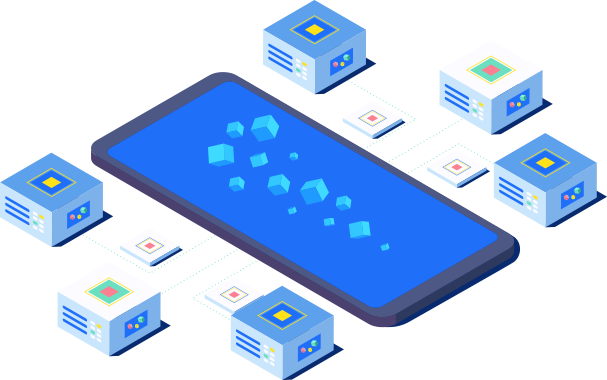
Illustration: AI Model Hosting Costs Compared: Self-Hosted vs API-BasedAPI Pricing: A Detailed Cost Comparison Table
The table below compares current pricing for the leading API-based model providers as of Q4 2025. All costs are expressed in USD per 1 million tokens (1M tokens), the industry-standard unit for AI inference pricing. For context, 1M tokens is roughly equivalent to 750,000 English words — about three full-length novels or 2,500 pages of text.
Provider / Model
Input Cost (per 1M tokens)
Output Cost (per 1M tokens)
Context Window
Batch Pricing Discount
OpenAI GPT-4o
$2.50
$10.00
128K
50% (Batch API)
OpenAI GPT-4o-mini
$0.15
$0.60
128K
50% (Batch API)
OpenAI o1-preview
$15.00
$60.00
128K
N/A
Anthropic Claude 3.5 Sonnet
$3.00
$15.00
200K
50% (Batch)
Anthropic Claude 3 Haiku
$0.25
$1.25
200K
50% (Batch)
Google Gemini 1.5 Pro
$3.50
$10.50
2M
None advertised
Google Gemini 1.5 Flash
$0.075
$0.30
1M
None advertised
OpenAI GPT-4.1
$2.00
$8.00
1M
50% (Batch API)
At first glance, the numbers appear modest. A single 1M-token inference session costs single-digit dollars. But scale matters enormously. A customer support chatbot handling 50,000 conversations per day, each averaging 2,000 tokens of input and 500 tokens of output, generates approximately 125M output tokens per month. On GPT-4o, that translates to $1,250 per month in output costs alone — plus $250 in input costs. Over a year, the API bill totals $18,000. On Gemini 1.5 Flash, the comparable annual cost drops to roughly $2,700 — a 6.7× difference between API providers for the same workload.
Fine-Tuning Surcharges: The Hidden API Multiplier
API providers charge substantial premiums for fine-tuned model inference. OpenAI's GPT-4o fine-tuned variant costs $3.75 per 1M input tokens and $15.00 per 1M output tokens — a 50% surcharge over base pricing. Anthropic does not publicly offer fine-tuning for Claude models as of Q4 2025, though enterprise contracts may include bespoke arrangements. Google's Gemini fine-tuning pricing varies by region and commitment level but typically carries a 20–40% premium. If your use case requires domain-specific model adaptation, these surcharges can materially alter the API-versus-self-hosted calculus, since self-hosted fine-tuned models incur no per-token premium beyond the one-time training cost.
Self-Hosted GPU Infrastructure: Real Costs Per Token
Calculating the per-token cost of self-hosted inference requires accounting for GPU rental cost, throughput (tokens per second), and utilization rate. The formula is deceptively simple but the inputs require careful benchmarking:
Below is a representative cost table for popular open-weight models running on common GPU instances available through Hosting Captain's AI-optimized VPS and dedicated GPU servers:
Model
GPU Instance
Hourly Cost
Tokens/sec (output)
Cost/1M tokens (80% util.)
Cost/1M tokens (50% util.)
Cost/1M tokens (20% util.)
Llama 3.3 70B (INT4)
1× L40S (48GB)
$2.20/hr
~85 tok/s
$0.90
$1.44
$3.60
Llama 3.3 70B (FP16)
2× L40S (48GB)
$4.40/hr
~95 tok/s
$1.61
$2.58
$6.44
Mistral Large 2 (INT4)
1× H100 (80GB)
$4.50/hr
~140 tok/s
$1.12
$1.79
$4.47
DeepSeek-V3 (INT4)
2× H100 (80GB)
$9.00/hr
~110 tok/s
$2.84
$4.55
$11.37
Llama 3.1 8B (FP16)
1× RTX 4090
$1.40/hr
~180 tok/s
$0.27
$0.43
$1.08
Qwen 2.5 72B (INT4)
2× L40S (48GB)
$4.40/hr
~100 tok/s
$1.53
$2.45
$6.12
The critical variable is utilization rate. At 80% GPU utilization (achievable with continuous batch processing and a queued workload), self-hosted Llama 3.3 70B costs $0.90 per 1M tokens — a fraction of GPT-4o's $10.00 output cost. At 20% utilization (sporadic, bursty traffic with long idle gaps), the same setup costs $3.60 per 1M tokens, still cheaper than GPT-4o but with significantly more operational complexity. The economic advantage of self-hosting evaporates entirely if GPU instances sit idle for large portions of the billing cycle.
Quantization Trade-Offs: Quality vs. Cost
The choice between FP16 (full precision), INT8, and INT4 quantization has dramatic cost implications. INT4-quantized models require roughly half the VRAM of their FP16 counterparts, enabling deployment on fewer or cheaper GPUs. Testing by the open-source community and independent benchmarks published by teams aligned with W3C standards for reproducible AI evaluation show that modern INT4 quantization (via AWQ or GPTQ methods) preserves 95–98% of FP16 benchmark performance for models in the 7B–70B parameter range. For most production inference workloads — summarization, RAG, classification, and conversational AI — INT4 represents the optimal cost-quality sweet spot. Reserve FP16 for tasks requiring maximum factual precision, mathematical reasoning, or creative generation where subtle quality degradation is unacceptable.
The Break-Even Analysis: Where Self-Hosting Beats APIs
Deriving the break-even point requires translating API per-token costs into equivalent GPU-hours and comparing against self-hosted infrastructure costs. For this analysis, we compare GPT-4o (representing premium API inference) against self-hosted Llama 3.3 70B INT4 on a single L40S GPU at $2.20/hour.
Monthly Token Volume (output)
GPT-4o API Cost
Self-Hosted (80% util.)
Self-Hosted (50% util.)
Break-Even?
1M tokens (hobbyist)
$10.00
$1,584/mo (GPU cost)
$1,584/mo
API wins decisively
10M tokens (small startup)
$100.00
$1,584/mo
$1,584/mo
API wins
100M tokens (mid-size SaaS)
$1,000.00
$1,584/mo
$1,584/mo
Near break-even
300M tokens (large app)
$3,000.00
$1,584/mo
$1,898/mo
Self-host wins
1B tokens (enterprise scale)
$10,000.00
$1,584–$2,200/mo
$2,534/mo
Self-host wins (5–6× savings)
5B tokens (platform scale)
$50,000.00
$3,168–$6,600/mo
$5,068/mo
Self-host wins (8–15× savings)
The crossover threshold for premium models sits at approximately 100–200 million output tokens per month. Below that volume, API-based inference is cheaper on a pure infrastructure cost basis, even before accounting for operational overhead. Above that threshold, self-hosting generates substantial savings. For models comparable to GPT-4o-mini or Gemini Flash, the crossover point shifts further right — closer to 500M–1B tokens per month — because the API pricing is already so aggressively low that self-hosting struggles to compete on cost alone.
A critical nuance: the break-even analysis above compares cost, not quality. GPT-4o currently outperforms Llama 3.3 70B on many benchmarks including MMLU-Pro, HumanEval, and multi-step reasoning tasks. If your application demands GPT-4o-level intelligence, self-hosting a weaker model to save money is a false economy if it degrades user experience. The cost comparison is only valid if the self-hosted model meets your quality requirements. Conversely, if Llama 3.3 70B or Mistral Large 2 meets your needs, the financial case for migration strengthens considerably.
Hidden Costs That Most Comparisons Miss
Published pricing pages tell only part of the story. Both API-based and self-hosted deployments carry hidden costs that materially impact total cost of ownership. Ignoring these costs is the single most common reason organizations find their AI infrastructure budgets exceeding projections by 40–80% within the first year of operation.
Hidden API Costs: Rate Limits, Latency, and Retry Economics
Rate limit engineering. OpenAI's GPT-4o imposes tiered rate limits starting at 500 requests per minute (RPM) for usage tier 1, scaling to 10,000 RPM at tier 5. Anthropic's Claude enforces similar constraints. If your application bursts beyond these limits, requests queue or fail, necessitating complex retry logic, exponential backoff, and queue management infrastructure. Engineers building these reliability layers cost organizations $50–150/hour, and the ongoing maintenance burden adds 10–20% to the effective cost of API-based architectures for high-throughput applications.
Latency variability. API latency is inherently unpredictable, particularly during peak usage hours when providers experience capacity constraints. GPT-4o's time-to-first-token (TTFT) can vary from 200ms during off-peak hours to 2–3 seconds during high-demand periods. User-facing applications with strict latency SLAs often implement redundant provider routing — calling both OpenAI and Anthropic simultaneously and returning the first response — effectively doubling API costs for latency-sensitive workloads. This redundancy tax is rarely captured in naive cost comparisons.
Fine-tuning and data egress charges. Uploading training datasets to API providers for fine-tuning incurs storage costs ($0.02–$0.05/GB/month). Completed fine-tuned models carry storage fees ($0.03–$0.10/GB/day for the model artifact). When you eventually need to migrate away from a provider, downloading your fine-tuned model weights incurs data egress charges, though OpenAI has recently eliminated egress fees for model downloads on some plans.
Prompt caching variability. Anthropic offers automatic prompt caching that can reduce input costs by 90% for repeated prefixes. OpenAI introduced similar functionality with its Prompt Caching feature in late 2024. However, cache hit rates are application-dependent and difficult to predict in advance. Budgeting for API costs without accounting for caching overestimates costs; budgeting assuming perfect caching underestimates them. Realistic planning requires modeling your specific prompt structure and cache hit rate.
Hidden Self-Hosting Costs: The Iceberg Below the Waterline
GPU idle time. The most significant hidden cost for self-hosting is simply unused GPU capacity. Even with autoscaling, GPU instances typically take 2–5 minutes to provision and initialize with model weights, during which demand must be absorbed by remaining instances or queued. This provisioning lag creates a utilization ceiling: you cannot run at 100% utilization because you need headroom to absorb traffic spikes. Empirical data from production deployments at Hosting Captain shows that most self-hosted inference clusters operate at 40–65% actual utilization over a monthly billing cycle when measured honestly.
Electricity and cooling. For on-premises or colocated GPU deployments, a single H100 node draws approximately 700W under load (GPU plus CPU, memory, and supporting components). At $0.12/kWh — the U.S. commercial average — that translates to roughly $60/month in electricity per GPU. Cooling infrastructure adds 30–50% overhead on top of the compute power draw. For a 4× H100 server, expect $240–$360/month in facility costs beyond the server lease or depreciation. Cloud and managed GPU providers like Hosting Captain bundle these costs into the hourly rate, but on-premise deployments must budget for them explicitly.
Maintenance and DevOps labor. Self-hosting models requires ongoing maintenance: updating model weights when new versions release, managing CUDA and driver compatibility, monitoring inference latency and throughput, debugging GPU memory leaks, and implementing model version rollback procedures. A conservative estimate is 0.25–0.5 FTE of DevOps/MLOps time per cluster of 4–8 GPUs. At a fully loaded cost of $120,000–$180,000/year for a mid-level MLOps engineer, that adds $30,000–$90,000/year in labor overhead that API-based approaches avoid entirely.
Redundancy and high availability. API providers handle failover across availability zones transparently. Self-hosted deployments must implement their own redundancy: at minimum a standby GPU instance in a different physical location to survive a hardware failure or data center outage. This effectively doubles infrastructure costs for production-critical workloads unless you accept downtime risk.
Hybrid Cost Optimization Strategies
The most sophisticated organizations — and those with the lowest effective cost per token — do not choose exclusively between API and self-hosted inference. They deploy hybrid architectures that route each request to the most cost-effective endpoint based on real-time conditions. This section outlines the three most impactful hybrid strategies we have observed across Hosting Captain's enterprise customer base.
Strategy 1: The Tiered Router (Quality-Based Splitting)
Deploy a lightweight routing layer that classifies incoming requests by complexity. Simple queries (summarization, classification, straightforward Q&A) route to a self-hosted Llama 3.1 8B model running on a cost-efficient RTX 4090 instance at $0.27 per 1M tokens. Complex queries requiring advanced reasoning route to GPT-4o or Claude 3.5 Sonnet via API. This pattern typically routes 60–80% of traffic to the self-hosted tier while preserving full quality on the most demanding 20–40% of requests. Organizations implementing this pattern report 50–65% reduction in total inference spend compared to API-only architectures, with negligible quality degradation as measured by user satisfaction scores.
Strategy 2: The Batch Scheduler (Latency-Based Splitting)
Not all inference requests are latency-sensitive. Batch processing workloads — document analysis, dataset labeling, embedding generation for semantic search — can tolerate minutes or hours of processing time. Route real-time synchronous requests to APIs for low latency, and queue batch workloads for processing on self-hosted GPUs during off-peak hours when electricity rates are lower and GPU availability is guaranteed. This strategy maximizes GPU utilization by filling idle time with batch work, pushing effective utilization toward 85–90% and dramatically improving self-hosted economics. OpenAI's Batch API, which offers 50% discounts for workloads completed within 24 hours, can serve as a cost-effective alternative for organizations that cannot justify dedicated GPU infrastructure for batch work alone.
Strategy 3: The Fallback Chain (Cost-Reliability Optimization)
Construct a fallback chain: attempt the cheapest model first, escalate to more expensive models only on failure or low-confidence responses. A typical chain might begin with a self-hosted Llama 3.1 8B, escalate to Llama 3.3 70B on low confidence, and finally fall back to GPT-4o via API for the most challenging requests. Each escalation step is gated by confidence scoring — using log probabilities, output validation, or embedding-based similarity checks. This pattern provides the cost profile of the cheapest model for the majority of traffic while maintaining the quality ceiling of the most capable model as a safety net. Implementing confidence-based escalation can reduce API costs by 40–60% while maintaining equivalent end-user task completion rates.
Strategy 4: Spot and Preemptible GPU Instances
Cloud providers including AWS, GCP, and Azure offer spot GPU instances at 60–80% discounts relative to on-demand pricing, with the caveat that instances can be terminated with 30–120 seconds of notice. For stateless inference workloads with proper checkpointing and graceful degradation logic, spot instances represent an underutilized cost optimization lever. A self-hosted Llama 3.3 70B deployment on spot H100 instances can achieve effective costs of $0.90–$1.80 per GPU-hour — approaching 40–60% below the already-competitive on-demand pricing. Hosting Captain offers preemptible GPU instances with guaranteed notice periods, bridging the gap between spot-market pricing and production reliability requirements.
Decision Framework: A Practical Guide to Choosing Your Path
After analyzing costs across hundreds of production AI deployments, we have distilled the decision into a structured framework that accounts for volume, latency requirements, quality sensitivity, and operational maturity. Answer the following questions to identify your optimal deployment strategy:
The Decision Matrix
Your Profile
Monthly Token Volume
Latency Sensitivity
Recommended Approach
Estimated Monthly Cost
Early-stage startup / hobbyist
< 10M output tokens
Moderate
API only (GPT-4o-mini or Gemini Flash)
$6–$100
Growing SaaS (10–100 DAU)
10M–200M output tokens
Moderate–High
API primary + batch to self-hosted
$100–$3,000
Mid-market application
200M–1B output tokens
Moderate
Self-hosted primary + API fallback
$2,000–$6,000
Enterprise platform
> 1B output tokens
Low–Moderate (batch OK)
Self-hosted fleet (multi-GPU)
$5,000–$15,000
Latency-critical real-time app
Any volume
< 300ms TTFT required
Self-hosted edge deployment
$2,500–$8,000
Regulated industry (HIPAA, SOC2)
Any volume
Moderate
Self-hosted (private GPU cluster)
$3,000–$12,000
When APIs Are the Clear Winner
Your monthly token volume is below 100M output tokens. The operational overhead of managing GPU infrastructure outweighs the potential savings at this scale.
Your traffic is highly variable or unpredictable. If you cannot forecast demand within a 2× band a month in advance, the flexibility of API pricing is worth the premium.
You lack in-house MLOps expertise. GPU driver management, CUDA compatibility, model quantization, and inference server configuration require specialized skills that are expensive to hire and retain.
Your quality requirements demand frontier models. As of Q4 2025, no open-weight model matches GPT-4o or Claude 3.5 Sonnet on the most demanding reasoning benchmarks. If your use case requires that level of intelligence, APIs are the only game in town — and the quality premium is non-negotiable.
You need rapid experimentation with minimal upfront commitment. Prototyping and iterating on prompts, model selection, and pipeline architecture is dramatically faster with APIs. Optimize for speed of learning before optimizing for cost.
When Self-Hosting Is the Right Call
Your token volume exceeds 200–300M output tokens per month. At this scale, self-hosting generates 3–8× cost savings even after accounting for operational overhead.
You require consistent sub-200ms latency. API latency jitter makes it impossible to guarantee tight latency SLAs. Self-hosted inference on edge-deployed GPUs can achieve predictable TTFT in the 50–150ms range.
Data sovereignty or regulatory compliance requires on-premise or private cloud deployment. Healthcare, financial services, and government applications often mandate that data never leaves controlled infrastructure. Self-hosting is not a cost decision here — it is a compliance necessity.
You are fine-tuning models extensively and frequently. Organizations that retrain weekly or deploy dozens of fine-tuned variants will find API fine-tuning surcharges compounding to unsustainable levels.
You have predictable, sustained inference demand. Continuous batch processing workloads with queued jobs that can absorb 24/7 GPU capacity achieve the highest utilization rates and thus the lowest effective cost per token.
The Migration Path: Start API, Graduate to Self-Hosted
The pattern we most frequently recommend at Hosting Captain is a phased migration: begin your AI journey exclusively on APIs to validate product-market fit and establish baseline token consumption patterns. Once you have three to six months of stable usage data demonstrating sustained volume above 150M tokens per month, begin transitioning latency-tolerant workloads to self-hosted infrastructure. Maintain APIs as a fallback and for handling traffic spikes that exceed your self-hosted capacity. Over 12–18 months, gradually shift the self-hosted share upward as your team builds MLOps competency and your usage patterns become more predictable. This phased approach minimizes risk while capturing the majority of cost savings within the first year.
The AI hosting landscape is evolving rapidly. The emergence of AI-powered search and AI overviews is already reshaping how users discover hosting providers and technical content, creating new demand patterns that affect inference volume forecasting. Staying informed about both infrastructure costs and the broader AI ecosystem is essential for making durable architectural decisions.
Frequently Asked Questions
What is the cheapest way to run AI inference at low volume?
For monthly volumes under 10M output tokens, API-based services like Google Gemini 1.5 Flash ($0.30/1M output tokens) or OpenAI GPT-4o-mini ($0.60/1M output tokens) are the most cost-effective option. At these volumes, the fixed cost of GPU infrastructure exceeds total API spend, and the operational simplicity of APIs eliminates the need for specialized DevOps resources. A hobbyist processing 1M tokens per month would spend $0.30–$10.00 via API versus a minimum of $1,000–$1,600/month for a dedicated GPU instance.
At what token volume does self-hosting become cheaper than OpenAI GPT-4o?
The crossover threshold is approximately 100–200 million output tokens per month when comparing GPT-4o against self-hosted Llama 3.3 70B on a single L40S GPU. Below this volume, API pricing is cheaper. Above it, self-hosting generates savings of 3–8×. However, this comparison assumes the self-hosted model meets your quality requirements. If your application genuinely requires GPT-4o-level reasoning capability, self-hosting a weaker model is not a true substitute regardless of cost savings.
What are the hidden costs of using AI APIs that pricing pages do not show?
The primary hidden API costs include: rate limit engineering and queue management infrastructure (10–20% overhead for high-throughput apps), latency variability requiring redundant provider routing (effectively doubling costs for latency-sensitive workloads), fine-tuning model storage fees ($0.03–$0.10/GB/day), data egress charges when migrating providers, and prompt caching unpredictability that makes cost forecasting difficult. Organizations should budget 15–30% above raw per-token pricing to account for these ancillary costs in production deployments.
How much does electricity and cooling add to self-hosted AI inference costs?
For on-premise or colocated GPU deployments, electricity costs approximately $60/month per H100-class GPU at U.S. average commercial electricity rates ($0.12/kWh). Cooling infrastructure adds 30–50% overhead, bringing total facility costs to $80–$90/month per GPU. For a 4× H100 server, expect $320–$360/month in combined electricity and cooling costs beyond the hardware lease or depreciation. Cloud GPU providers and managed hosting services like Hosting Captain bundle these facility costs into the hourly GPU rate, simplifying budgeting for organizations that prefer not to manage physical infrastructure.
Is it possible to use both API and self-hosted models simultaneously?
Yes, and this hybrid approach is the most cost-effective strategy for the majority of organizations processing more than 50M tokens per month. A tiered routing architecture sends simple queries to self-hosted models (60–80% of traffic) and complex queries to API-based frontier models (20–40% of traffic), achieving 50–65% total cost reduction compared to API-only deployments without sacrificing quality on demanding requests. Implementation requires a lightweight routing layer with confidence scoring to determine which model handles each request.
What GPU should I rent for self-hosting Llama 3.3 70B or Mistral Large?
For INT4-quantized Llama 3.3 70B, a single NVIDIA L40S (48GB VRAM) provides sufficient capacity at approximately $2.20/hour, delivering ~85 tokens/second of output throughput. For Mistral Large 2 (INT4), an H100 (80GB) at ~$4.50/hour is recommended due to the model's architectural requirements and larger parameter count. For FP16 precision variants, double the GPU count — two L40S instances for Llama 3.3 70B or two H100 instances for Mistral Large 2. Hosting Captain offers pre-configured GPU instances optimized for these specific model profiles, eliminating the need for manual CUDA and inference server setup.
Does model quantization significantly degrade output quality for production use?
Modern INT4 quantization methods (AWQ, GPTQ) preserve 95–98% of FP16 benchmark performance for LLMs in the 7B–70B parameter range, making INT4 suitable for most production inference workloads including summarization, RAG, classification, and conversational AI. The quality degradation is most noticeable in tasks requiring precise factual recall, multi-step mathematical reasoning, or nuanced creative writing. For those use cases, INT8 or FP16 precision is warranted despite the higher GPU cost. Organizations should benchmark quantized models against their specific task requirements rather than relying solely on published benchmarks, as degradation patterns vary by use case.
How do I forecast my monthly token consumption before launching an AI feature?
Start by defining your expected user interaction model: number of daily active users, average interactions per user per day, and average tokens per interaction (input + output). A customer support chatbot handling 1,000 conversations per day with 2,000 input tokens and 500 output tokens per conversation generates approximately 15M output tokens per month. Multiply by your projected user growth rate over 6–12 months. Add a 20–30% buffer for prompt engineering iteration, retries, and unexpected usage spikes. If the projected volume exceeds 150–200M output tokens per month within the forecast window, begin planning for self-hosted infrastructure alongside your API launch. Hosting Captain offers token forecasting tools as part of our AI hosting consultation process to help organizations right-size their initial infrastructure.
Can I use spot or preemptible GPU instances for production AI inference?
Yes, with proper engineering. Spot GPU instances offer 60–80% discounts but can be terminated with short notice (30–120 seconds). For stateless inference workloads — where each request is independent and no long-lived session state is maintained on the GPU — spot instances are viable if you implement graceful degradation: checkpoint model loading state, maintain a warm standby on on-demand instances, and use request-level retry logic to reroute traffic when spot instances are reclaimed. Some organizations run 70–80% of their self-hosted inference on spot instances and maintain on-demand capacity for the remaining 20–30% to absorb spot interruptions. Hosting Captain offers preemptible GPU instances with guaranteed 60-second termination notice, providing a middle ground between spot-market pricing and production reliability.
Is AI inference pricing likely to decrease significantly in 2026?
Yes, the trend is strongly deflationary. API inference costs have declined approximately 80–90% since GPT-4's launch in March 2023, driven by model efficiency improvements, hardware advances (NVIDIA Blackwell, AMD MI300X, custom inference chips), and intensifying competition among providers. Self-hosted GPU costs are also declining as newer, more efficient GPU architectures enter the market and competition among cloud GPU providers intensifies. However, absolute costs are likely to stabilize as models grow in capability and organizations increase usage volume to match declining per-token prices. The most durable cost strategy is building architecture-agnostic inference pipelines that can route to the most cost-effective provider or model at any given moment, rather than committing to a single vendor or deployment model based on today's pricing.
This analysis is based on publicly available pricing data as of November 2025 and Hosting Captain's operational experience managing AI inference infrastructure for enterprise customers. Pricing is subject to change. For a personalized cost analysis of your specific AI inference workload, contact the Hosting Captain team for a complimentary infrastructure consultation.
Arjun Mehta is a cloud infrastructure consultant specializing in bare-metal architectures, network routing, and high-traffic database clustering.
Frequently Asked Questions
This guide covers the practical decision points — pricing, performance, and when it makes sense for your situation — based on current 2026 data.
Pricing varies by provider and plan tier; see the cost breakdown section above for current ranges and what's actually included at each price point.
Look closely at uptime guarantees, renewal pricing (not just the first-year discount), and how responsive support actually is — all covered in detail in this article.
Hosting Captain has been exceptional for my e-commerce store in Pune. The NVMe SSD speed is
noticeable, and their support team responds within minutes. Highly recommended for any
Indian business!
Ryan John, Pune
Great Value for Money
Switched from a US-based host to Hosting Captain and my website loads 3x faster for Indian
visitors. The free SSL and cPanel are great, and the pricing is unbeatable. Very satisfied
customer!
Priya Mehta, Mumbai
Reliable VPS Hosting
I've been using their VPS plan for 2 years now. 99.9% uptime is not just a claim — it's
reality. My client projects run without interruption. The KVM virtualization gives me full
control I need.
Amit Kumar, Bangalore
Excellent 24/7 Support
The support team helped me migrate my entire WordPress site at 2 AM without any downtime.
This level of service is rare in Indian hosting. Worth every rupee!
Sunita Patel, Ahmedabad
Perfect for Startups
As a startup, budget matters. Hosting Captain's Business plan covers everything we need —
multiple websites, free SSL, daily backups — at a fraction of what international hosts
charge.
Vikram Singh, Delhi
Professional Dedicated Server
Our high-traffic news portal needed a dedicated server. Hosting Captain's DS Business plan
handles 100K+ daily visitors effortlessly. Their team provisioned everything within 4 hours!
Meena Krishnaswamy, Chennai
Trusted Technologies & Partners
Start Your Website with Hosting Captain
From personal blogs to enterprise solutions, we've got you covered!