What Makes Cloud Hosting and VPS Hosting Fundamentally Different Architectures
The Single Server vs. the Distributed System
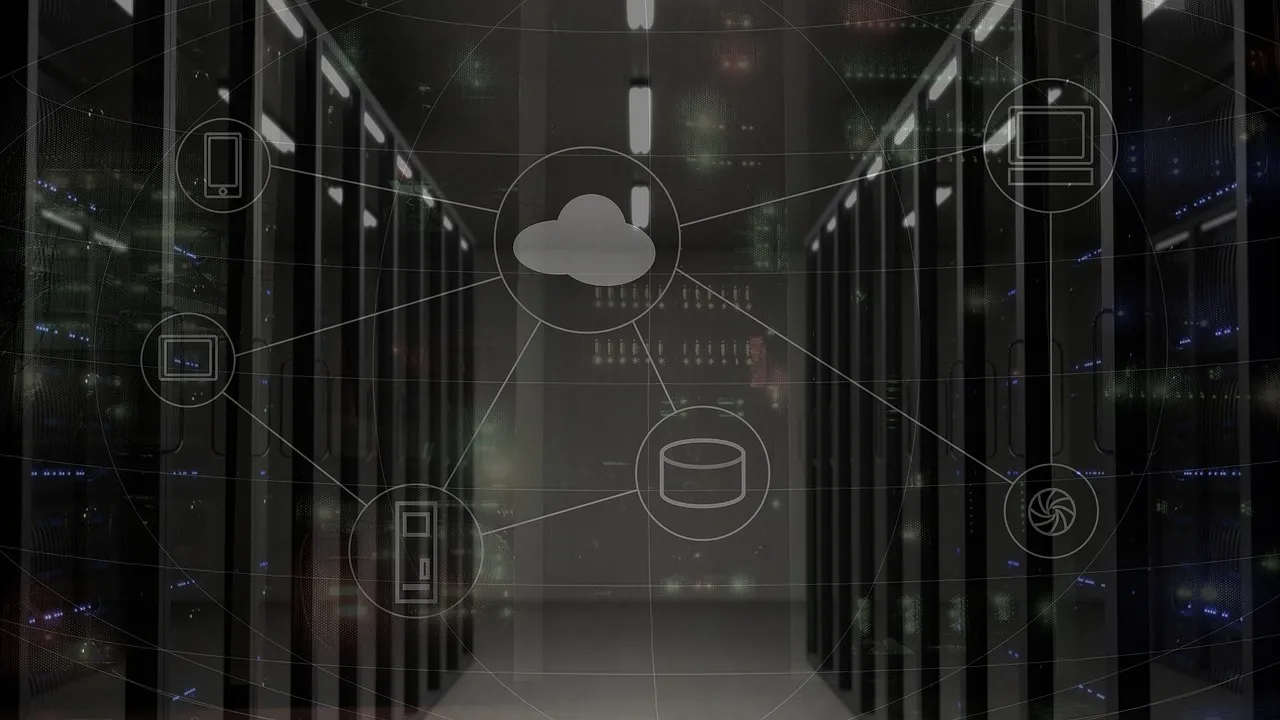
When a hosting comparison article puts a cloud hosting plan next to a VPS plan and compares their price, RAM allocation, and storage capacity as though they are equivalent products distinguished only by the marketing label, it misses the architectural distinction that determines everything about how each hosting model scales, fails, recovers, and costs money over time. A VPS is a virtual machine running on a single physical server, allocated a fixed portion of that server's CPU cores, RAM, and storage, with all of those resources drawn from one machine in one rack in one data center. If that physical server loses power, suffers a motherboard failure, or experiences a network switch outage, every VPS on that machine goes offline simultaneously and stays offline until the hardware is repaired or the VPS instances are migrated to a different physical host — a process that takes minutes to hours. A cloud hosting vs vps comparison must begin with this architectural reality: cloud hosting is a distributed system where your website's compute, storage, and network resources are abstracted across multiple physical servers, often across multiple racks and sometimes across multiple data centers, and the failure of any single physical component does not cause a service outage because the cloud platform redistributes the workload across the remaining healthy infrastructure automatically.
This architectural distinction has profound implications for scalability that extend well beyond the simple question of "can I upgrade to a bigger plan?" On a VPS, scaling up — moving to a larger instance with more vCPUs, more RAM, and more storage — involves a resize operation that requires powering down the virtual machine, reallocating resources, and powering it back on. This operation takes minutes, during which the website is offline, and the resulting upgraded VPS is still a single point of failure — a larger, more capable single point, but a single point nonetheless. On cloud hosting platforms, scaling up can be nearly instantaneous and, in many cases, does not require downtime at all because the workload can be shifted to other nodes while the instance being resized is temporarily unavailable. More fundamentally, cloud hosting enables scaling out — adding additional server instances that run alongside the existing instances, distributing the workload horizontally across multiple machines — which is a capability that VPS hosting fundamentally cannot provide without you manually provisioning additional VPS instances, configuring a load balancer, and building a clustered architecture yourself. The cloud platform provides horizontal scaling as an integrated feature; the VPS requires you to build it. Cloudflare's explanation of cloud computing provides the foundational concepts of resource pooling, elasticity, and on-demand self-service that define cloud platforms, and these concepts are the building blocks of the scalability comparisons that follow.
In my fifteen years managing hosting infrastructure for businesses ranging from single-founder startups to enterprise organizations with millions of monthly visitors, I have repeatedly observed the same pattern: a growing website starts on a VPS, the VPS handles the growth well for months or years, and then the site reaches a scale where a single server — no matter how large — cannot handle peak traffic without degrading performance or risking a complete outage if that single server fails. That is the moment when the architectural limitations of VPS hosting become impossible to ignore and the distributed architecture of cloud hosting becomes not a premium option but a necessity. This guide maps out the entire journey, from the smallest VPS to the most resilient cloud architecture, so you understand at each stage what your hosting can handle, what it cannot, and what the next step costs in both money and operational complexity. For context on where dedicated servers fit into this scalability spectrum, our dedicated server guide covers the single-tenant physical server option that occupies the space between large VPS instances and cloud platforms.
Vertical Scaling: How VPS Hosting Grows (and Where It Stops Growing)
The Resource Ceiling Inherent in Single-Server Architectures
Vertical scaling — increasing the resources available to a single server — is the only scaling mechanism available on a VPS without building a multi-server architecture yourself, and it is subject to a hard ceiling determined by the physical hardware that hosts your virtual machine. A cloud provider can offer a VPS with 16 vCPUs and 64 GB of RAM because the physical server underlying that VPS has at least 32 CPU threads and 128 GB of RAM, allowing two such VPS instances per physical host with room for the hypervisor overhead. But as the VPS size increases, it eventually reaches a point — typically around 32 to 64 vCPUs and 128 to 256 GB of RAM — where the virtual machine requires an entire physical server to itself, at which point the VPS pricing converges with bare-metal dedicated server pricing, and the economic advantage of virtualization (resource sharing across multiple tenants on one physical machine) evaporates. This is the vertical scaling ceiling: beyond a certain size, there is no larger VPS plan available because no physical server exists that has enough resources to virtualize a meaningfully larger instance while still sharing with other tenants.
The vertical scaling ceiling is not a theoretical limit reserved for the largest websites; it is a constraint that businesses encounter earlier than expected because traffic is not evenly distributed across time. A VPS sized adequately for average daily traffic — say, 4 vCPUs and 8 GB of RAM — might handle the ninety-fifth percentile of traffic comfortably but collapse under the ninety-ninth percentile, which for many businesses occurs during seasonal peaks (Black Friday for e-commerce, tax season for financial services, back-to-school for educational platforms) that are predictably much higher than average. Resizing the VPS to handle the ninety-ninth percentile means paying for capacity that sits idle ninety-nine percent of the time — a fundamentally inefficient use of resources that cloud hosting's elastic scaling model is designed to solve. The alternative on a VPS-based architecture is a multi-VPS cluster with manual load balancing, which we address in the scaling-out section below, but that architecture is operationally complex to build and maintain compared to the integrated scalability features of cloud platforms.
What VPS Scaling Looks Like in Practice: Migrations, Downtime, and Data Risk
The process of vertically scaling a VPS is conceptually simple — choose a larger plan, initiate the resize, wait for it to complete — but the operational reality involves trade-offs that are not apparent from the pricing page. A typical VPS resize requires powering down the virtual machine, meaning the websites and services running on that VPS are offline for the duration of the migration. The migration itself involves copying the virtual machine's disk image to new hardware or reallocating resources on the existing physical host, which for a lightly loaded VPS with 25 GB of data might take five minutes, but for a heavily loaded VPS with 200 GB of data might take thirty to sixty minutes. During this window, the site is offline — not degraded, not slow, but completely unavailable — and that downtime occurs during the exact moment when you are resizing because the site has grown beyond its current capacity, meaning the downtime is happening precisely when traffic is highest and every minute offline costs real revenue. This is the operational irony of VPS scaling: you resize because you need more capacity, but the resize itself causes an outage at the worst possible time.
Data risk during VPS resizing is low on reputable providers that perform a snapshot before the resize operation, but it is not zero. If the resize operation fails — due to a storage subsystem error, a hypervisor bug, or a configuration conflict — the provider restores from the pre-resize snapshot, which may have been taken an hour or more before the resize was initiated depending on the provider's snapshot scheduling. Any data written to the VPS between the snapshot and the failed resize is lost, and while the probability of a failed resize is low on modern infrastructure (well under one percent), the consequence of data loss at the wrong moment — an e-commerce store losing the last hour of Black Friday orders, a SaaS platform losing customer data created during a signup promotion — is disproportionate to the probability. Hosting Captain recommends performing a manual backup immediately before initiating any VPS resize, regardless of the provider's automated snapshot policy, because the five minutes to generate and verify a manual backup is trivial compared to the cost of unrecoverable data.
Illustration: Cloud Hosting vs VPS Hosting: Scalability ComparedHorizontal Scaling: The Capability That Defines Cloud Hosting
Scaling Out Instead of Scaling Up
Horizontal scaling — adding more server instances rather than making the existing instance larger — is the architectural capability that separates cloud hosting from VPS hosting at the most fundamental level, because it transforms your hosting infrastructure from a single server that can fail into a distributed system that survives individual server failures without service interruption. On a cloud platform, when traffic increases beyond what a single server instance can handle, the platform provisions additional instances automatically (if you have configured auto-scaling) or manually with a few clicks, and a load balancer distributes incoming traffic across all instances. The key operational difference from VPS vertical scaling is that adding instances does not require downtime: the new instances are provisioned alongside the existing ones, the load balancer begins sending them traffic as soon as they report healthy, and the original instance continues serving requests throughout the process. At no point is the website offline, and the scaling operation can be performed at any time — including during peak traffic — without affecting current visitors.
The cloud platform services that enable horizontal scaling are: compute instances (virtual machines or containers that run your application code), a load balancer (distributing traffic across instances and performing health checks to detect failed instances), shared storage (object storage like Amazon S3 or block storage volumes that multiple instances can access, ensuring that user-uploaded files, session data, and shared assets are available to every instance), and a managed database service (a separate database cluster that all application instances connect to, rather than a database running on one of the application instances). These components interact in a specific architecture: the load balancer sits at the edge, receiving all incoming traffic and distributing it to the application instances based on the configured algorithm (round-robin, least-connections, or more sophisticated schemes). Each application instance runs identical code and configuration, making them interchangeable — the load balancer can send any request to any instance, and the response will be correct. Shared storage ensures that stateful data (uploads, sessions, caches) is consistent across all instances. The managed database provides a single logical database that all instances query, with its own scaling and high-availability configuration independent of the application layer. For a detailed comparison of managed database and dedicated server options across providers, our dedicated server provider comparison covers the infrastructure tier where high-performance databases often live, and the same selection criteria apply when choosing a managed database service in the cloud.
Auto-Scaling: The Automation That Eliminates Capacity Planning
Auto-scaling is the cloud platform feature that automatically adjusts the number of running application instances based on observed demand metrics — CPU utilization, request rate, response latency, or custom metrics published by the application — within bounds you define (minimum and maximum instance counts). When the observed metric crosses a threshold — CPU utilization above seventy percent across all instances for five consecutive minutes, for example — the auto-scaling system provisions one or more new instances, waits for them to become healthy, and registers them with the load balancer. When the metric drops below a lower threshold — CPU below thirty percent for fifteen minutes — the system terminates instances to reduce cost. This automation means you do not need to predict traffic, manually provision capacity before known events, or wake up at 3 a.m. to add instances during an unexpected viral spike; the platform responds to actual demand automatically, ensuring that your site has enough capacity to serve current traffic without paying for idle capacity during quiet periods.
The operational nuance of auto-scaling that is frequently misunderstood by first-time cloud users is that auto-scaling is not instantaneous — provisioning a new instance, booting the operating system, deploying the application code, and registering with the load balancer takes one to three minutes on most cloud platforms, and during those minutes, the existing instances must absorb the full traffic load without the relief that the new instances will eventually provide. This provisioning lag means that auto-scaling thresholds must be set conservatively: if you trigger scaling at ninety percent CPU utilization, the existing instances will hit one hundred percent and begin degrading performance before the new instances are ready, resulting in a period of degraded service for everyone who visits during the provisioning window. The correct threshold triggers scaling when resources are at sixty to seventy percent of capacity, giving the provisioning process time to complete before the existing instances are overwhelmed. This threshold selection, combined with a minimum instance count that handles baseline traffic (so that there is always at least one instance running during the provisioning window when scaling from zero), is the operational art of auto-scaling configuration, and cloud platforms provide the tools (scaling policies, cooldown periods, step adjustments) to tune this behavior for each application's specific traffic patterns. For background on the broader AI infrastructure that increasingly manages these scaling decisions, our AI hosting guide explains the predictive technologies that are beginning to anticipate demand before it arrives, reducing or eliminating the provisioning lag window.
Cost Comparison: Cloud vs VPS Over the Full Traffic Spectrum
The Cost Crossover Point Where Cloud Becomes Cheaper Than Over-Provisioned VPS
The standard narrative that VPS hosting is cheaper than cloud hosting is true at the low end of the traffic spectrum — a $20 per month VPS with 4 GB of RAM provides more raw resources than a $20 per month cloud compute allocation — but it becomes false as traffic grows and the cost of over-provisioning a VPS for peak demand exceeds the cost of cloud auto-scaling that matches resources to demand in real time. The crossover point depends on the ratio of peak traffic to average traffic for the specific website: a site with a peak-to-average ratio of 2x (busiest hour is twice as busy as the average hour) will find VPS hosting more economical than cloud for longer than a site with a ratio of 10x, because the VPS must be sized for the peak and the amount of wasted capacity during average traffic is relatively modest at 2x but enormous at 10x.
Consider a concrete example. A website averages 500 requests per minute across the month but peaks at 2,500 requests per minute during weekday afternoons and occasionally spikes to 5,000 requests per minute during marketing campaigns. On a VPS, the server must be sized to handle at least 5,000 requests per minute, requiring a plan with 8 vCPUs and 16 GB of RAM at approximately $80 per month — and for the vast majority of the month, that server operates at twenty percent utilization or less. On a cloud platform with auto-scaling, the baseline configuration might be two small instances at $15 per month each ($30 total) that handle the average 500 requests per minute, scaling up to six instances ($90 total) during the 2,500 peak and ten instances ($150 total) during the 5,000 spikes. The cloud setup costs more during peaks but less during the majority of the month, and the total monthly cloud bill might be $40 to $60 — less than the VPS — because the spikes are brief and the billing is metered by the hour rather than committed monthly. This arithmetic varies by provider, by traffic pattern, and by the instance types selected, but the principle is consistent: when peak traffic significantly exceeds average traffic, cloud hosting's elastic pricing can be cheaper than VPS hosting's fixed pricing, and you must calculate the total cost based on your actual traffic patterns rather than comparing the per-hour rates of identically specified instances.
Understanding Cloud Billing: What Makes It Predictable (and What Does Not)
Cloud hosting bills are metered — you pay for compute instances by the second or hour, data transfer by the gigabyte, storage by the gigabyte-month, and load balancing by the hour plus data processed. This metering model is simultaneously the source of cloud hosting's cost efficiency (you pay only for what you use) and the source of billing anxiety that keeps some site owners on fixed-price VPS plans (you do not know exactly what you will pay until the end of the month). Mitigating this anxiety requires understanding which charges are predictable and which are variable, and configuring the platform to cap the variable charges at a level you are willing to pay.
Predictable cloud charges are those under your direct control: the baseline instance count (you decide the minimum number of instances that run continuously), the instance types (you select the CPU and RAM specification, which determines the per-hour rate), and the storage allocation (you decide how many gigabytes of persistent storage to provision). Variable cloud charges are those driven by external demand: the number of instances auto-scaling provisions during traffic spikes (you set a maximum, which caps this cost), the volume of data transferred out to the internet (you can estimate this from your site's bandwidth usage but cannot control it without throttling or rate-limiting), and the number of load balancer hours and data units processed (a function of traffic volume). Hosting Captain recommends setting auto-scaling maximum instance counts conservatively — enough to handle your historically observed peak traffic plus a twenty percent buffer, not an arbitrarily high number — and monitoring data transfer costs during the first month on a cloud platform to establish a baseline before committing production traffic. Most cloud platforms provide budget alerts that notify you when your projected monthly spend exceeds a threshold you define, allowing you to investigate and intervene before a billing surprise materializes at month-end. For sites with traffic patterns suited to dedicated infrastructure, our Mumbai dedicated server guide covers enterprise hosting in the Indian market, and the fixed-cost model contrasts usefully with cloud metering for organizations that prefer billing predictability over elasticity.
Reliability and High Availability: The Uptime Implications of Each Architecture
How a VPS Fails and How a Cloud Platform Survives Failure
The reliability difference between VPS and cloud hosting is not a matter of probability — a well-managed VPS on quality infrastructure can achieve uptime comparable to a cloud platform under normal conditions — but of failure mode. When a VPS fails, the failure is total and the recovery is manual or semi-automated: the server goes offline, all websites and services on it become unavailable, and the provider's monitoring system detects the failure and either attempts to restart the virtual machine on the same physical host or initiates a migration to a different host. This recovery process takes minutes to hours, during which the site is offline, and the provider's SLA generally credits you a prorated amount of your monthly fee — a number that is almost always trivially small compared to the revenue lost during the outage. When a cloud platform experiences a single-server failure — one physical host among dozens in a cluster — the applications running on that host are automatically rescheduled onto other hosts by the orchestration layer, and if the application is deployed across multiple instances (as horizontal scaling enables), the traffic that was routing to the failed instance is redirected to the surviving instances by the load balancer. The service remains available; visitors experience no interruption; the failed instance is replaced automatically, and the operators receive an alert to investigate the root cause on their own schedule rather than under the pressure of a production outage.
Multi-zone and multi-region deployment — running application instances and database replicas across physically separate data centers — is the reliability capability that differentiates enterprise cloud architectures from both VPS hosting and single-zone cloud deployments. A cloud region is a geographic area containing multiple isolated data centers (availability zones) connected by low-latency, high-bandwidth networking. Deploying your application across multiple availability zones within a region protects against failures that affect an entire data center — power loss, cooling failure, network equipment malfunction, natural disaster — because the load balancer detects that instances in one zone have become unhealthy and routes all traffic to instances in the remaining zones. Multi-region deployment extends this protection to cover entire regional failures, at the cost of increased latency between regions and data replication complexity. Neither capability is available on a VPS without you manually provisioning multiple VPS instances in different data centers and building the failover logic yourself — a project that requires deep networking and systems engineering expertise and is rarely attempted by organizations below enterprise scale.
The Cost of Downtime and the Economics of Redundancy
The decision between VPS and cloud hosting often reduces to a calculation that is rarely made explicit: how much revenue does an hour of downtime cost, and how does that cost compare to the premium of a highly available cloud architecture? For a content website generating $2,000 per month in advertising revenue, an hour of downtime costs approximately $2.78 in lost ad impressions — a cost that does not justify a cloud architecture whose redundancy features add $50 to $100 per month to the hosting bill. For an e-commerce site generating $50,000 per month in revenue, an hour of downtime during peak shopping hours costs roughly $69 in direct lost sales (assuming revenue is evenly distributed across the month) plus the harder-to-quantify cost of customers who abandon their carts and never return — a combined cost that justifies cloud redundancy many times over. The breakpoint where cloud high availability becomes economically rational is different for every business, and it depends on the tolerance for downtime baked into the customer relationship: a SaaS platform whose customers expect five-nines (99.999%) uptime has a lower tolerance and therefore a lower breakpoint than a local restaurant whose website going down for an afternoon inconveniences a few dozen potential diners but does not damage the core business.
Between the extremes of a single VPS and a multi-region cloud deployment, there exists a spectrum of intermediate architectures that provide increasing reliability at increasing cost. A single VPS with automated off-site backups provides basic recoverability — the server may go down, but data is not lost. A pair of VPS instances with a floating IP and manual failover provides faster recovery — when the primary fails, a manual action or simple script reassigns the IP to the secondary, reducing downtime from hours to minutes. A cluster of VPS instances behind a cloud load balancer with shared storage provides automated recovery — the load balancer detects failed instances and routes around them without human intervention. Each step up this ladder requires more operational expertise and more infrastructure cost, and the cloud platform's integrated services — managed load balancers, managed databases with automatic failover, instance auto-replacement — collapse the operational complexity of these architectures into configuration choices rather than engineering projects. This is the value proposition of cloud hosting in the reliability dimension: it is not that cloud platforms can achieve uptime levels impossible on VPS infrastructure, but that they make high-availability architectures accessible to teams that do not have the systems engineering expertise to build them from scratch.
Migration Paths: When to Move from VPS to Cloud (and How)
The Technical and Operational Signals That Indicate It Is Time to Migrate
The decision to migrate from a VPS to a cloud platform should be driven by operational signals, not by a vague sense that "cloud is the future" or by a competitor's marketing. The primary signals are: recurring resource exhaustion during peak traffic that a VPS resize cannot economically solve because the peak-to-average ratio makes paying for peak capacity year-round wasteful; the need for geographic distribution because your audience has globalized and a single server in one data center cannot deliver acceptable latency to visitors on other continents; the need for automated failover because your business now depends on near-continuous availability and even brief outages cause measurable revenue loss or customer churn; and the operational burden of managing infrastructure at scale — when you are manually managing more than three to five VPS instances, the time spent on server administration has crossed the threshold where cloud platform automation provides a meaningful return on investment in the form of reclaimed engineering hours.
The migration from VPS to cloud is fundamentally a re-architecture exercise, not a lift-and-shift operation. A website that runs on a single VPS with the web server, database, file storage, and application code all co-located on one machine cannot simply be copied to a cloud instance and expected to scale horizontally, because that architecture assumes a single-server model where the database and files are accessible via localhost rather than over the network. The migration requires decomposing the monolithic VPS into separate services: the database moves to a managed database service, uploaded files move to object storage (S3 or compatible), session state moves to a shared cache (Redis or Memcached) accessible from all instances, and the application code is packaged into a deployable artifact that can be provisioned onto newly launched instances automatically. This decomposition is the technical work that makes horizontal scaling possible, and it is work that must be done regardless of whether you are moving to a cloud platform or building a multi-VPS cluster — the cloud platform provides the services that make the decomposed architecture manageable, but the decomposition itself is the migration's core engineering challenge. For those evaluating whether this complexity is justified versus alternative approaches like vertically scaling a dedicated server, our dedicated server provider comparison offers the counterpoint analysis.
Hybrid Architectures: The Practical Middle Ground
Between the extremes of a single VPS and a fully cloud-native architecture, hybrid approaches provide pragmatic intermediate steps that deliver specific cloud benefits without requiring a complete re-architecture. The most common hybrid pattern is a VPS for the application layer paired with cloud services for specific functions: a VPS running the web server and application code, but using a managed cloud database service instead of a local MySQL installation; or a VPS as the origin server paired with a cloud CDN that caches and serves the majority of traffic at the edge; or a pair of VPS instances behind a cloud load balancer that provides automated failover without requiring the full application decomposition needed for horizontal auto-scaling. These hybrid approaches extract specific value from cloud services — managed database reliability, CDN performance, load balancer failover — while preserving the simplicity and fixed-cost predictability of the VPS application layer. Hosting Captain frequently recommends hybrid architectures for businesses that have outgrown a single VPS but whose traffic patterns or team size do not yet justify a full cloud-native re-architecture.
Frequently Asked Questions
Which is cheaper — cloud hosting or VPS?
At the low end of the traffic spectrum, VPS hosting is typically cheaper because a $20 VPS provides more raw resources than $20 buys on a cloud platform. However, as traffic grows and the peak-to-average ratio increases, cloud hosting can become cheaper because its elastic pricing matches resources to actual demand rather than requiring you to provision for peak traffic at all times. The crossover point depends on your specific traffic pattern and should be calculated based on your actual metrics rather than assumed from general comparisons.
Can a VPS handle the same traffic as cloud hosting?
A single VPS can handle the same traffic as a single cloud instance of equivalent specification — both are virtual machines with comparable CPU, RAM, and I/O characteristics. The difference is that when traffic exceeds what a single instance can handle, cloud hosting enables adding more instances (horizontal scaling) while VPS hosting requires upgrading to a larger single instance (vertical scaling), which eventually hits a ceiling determined by available physical hardware. The maximum traffic capacity of a cloud architecture is effectively unbounded within the provider's regional capacity; the maximum capacity of a VPS is bounded by the largest available plan size.
How difficult is it to set up auto-scaling on a cloud platform?
Configuring auto-scaling on a cloud platform requires defining a launch template (the instance configuration — operating system image, instance type, startup script that deploys the application), an auto-scaling group (minimum and maximum instance counts, which availability zones to use), and a scaling policy (which metric triggers scaling — typically CPU utilization — and the threshold values). For an application already designed for horizontal scaling (stateless, with shared storage and a separate database), this configuration is moderately complex but well-documented, and an experienced developer can set it up in a day. For an application not designed for horizontal scaling, the application re-architecture required to support it is substantially more work than the auto-scaling configuration itself.
Do I lose data if a cloud instance fails?
Cloud instances use ephemeral storage that is lost when the instance is terminated — this is intentional, because it enforces the architectural principle that instances should be stateless and replaceable. Persistent data — databases, uploaded files, user-generated content — must be stored on persistent cloud storage services (managed databases, object storage, persistent block volumes) that survive individual instance failures and are themselves replicated for durability. If the application is correctly architected with data on persistent services and compute on ephemeral instances, an instance failure causes no data loss — the load balancer stops sending traffic to the failed instance, replacement instances are provisioned automatically, and the persistent data remains available from the storage services.
Arjun Mehta is a cloud infrastructure consultant specializing in bare-metal architectures, network routing, and high-traffic database clustering.
Frequently Asked Questions
This guide covers the practical decision points — pricing, performance, and when it makes sense for your situation — based on current 2026 data.
Pricing varies by provider and plan tier; see the cost breakdown section above for current ranges and what's actually included at each price point.
Look closely at uptime guarantees, renewal pricing (not just the first-year discount), and how responsive support actually is — all covered in detail in this article.
Hosting Captain has been exceptional for my e-commerce store in Pune. The NVMe SSD speed is
noticeable, and their support team responds within minutes. Highly recommended for any
Indian business!
Ryan John, Pune
Great Value for Money
Switched from a US-based host to Hosting Captain and my website loads 3x faster for Indian
visitors. The free SSL and cPanel are great, and the pricing is unbeatable. Very satisfied
customer!
Priya Mehta, Mumbai
Reliable VPS Hosting
I've been using their VPS plan for 2 years now. 99.9% uptime is not just a claim — it's
reality. My client projects run without interruption. The KVM virtualization gives me full
control I need.
Amit Kumar, Bangalore
Excellent 24/7 Support
The support team helped me migrate my entire WordPress site at 2 AM without any downtime.
This level of service is rare in Indian hosting. Worth every rupee!
Sunita Patel, Ahmedabad
Perfect for Startups
As a startup, budget matters. Hosting Captain's Business plan covers everything we need —
multiple websites, free SSL, daily backups — at a fraction of what international hosts
charge.
Vikram Singh, Delhi
Professional Dedicated Server
Our high-traffic news portal needed a dedicated server. Hosting Captain's DS Business plan
handles 100K+ daily visitors effortlessly. Their team provisioned everything within 4 hours!
Meena Krishnaswamy, Chennai
Trusted Technologies & Partners
Start Your Website with Hosting Captain
From personal blogs to enterprise solutions, we've got you covered!