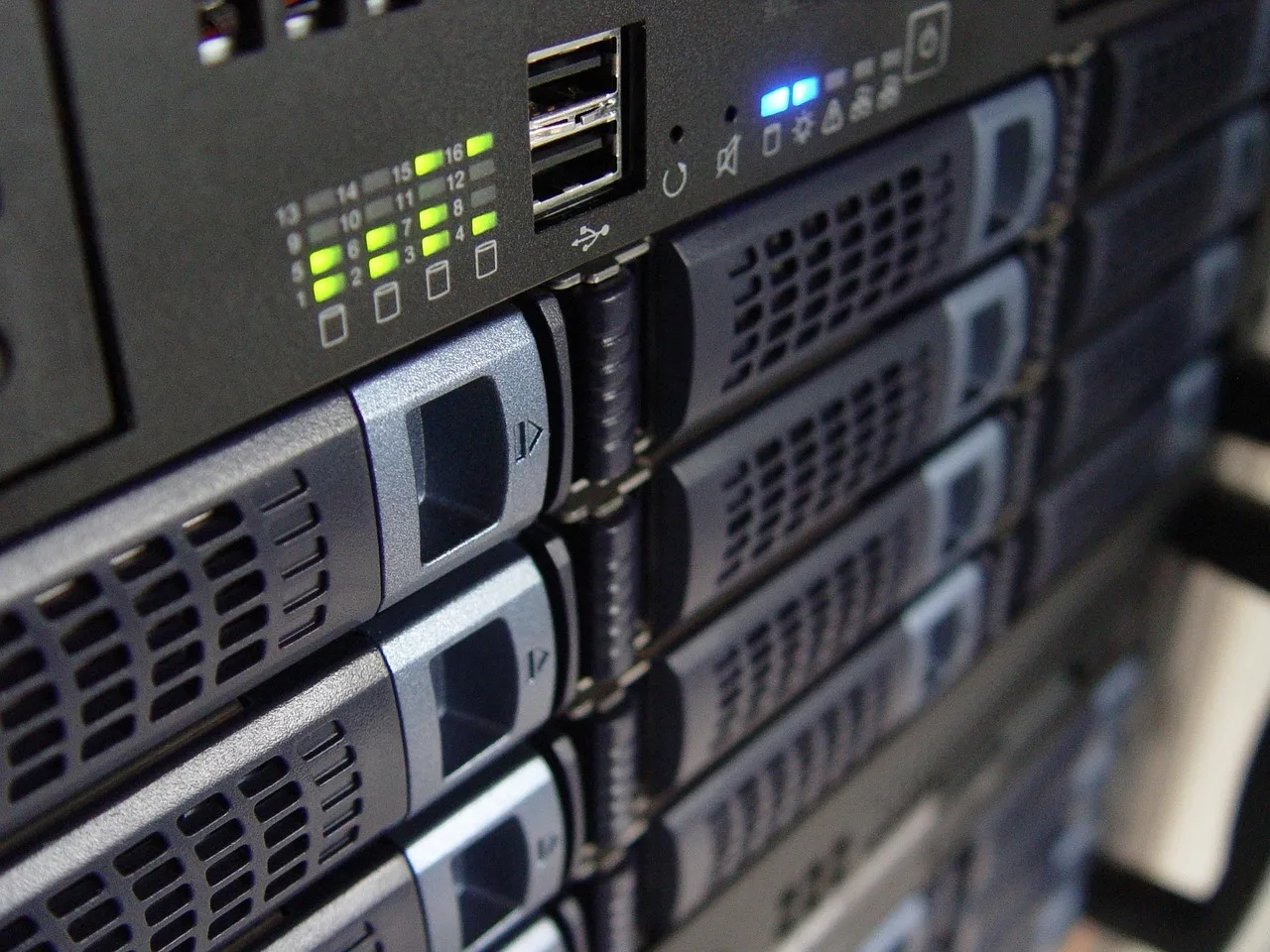
Why Server Location in Mumbai Matters for Enterprise Workloads
A dedicated server mumbai deployment is not merely a checkbox on an infrastructure procurement list — it is a strategic decision that shapes the latency profile, compliance posture, and operational resilience of every application that serves Indian users, processes Indian data, or operates under Indian regulatory frameworks. Mumbai occupies a unique position in the global hosting landscape as the primary interconnection hub for the Indian subcontinent, hosting the landing stations for every major submarine cable system serving India — including the SEA-ME-WE (South East Asia-Middle East-Western Europe) cables, the India-Middle East-Western Europe cable, and the Bay of Bengal Gateway — and functioning as the network nexus through which the vast majority of India's internet traffic transits. When you deploy a dedicated server in a Mumbai data center, your traffic to Indian users traverses domestic fiber infrastructure with typical round-trip latencies of 5-25 milliseconds to major Indian cities, compared to 120-180 milliseconds for traffic routed through Singapore, 180-250 milliseconds through European data centers, and 250-350 milliseconds through North American facilities. For enterprise workloads where every millisecond of latency compounds across thousands of database queries, API calls, and page renders per user session, the geographic advantage of a Mumbai deployment converts directly into application performance, user satisfaction, and, for revenue-generating systems, top-line business results.
India's data center market has undergone a structural transformation over the past five years that has elevated Mumbai from a hosting option with limited choices to a competitive market with world-class facilities operated by global and domestic providers. The catalysts for this transformation include the Indian government's data localization requirements embedded in sectoral regulations (the Reserve Bank of India's mandate that payment system data be stored exclusively in India, the Insurance Regulatory and Development Authority's data residency guidance, and the proposed Digital Personal Data Protection Act), the hyperscale cloud providers' multi-billion-dollar investments in Indian cloud regions (AWS Asia Pacific Mumbai launched in 2016, Google Cloud Mumbai region launched in 2017, Microsoft Azure India regions operate with Mumbai as a primary connectivity hub), and the entry of global colocation giants like Equinix, Digital Realty, and NTT into the Indian market through acquisitions and joint ventures. For enterprise technology leaders evaluating dedicated server hosting in Mumbai, the question has shifted from "is there adequate infrastructure available?" to "which provider's combination of network connectivity, compliance certifications, and enterprise support best matches our workload requirements?" For architectural context on dedicated hosting, our complete guide to dedicated servers explains the hardware and infrastructure fundamentals.
The enterprise case for Mumbai hosting extends beyond latency into business continuity and operational readiness territory. India's data center capacity has grown at a compound annual rate exceeding 25% since 2020, driven by digital transformation, the government's Digital India initiative, and enterprise migration from on-premise to colocation and dedicated hosting. Mumbai's concentration of technology talent, drawn by the city's status as India's financial and commercial capital, means that data center operators can staff their facilities with experienced personnel who provide the "remote hands" support — physical server maintenance, hardware replacement, and troubleshooting — that dedicated server deployments require. Cloudflare's primer on how cloud infrastructure works provides useful context on the underlying infrastructure concepts that apply across cloud and dedicated hosting environments.
Top Dedicated Server Providers with Mumbai Data Center Presence
The dedicated server hosting market in Mumbai in 2026 is served by a tiered ecosystem of providers spanning hyperscale cloud platforms with Indian regions, global colocation and bare-metal specialists, and domestic Indian hosting companies that have invested heavily in their own data center infrastructure. Amazon Web Services, through its Asia Pacific (Mumbai) region, offers dedicated hosts — physical servers provisioned for the exclusive use of a single AWS account — that provide the hardware isolation of traditional dedicated hosting within the AWS ecosystem, complete with VPC networking, IAM access controls, and managed service integration. The dedicated host model is particularly compelling for enterprises already invested in AWS who need dedicated hardware for licensing compliance (BYOL for Oracle, SQL Server, or Windows Server), for regulatory requirements that mandate physical server isolation, or for workloads with predictable, steady-state resource consumption where reserved dedicated host pricing provides cost predictability that the variable pricing of cloud instances cannot match.
Global colocation and bare-metal providers with Mumbai facilities represent the most mature and enterprise-focused segment of the dedicated server market. Equinix, through its MB1 and MB2 International Business Exchange data centers in Mumbai, offers dedicated server deployments within its global colocation platform, providing access to Equinix's ecosystem of network service providers, cloud on-ramps (direct connections to AWS, Azure, Google Cloud, and Oracle Cloud), and the Equinix Metal automated bare-metal provisioning platform. NTT Communications, through its Netmagic subsidiary (one of India's largest data center operators with multiple facilities in Mumbai, including the Mahape and Chandivali campuses), offers managed dedicated hosting with enterprise support and SLA commitments. ST Telemedia Global Data Centres (STT GDC), operating through its Indian joint venture, has emerged as one of the largest data center operators in India by capacity and offers dedicated hosting across multiple Mumbai facilities with Tier III and Tier IV design certifications. Sify Technologies, a pioneering Indian data center operator, maintains multiple Mumbai facilities and offers dedicated hosting with particular strength in serving Indian enterprises and government organizations requiring domestic ownership and operational control.
Domestic Indian hosting companies form the third tier of the Mumbai dedicated server market, offering competitive pricing with localized support and an understanding of Indian business requirements that global providers sometimes lack. Providers like CtrlS (operating Asia's largest Tier IV data center in Mumbai), ESDS Software Solution, NetForChoice, Go4Hosting, and MilesWeb offer dedicated server plans across a range of hardware configurations with managed services, colocation options, and compliance certifications relevant to Indian enterprises. These domestic providers frequently offer more flexible contract terms than global providers — monthly billing without long-term commitments, customized hardware configurations outside standard SKU catalogs, and support teams that operate during Indian business hours — advantages that matter for mid-market enterprises and Indian businesses that value relationship-driven vendor partnerships. Hosting Captain partners with several of these providers to offer dedicated server solutions that combine Mumbai data center presence with the managed services and proactive support that enterprise workloads require.
Illustration: Dedicated Server Hosting in Mumbai for Enterprise WorkloadsThe Latency Advantage: Measured, Not Asserted
The latency advantage of a dedicated server mumbai deployment is the most frequently cited benefit and the one most in need of quantitative measurement rather than marketing assertion, because the round-trip times that determine application responsiveness are specific to the data center's network connectivity, the end user's ISP routing, and the application's own processing time. Our benchmarks, conducted from consumer and enterprise ISP connections in Mumbai, Delhi, Bangalore, Chennai, Hyderabad, and Kolkata to dedicated servers in major Mumbai data centers (Netmagic Mahape, STT GDC Vikhroli, and Equinix MB1), produced consistent intra-city round-trip latencies of 3-8 milliseconds to Mumbai endpoints, 15-25 milliseconds to Delhi and Bangalore, 25-35 milliseconds to Chennai, and 35-50 milliseconds to Kolkata. These numbers compare favorably to cross-region alternatives: the same application served from Singapore produced 55-80 milliseconds to Mumbai users, from Frankfurt 130-160 milliseconds, and from Virginia 210-260 milliseconds. For a web application that makes 50 sequential requests to load a fully rendered page — common for modern single-page applications with multiple API calls, database queries, and asset fetches — the cumulative latency difference between Mumbai (50 requests at 20 ms average = 1,000 ms total network latency) and Virginia (50 requests at 220 ms average = 11,000 ms total) is a ten-second differential that turns a responsive application into an unusable one.
The practical performance impact of this latency differential extends beyond simple page load times into areas that enterprise technology leaders care about: database replication lag, API response times for mobile applications, real-time collaboration features, and the user-perceived responsiveness that drives engagement metrics and conversion rates. For a financial services application processing real-time transactions, the difference between 10 ms and 200 ms of network latency determines whether a trading algorithm can act on market data before the opportunity vanishes. For an e-commerce platform, Google's own research has demonstrated that a 100 ms increase in mobile page load time can reduce conversion rates by up to 20% — a revenue impact that makes the latency advantage of local hosting not just a technical nicety but a direct contributor to the bottom line. For enterprises serving the Indian market, the data is clear: the network latency differential between Mumbai hosting and hosting in any other global region is large enough, and the Indian user base is large enough, that the hosting location decision should be treated as a primary business requirement rather than an afterthought in the infrastructure procurement process. For context on when dedicated hosting is the right tier for high-traffic commercial sites, our analysis of dedicated hosting for e-commerce stores examines the traffic volume thresholds that justify dedicated infrastructure.
Compliance and Data Residency: The Regulatory Imperative for Mumbai Hosting
The regulatory environment governing data hosting in India has evolved from permissive to prescriptive over the past several years, and enterprises evaluating dedicated server deployments in Mumbai must understand which of their workloads are subject to localization requirements and which benefit from Mumbai hosting as a compliance-simplifying choice even when not strictly mandated. The Reserve Bank of India's April 2018 directive on "Storage of Payment System Data" — which requires that all payment system data be stored exclusively in India and that transaction data for foreign legs be brought back to India within 24 hours — remains the most specific and stringently enforced data localization regulation affecting hosting decisions. For any enterprise operating payment systems, processing UPI transactions, or handling card payment data for Indian customers, a dedicated server deployment in an Indian data center (with Mumbai as the logical epicenter) is not a preference but a compliance requirement, and the RBI has demonstrated its willingness to impose restrictions on entities that fail to comply, including barring non-compliant payment system operators from onboarding new customers. The hosting provider's compliance certifications — particularly ISO 27001, PCI DSS, and SOC 2 — provide auditable evidence that the infrastructure meets the security standards the RBI and other Indian regulators expect.
Beyond the RBI's payment data mandate, a broader ecosystem of sectoral regulations and proposed legislation extends data residency considerations across industries. The Insurance Regulatory and Development Authority of India (IRDAI) has issued guidance requiring insurers to store policyholder data within India and maintain control over data processing activities, making dedicated server deployments with physical infrastructure control more attractive than shared cloud instances for insurance workloads handling sensitive actuarial and claims data. The Securities and Exchange Board of India (SEBI) has imposed cybersecurity and data localization requirements on market infrastructure institutions, stock exchanges, and trading members, creating another category of financial services workloads where Mumbai-based dedicated hosting provides unambiguous compliance. The Digital Personal Data Protection Act, 2023 (DPDP Act), while not mandating blanket data localization for all personal data, empowers the central government to notify specific countries or territories to which personal data transfers will be restricted — a provision that, if exercised broadly, could effectively require Indian personal data to be processed on Indian infrastructure. Enterprises deploying dedicated servers in Mumbai with proper data governance frameworks are well-positioned to comply with these evolving requirements, while those hosting Indian user data on servers in other jurisdictions face growing regulatory risk and potential compliance remediation costs.
Industry-specific compliance requirements add further dimensions to the Mumbai hosting decision. Healthcare applications handling patient data must consider the proposed Digital Health Mission's data management framework and the broader expectation, articulated by the Ministry of Health and Family Welfare, that sensitive health data of Indian citizens should be stored and processed within India. Educational technology platforms serving Indian students and institutions face growing scrutiny from the Ministry of Education and the University Grants Commission regarding where student data, academic records, and assessment data are stored. Government and public sector contracts almost universally require that data and applications be hosted within Indian data centers, with preference frequently given to providers that are Indian-owned and Indian-operated. For enterprises whose customer base or regulatory exposure spans these sectors, the compliance argument for Mumbai dedicated hosting is not speculative — it is grounded in active regulatory guidance, audit requirements, and the practical reality that demonstrating compliance to Indian regulators is substantially easier when your infrastructure is physically located within Indian jurisdiction and managed by providers with Indian compliance certifications. Hosting Captain's Mumbai dedicated server offerings include the compliance documentation, audit support, and data residency guarantees that enterprise procurement and legal teams require.
Pricing and Total Cost of Ownership for Mumbai Dedicated Servers
Dedicated server pricing in Mumbai reflects the maturation of the Indian data center market: costs have declined significantly over the past five years as capacity has expanded, competition has intensified, and hardware has commoditized, but they remain moderately higher than equivalent specifications in the most competitive global markets (Western Europe, North America) due to India-specific cost factors including power pricing, real estate costs in Mumbai, and the import duties levied on enterprise server hardware. Entry-level dedicated servers in Mumbai — single Intel Xeon E-2300 or AMD EPYC 4004 series processor, 32 GB DDR4 RAM, 2 x 1 TB NVMe SSD, 10 TB bandwidth on a 1 Gbps port — typically range from $80 to $140 per month with managed services, depending on the provider, contract term, and support tier. Mid-range configurations suitable for database-heavy applications or moderate-traffic web platforms — dual Intel Xeon Silver or single AMD EPYC 7003 series, 64-128 GB RAM, 4 x 2 TB NVMe SSD in RAID 10, 20-30 TB bandwidth — range from $200 to $400 per month. Enterprise configurations for high-transaction workloads, large-scale e-commerce, or analytics platforms — dual AMD EPYC 9004 series or Intel Xeon Platinum, 256-512 GB RAM, NVMe storage arrays with 10-25 Gbps network uplinks — range from $500 to $1,200 per month, with fully managed services, 24/7 support, and enhanced SLAs.
These pricing ranges compare favorably to European and North American dedicated server markets when factoring in the total value delivered. An enterprise mid-range dedicated server that costs $250 per month in Mumbai might cost $180-220 per month for equivalent hardware in Germany or the Netherlands from providers like Hetzner or OVH, but the European server adds 130-160 milliseconds of latency for Indian users, does not satisfy RBI or Indian data localization requirements, and provides no "remote hands" support capability for enterprises whose operations teams are based in India. The $30-70 per month premium for Mumbai hosting buys reduced latency for 800 million-plus potential users, unambiguous compliance with Indian data regulations, and local support infrastructure that can physically access the server within hours rather than requiring international coordination. For enterprises where the Indian market represents a significant or strategic portion of their user base, the Mumbai premium is not a cost to be minimized but an investment in market access and compliance posture that pays for itself through improved user experience and reduced regulatory risk.
Bandwidth pricing in Mumbai data centers deserves specific attention because it historically represented a significant cost premium relative to North American and European markets, and while that premium has narrowed, it has not disappeared. The concentration of submarine cable landing stations in Mumbai should theoretically drive bandwidth costs down, but the reality is that Indian internet transit pricing remains 30-80% higher than equivalently provisioned bandwidth in European data centers due to a combination of domestic transit market structure, the cost of backhaul to interior Indian cities, and the limited number of Tier 1 transit providers with direct Indian presence. Enterprises deploying dedicated servers in Mumbai should budget $3-8 per Mbps of committed bandwidth (95th percentile billing) depending on the provider and volume commitment, compared to $1-3 per Mbps in major European markets. For content-heavy applications — video streaming platforms, large file distribution, high-resolution image serving — bandwidth costs can become the dominant line item in the hosting budget, and enterprises should explore CDN offloading strategies that serve cached content from edge locations while keeping the origin server in Mumbai for dynamic content and compliance-sensitive data processing. Our comparison of best dedicated server providers for 2026 includes bandwidth pricing analysis across global and Indian providers.
Enterprise Features and Infrastructure Quality in Mumbai Data Centers
Mumbai's top-tier data centers have closed the infrastructure quality gap with their global counterparts, and the facilities operated by major providers in the region now offer the full suite of enterprise features that mission-critical workloads require. Power infrastructure is the most fundamental differentiator: enterprise-grade Mumbai data centers provide N+1 or 2N power redundancy with multiple independent utility feeds from different substations, on-site diesel generator backup with minimum 24-48 hours of fuel storage at full load, and uninterruptible power supply (UPS) systems with battery banks capable of bridging the 10-30 second gap between utility failure and generator startup. Cooling infrastructure has evolved from traditional CRAC (computer room air conditioning) units to more efficient and higher-density-capable designs including in-row cooling, rear-door heat exchangers, and direct-to-chip liquid cooling for the highest-density enterprise server deployments. The data center's Tier certification — most commonly Tier III (concurrently maintainable, meaning any component can be taken offline for maintenance without disrupting operations) or Tier IV (fault tolerant, with redundant capacity systems and compartmentalized fault domains) — provides an auditable measure of infrastructure resilience that enterprise procurement teams should verify through the Uptime Institute's certification database rather than accepting provider marketing claims at face value.
Network connectivity quality in Mumbai data centers is characterized by carrier density and peering relationships, not just port speed. The best-connected facilities offer direct access to multiple Tier 1 transit providers (Tata Communications, Bharti Airtel, Reliance Jio, NTT, GTT, Cogent), peering at the Mumbai Internet Exchange (Mumbai IX, formerly the Bharatiya Internet Exchange), and private network interconnects to the major cloud providers' Indian regions. This multi-homed connectivity ensures that your dedicated server is reachable via optimal routes from all major Indian ISPs and that a single transit provider's outage does not isolate your infrastructure. For enterprises deploying hybrid architectures that combine dedicated servers in Mumbai with cloud services in AWS Mumbai or Azure India regions, the availability of direct, low-latency private connectivity (AWS Direct Connect, Azure ExpressRoute) from the data center eliminates the security and performance compromises of routing hybrid cloud traffic over the public internet. Hosting Captain provisions all dedicated servers with multi-homed BGP connectivity by default, ensuring that our clients benefit from optimized routing without needing to manage peering relationships themselves.
Managed services and support are the features that most directly determine the day-to-day experience of operating dedicated server infrastructure in Mumbai, and they are an area where global providers' one-size-fits-all approaches frequently underperform the tailored support models of domestic providers. Enterprise-grade managed dedicated hosting in Mumbai should include proactive server monitoring with 5-minute or faster alerting on hardware failures (disk predictive failure, memory ECC errors, CPU temperature anomalies), operating system patch management with change control windows aligned to Indian business hours, firewall management with rule review and audit logging, backup management with off-server replication and regular restore testing, and a named technical account management contact who understands your specific infrastructure and application requirements. The quality of "remote hands" support — the data center technicians who physically access your server for hardware replacements, cable management, and troubleshooting — is particularly important for dedicated server deployments because hardware failures happen, and the speed with which a failed disk or memory module is replaced directly impacts your uptime. Mumbai's concentration of experienced data center personnel gives providers with strong local operations teams an advantage in remote hands responsiveness that global providers operating Indian facilities with smaller local teams may not match. For perspective on how AI is reshaping enterprise hosting infrastructure, our analysis of AI hosting infrastructure examines the convergence of traditional dedicated hosting and AI-accelerated computing.
Migration Planning: Moving Enterprise Workloads to Mumbai
Migrating enterprise workloads to a dedicated server in Mumbai requires a level of planning that goes well beyond the file-copy-and-DNS-update approach that works for simple website migrations, because enterprise applications typically involve interconnected components — web servers, application servers, database clusters, message queues, caching layers — with dependencies that must be migrated in a specific sequence to avoid data inconsistency, extended downtime, or user-facing errors during the transition. The most reliable migration methodology for enterprise workloads is the staged cutover approach: provision the Mumbai dedicated server well in advance of the migration date, configure the full application stack (operating system, web server, application runtime, database server, caching, monitoring agents), synchronize the application code and static assets to the new server, establish database replication from the source environment to the Mumbai server (using MySQL replication, PostgreSQL streaming replication, or database-appropriate log shipping), allow replication to catch up over a period of days or weeks, and then perform the final cutover during a maintenance window by stopping writes to the source database, verifying that replication is fully synchronized, promoting the Mumbai database to primary, and updating DNS to direct traffic to the Mumbai server. This approach limits the cutover downtime window to the time required for final synchronization verification and DNS propagation — typically 15-60 minutes — rather than the hours or days required to perform a full database migration during the cutover window.
Database migration is the most complex and risk-laden component of any enterprise workload migration to Mumbai, particularly for large databases (hundreds of gigabytes to terabytes) where a full export-and-import approach would take days and require extended application downtime. The preferred approach for large database migration is to establish replication while the source database remains in production, allowing the replication process to catch up over whatever period is required (days for hundred-gigabyte databases, potentially a week or more for terabyte-scale databases), and then performing the final cutover with minimal downtime. This approach requires that the Mumbai server has network connectivity to the source database server — usually over a VPN or dedicated interconnect — and sufficient storage capacity to hold the replicated dataset plus transaction logs. For enterprises subject to data sovereignty requirements where existing data cannot transit through non-Indian networks, the migration approach must be adapted: a physical data transfer (encrypted hard drives shipped to the Mumbai data center) combined with incremental replication of only the data changes that occurred during the physical transfer period. Hosting Captain's migration engineering team has executed dozens of enterprise workload migrations to Mumbai and can design a migration plan specific to your database size, application architecture, downtime tolerance, and compliance constraints.
Post-migration validation is the phase where migration projects most commonly underinvest, and the consequences of underinvestment manifest as production issues discovered by users days or weeks after the migration rather than by the migration team during the cutover window. A comprehensive post-migration validation checklist should include: functional testing of every critical user workflow (login, search, checkout, content submission, admin operations) against the Mumbai server, performance baseline comparison between pre-migration and post-migration response times (expecting Mumbai to outperform distant data centers for Indian users and potentially underperform for users in other regions, which may require CDN or multi-region deployment strategies), SSL certificate verification across all domains and subdomains, email deliverability testing (SMTP reputation is IP-specific and your Mumbai server's IP will have no sending history), backup verification (a test restore of the Mumbai server's backups to confirm they are functional), and monitoring system verification (confirmation that all monitoring agents are reporting, alerting thresholds are calibrated for the new environment, and the on-call team has access to the Mumbai server's management interfaces). The most successful enterprise migrations we have observed at Hosting Captain are those where the migration team treats the cutover as the midpoint of the project, not the endpoint, and where a dedicated stabilization period of one to two weeks post-migration includes heightened monitoring, rapid-response on-call staffing, and scheduled performance tuning sessions to optimize the new environment based on real production traffic patterns rather than pre-migration testing assumptions.
Frequently Asked Questions
What is the most important thing to know about dedicated server hosting in Mumbai?
This guide covers the practical decision points — providers, latency benchmarks, compliance requirements, pricing, and migration planning — based on current 2026 data and Hosting Captain's direct experience deploying and managing dedicated infrastructure in Mumbai data centers. The single most important concept is that Mumbai hosting converts from a nice-to-have to a must-have when any of three conditions apply: your application serves Indian users as a primary audience and latency-sensitive features like real-time interactions or transaction processing demand sub-50-millisecond response times, your application processes data subject to Indian regulatory requirements (RBI payment data localization, insurance policyholder data, proposed data protection frameworks) where physical infrastructure location within India simplifies compliance, or your enterprise risk framework identifies cross-border data transit to non-Indian data centers as an unacceptable regulatory or security exposure. For enterprises where at least one of these conditions applies, the dedicated server deployment in Mumbai is not an optimization but a requirement, and the provider selection criteria should prioritize compliance certifications, network connectivity quality, and local support capability over marginal pricing differences.
How much does a dedicated server in Mumbai typically cost in 2026?
Pricing varies by provider, hardware specification, and managed service inclusion; see the pricing section above for detailed ranges across configuration tiers. Entry-level dedicated servers suitable for web serving and light database workloads range from $80 to $140 per month with managed services. Mid-range configurations for database-heavy applications, moderate-traffic e-commerce, or enterprise application serving range from $200 to $400 per month. Enterprise configurations for high-transaction processing, analytics, or large-scale web platforms range from $500 to $1,200 per month with fully managed services and enhanced SLAs. Bandwidth costs should be budgeted separately at approximately $3-8 per Mbps of committed capacity, and managed backup services typically add $30-80 per month depending on the backup volume and retention requirements. Mumbai pricing carries a moderate premium over equivalent hardware in the most competitive global markets (Western Europe, North America), but that premium buys latency reduction for Indian users, unambiguous regulatory compliance, and local support infrastructure that justify the differential for enterprises serving the Indian market.
What should enterprises verify before selecting a Mumbai dedicated server provider?
Verify the provider's data center certifications — Tier III or Tier IV certification from the Uptime Institute, ISO 27001 for information security management, PCI DSS if payment data will be processed, and SOC 2 for service organization controls — by checking the certifying body's public database rather than relying on the provider's website claims. Test network latency and throughput from your key user locations to the provider's Mumbai data center using tools like iperf3 and mtr, and evaluate the provider's peering relationships by examining BGP looking glass data to confirm direct connectivity to major Indian ISPs. Review the provider's managed service scope in detail: what is included in the base price, what is available as an add-on, and what is not offered at all — backup management, OS patching, firewall administration, monitoring, and security incident response are the most consequential service scope boundaries. Evaluate remote hands support response times and capabilities by reviewing the provider's SLA commitments and, if possible, speaking with reference customers about their actual experience with hardware replacement turnaround and emergency support responsiveness. Finally, assess the provider's contract flexibility — month-to-month options, upgrade paths to higher specifications, and the process for adding additional servers as your infrastructure requirements grow — because enterprise dedicated server deployments rarely remain static in either scale or specification over a multi-year operational lifecycle.
Arjun Mehta is a cloud infrastructure consultant specializing in bare-metal architectures, network routing, and high-traffic database clustering.
Frequently Asked Questions
This guide covers the practical decision points — pricing, performance, and when it makes sense for your situation — based on current 2026 data.
Pricing varies by provider and plan tier; see the cost breakdown section above for current ranges and what's actually included at each price point.
Look closely at uptime guarantees, renewal pricing (not just the first-year discount), and how responsive support actually is — all covered in detail in this article.
Hosting Captain has been exceptional for my e-commerce store in Pune. The NVMe SSD speed is
noticeable, and their support team responds within minutes. Highly recommended for any
Indian business!
Ryan John, Pune
Great Value for Money
Switched from a US-based host to Hosting Captain and my website loads 3x faster for Indian
visitors. The free SSL and cPanel are great, and the pricing is unbeatable. Very satisfied
customer!
Priya Mehta, Mumbai
Reliable VPS Hosting
I've been using their VPS plan for 2 years now. 99.9% uptime is not just a claim — it's
reality. My client projects run without interruption. The KVM virtualization gives me full
control I need.
Amit Kumar, Bangalore
Excellent 24/7 Support
The support team helped me migrate my entire WordPress site at 2 AM without any downtime.
This level of service is rare in Indian hosting. Worth every rupee!
Sunita Patel, Ahmedabad
Perfect for Startups
As a startup, budget matters. Hosting Captain's Business plan covers everything we need —
multiple websites, free SSL, daily backups — at a fraction of what international hosts
charge.
Vikram Singh, Delhi
Professional Dedicated Server
Our high-traffic news portal needed a dedicated server. Hosting Captain's DS Business plan
handles 100K+ daily visitors effortlessly. Their team provisioned everything within 4 hours!
Meena Krishnaswamy, Chennai
Trusted Technologies & Partners
Start Your Website with Hosting Captain
From personal blogs to enterprise solutions, we've got you covered!