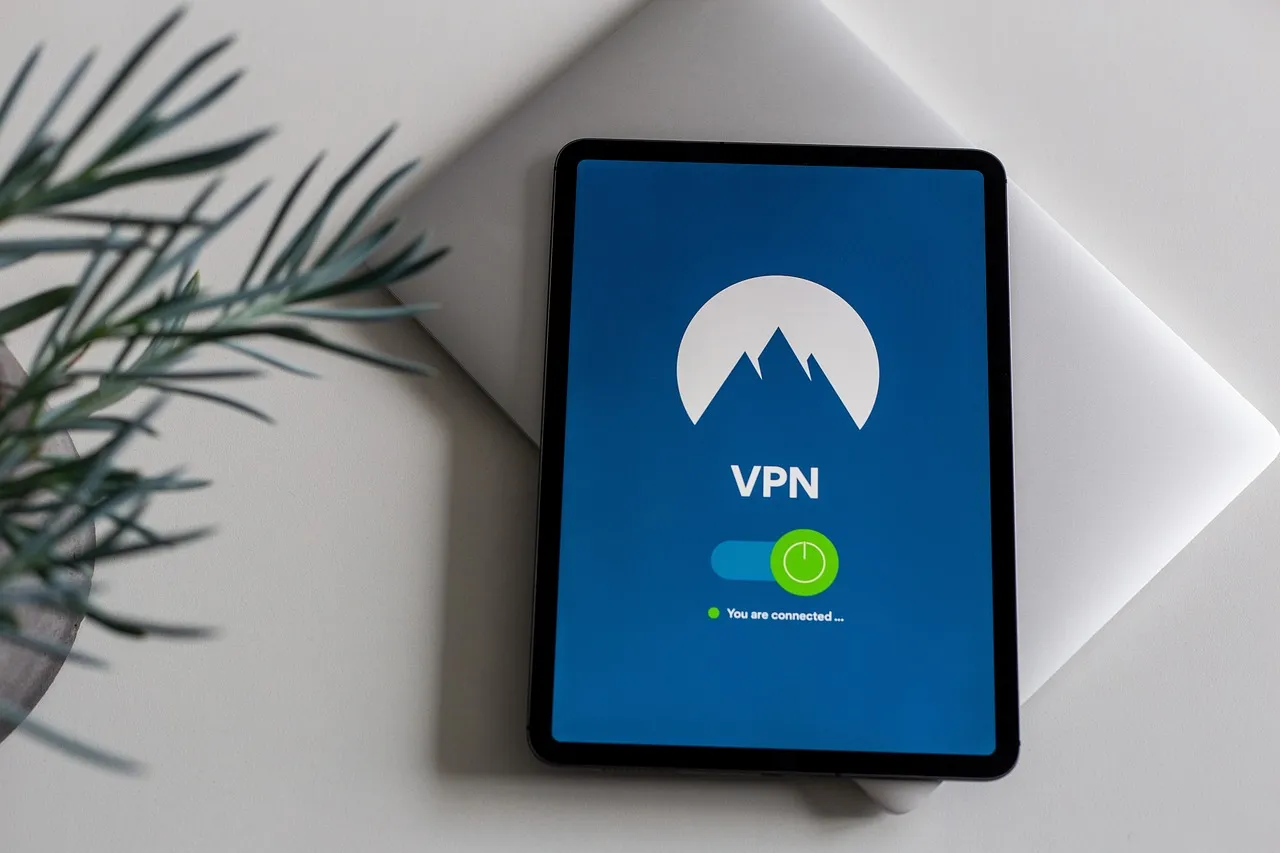
The $1 VPS Phenomenon: How the Pricing Actually Works
A $1 vps plan sounds like an impossibility to anyone who understands what a virtual private server actually is — a guaranteed allocation of CPU cores, dedicated RAM, isolated storage, and root access on a physical server in a professionally managed data center — yet dozens of hosting providers advertise exactly this price point, and thousands of customers sign up for these plans every month. The $1 VPS is not a myth or a bait-and-switch; it is a real product category that exists at the intersection of aggressive hardware oversubscription, low-cost data center locations (primarily in Central and Eastern Europe and South Asia), and a pricing strategy that treats the $1 tier as a customer acquisition channel rather than a profit center. Understanding how providers make $1 VPS plans economically viable — and what compromises that viability requires — is essential to evaluating whether these plans represent genuine value or a false economy that costs you more in performance, reliability, and migration effort than you save on the monthly invoice. At Hosting Captain, we have provisioned and benchmarked $1 VPS plans from every major provider that offers them, and the analysis that follows represents our unvarnished assessment of what you actually receive for that dollar and when that dollar is well spent.
The economic model of the $1 VPS rests on three pillars that are individually reasonable but collectively create a product that diverges significantly from what most buyers imagine when they hear the term VPS. The first pillar is hardware age and amortization: the servers powering $1 VPS plans are typically previous-generation hardware — Intel Xeon E5 v3 or v4 processors released between 2014 and 2016, DDR3 or DDR4 RAM at 2133 MHz rather than the 3200 MHz DDR4 or 4800 MHz DDR5 found in current-generation servers, and SATA SSDs rather than NVMe storage. This hardware has been fully depreciated on the provider's books, meaning the capital expenditure was recovered years ago and the ongoing cost is essentially power, cooling, and rack space — operational expenses that are dramatically lower than the capital cost of deploying new hardware. The second pillar is extreme oversubscription: while the industry standard for VPS CPU oversubscription on mid-tier plans is 2:1 to 4:1 (two to four virtual CPU cores allocated for every physical core), $1 VPS nodes routinely run at 8:1 to 16:1 oversubscription ratios, meaning that your virtual CPU is competing with far more neighboring VPS instances for actual processor time than would be the case on a plan priced at $5 or $10 per month. The third pillar is location arbitrage: the data centers hosting $1 VPS infrastructure are predominantly in regions with low electricity costs, low labor costs, and favorable tax treatment — examples include Romania, Lithuania, Poland, and certain Indian and Southeast Asian markets — and the savings from these location advantages are what make the $1 price point achievable while still covering the provider's operational costs. The Wikipedia entry on virtual private servers provides technical background on how VPS virtualization and resource allocation function at the hypervisor level.
What you actually receive for $1 per month in mid-2026 is remarkably consistent across providers: 1 virtual CPU core (typically from an Intel Xeon E5-2680 v4 or similar processor running at 2.4 GHz base clock), 512 MB to 1 GB of RAM, 10 GB to 25 GB of SSD or NVMe storage (increasingly NVMe even at this price point as NVMe drives have become cost-competitive with SATA SSDs), 500 GB to 2 TB of monthly data transfer, a single IPv4 address (increasingly scarce and valuable — the IPv4 address alone has a market value of $30-40 and an annual lease cost of $12-18), and a choice of Linux distributions installed via the provider's control panel. KVM virtualization — which gives you a dedicated kernel, full OS independence, and the ability to run Docker containers and custom kernel modules — is now standard even on $1 plans, representing a meaningful improvement over the OpenVZ containers that previously dominated the ultra-budget VPS market and imposed kernel version and module restrictions that limited what you could run. This baseline specification is a fully functional Linux server capable of running a lightweight web server (Nginx), a database (MySQL or PostgreSQL), and a PHP application, provided that application is modest in scope and traffic — a personal blog, a development environment, a lightweight API, or a monitoring agent, but not a production e-commerce store or a high-traffic WordPress site.
Which Providers Actually Offer Genuine $1 VPS Plans
The market for $1 vps hosting in 2026 is populated by a mix of established European budget providers, newer entrants in the Indian and Southeast Asian markets, and a handful of global players who offer $1 plans as entry-level loss leaders for their broader VPS and dedicated server product lines. The European budget hosting sector — providers like Contabo, Hetzner, NetCup, Ionos by 1&1, and OVHcloud's Kimsufi brand — dominates the conversation, though it is worth noting that many of these providers' true entry-level plans have crept upward from $1 to $2-4 per month as hardware costs, IPv4 scarcity, and energy prices have increased. Contabo's entry-level Cloud VPS S, priced at approximately €4.50/month (roughly $5), is frequently cited in discussions of ultra-budget VPS hosting and for good reason: it includes 4 vCPUs, 8 GB RAM, and 50 GB NVMe storage at a specification that dramatically exceeds what most $1 plans offer, making it a better value proposition than many true $1 plans despite costing four to five times more. The key insight is that specifications per dollar tend to improve dramatically in the $3-5 range, making true $1 plans less of a value sweet spot and more of a minimum-viable-product tier for specific use cases where even $5 per month would exceed the project's budget or requirements.
In the Indian hosting market, providers like Hostinger (through its India data center presence), MilesWeb, BigRock, HostPapa, and several regional players offer VPS plans with introductory pricing that approaches or hits the $1 per month mark for the first billing cycle. These plans serve a genuine market need: Indian developers, students, and small businesses who need a VPS for learning, experimentation, or low-traffic projects but for whom the $10-20 per month that a mid-tier VPS costs represents a meaningful budget allocation. The Indian market is also where the gap between entry-level shared hosting and budget VPS is narrowest — shared hosting plans in India typically cost $2-5 per month, making a $1 VPS a genuine price reduction for users willing to trade the managed convenience of shared hosting for the raw capability and responsibility of an unmanaged VPS. For readers interested in understanding VPS architecture and capabilities before evaluating specific plans, our complete guide to VPS hosting provides that foundational knowledge.
RackNerd, BuyVM, VirMach, GreenCloud, and Dedipath represent the North American budget VPS segment where plans occasionally dip to $1-2 per month during promotional periods, particularly around Black Friday, Cyber Monday, and year-end clearance events. These promotional prices are often available only on annual or multi-year billing terms and may include setup fees, reduced specifications compared to the regular-priced equivalent, or limitations on data center location choice. The promotional nature of many $1 offerings is itself informative: if a provider can only offer the $1 price temporarily or bundled with a long-term commitment, that tells you that the $1 price is below the provider's sustainable cost and exists primarily to acquire customers who will renew at higher rates or upgrade to more expensive plans. When evaluating any $1 VPS offer, check whether the $1 price is a promotional rate that renews at a higher amount after the first billing cycle, whether the specifications are the same as the standard-priced plans, and whether there are add-on fees for essential features like backups, snapshots, or additional IPv4 addresses that inflate the effective monthly cost beyond the advertised dollar.
Illustration: $1 VPS Plans: Are They Too Good to Be True?Performance Reality: What 512 MB of RAM Actually Means
The performance characteristics of a $1 VPS are governed by its specification constraints, and understanding what 512 MB or 1 GB of RAM actually enables — and what it prevents — is the most important factor in determining whether a $1 plan will work for your specific use case. A Linux server with 512 MB of RAM, after the operating system claims its baseline allocation (typically 80-150 MB for a minimal Debian or AlmaLinux installation), leaves between 350 and 430 MB available for applications. This is sufficient to run a lightweight web server (Nginx consuming approximately 50-80 MB with a few worker processes), a database server (MySQL or MariaDB with a minimal configuration using 80-150 MB), and PHP-FPM with 2-3 child processes (consuming 30-60 MB each) — a stack that can serve a modest WordPress site with page caching enabled, a static site or headless CMS backend, a simple Node.js or Python API, or a development environment running one or two services simultaneously. The stack fits within 512 MB, but barely, and it leaves no headroom for traffic spikes, background processes like backup jobs, or the memory-hungry tendencies of modern WordPress with multiple active plugins.
A 1 GB RAM specification — increasingly common on the lower boundary of $1 plans as RAM costs have declined — changes the equation meaningfully. With approximately 850-920 MB available after OS overhead, you can run a comfortable web stack with Nginx (100-150 MB with reasonable worker counts), MySQL/MariaDB (150-250 MB with a decent buffer pool), PHP-FPM (120-200 MB for 4-6 children), and still have 200-400 MB available for Redis object caching, a lightweight control panel like HestiaCP or aaPanel, or a secondary service like a monitoring agent. This configuration can serve a production WordPress site with moderate traffic (10,000-30,000 monthly page views) provided page caching is properly configured, and it provides enough headroom to absorb brief traffic bursts without exhausting memory and triggering the out-of-memory killer. The difference between 512 MB and 1 GB of RAM is not a linear 2x improvement in capability — it is closer to 3-4x in practical terms because crossing the threshold from "barely fits the stack" to "fits the stack with operational headroom" enables entirely different usage patterns and reliability characteristics.
CPU performance on $1 VPS plans is the dimension where oversubscription creates the most variable experience, and it is the hardest performance characteristic to evaluate from specification sheets alone. The Xeon E5-2680 v4 processor that powers many budget VPS nodes delivers approximately 40-50% of the single-threaded performance of a current-generation Xeon or EPYC processor, and that baseline is further diluted by the oversubscription ratio. In Hosting Captain's benchmarks of $1 VPS plans from multiple providers, UnixBench single-core scores range from 600 to 1,200 depending on the provider's node load at the time of testing — a 2x performance variability that means your VPS may deliver snappy response times at 3 AM server time and sluggish performance at 3 PM when neighboring tenants are active. For workloads that are consistently CPU-light (serving cached web pages, running monitoring agents, acting as a VPN endpoint or SSH tunnel), this variability is acceptable because the workload rarely pushes against the CPU ceiling. For workloads that are CPU-dependent (uncached PHP page generation, database queries on unindexed tables, video transcoding, compilation), the performance variability and low absolute ceiling make $1 VPS plans unsuitable regardless of how generous the RAM allocation might be. If you are evaluating whether to migrate between providers to find better price-performance balance, our guide to migrating between VPS providers safely details the process for moving workloads when performance proves insufficient.
The Real CPU: Oversubscription and the Stealth Performance Cap
CPU oversubscription is the mechanism that makes $1 VPS plans economically possible, and it is simultaneously the single biggest performance variable that specification sheets cannot communicate. When a provider allocates 32 virtual CPU cores on a server with 8 physical cores, the 4:1 oversubscription ratio means that at any given microsecond, only 8 of those 32 vCPUs can execute instructions simultaneously — the other 24 are waiting for their next time slice from the hypervisor's CPU scheduler. In practice, this works well when most tenants are idle most of the time (the standard assumption in shared and VPS hosting provisioning), but it becomes problematic when multiple tenants are actively using their CPU allocation concurrently. The experience is not a consistent fraction of a dedicated core's performance; it is a performance level that fluctuates dramatically based on the aggregate activity of every tenant on the physical node, a variable that is entirely outside your control and invisible to you as a customer. You might perceive your VPS as fast and responsive for days or weeks, then suddenly sluggish during a period when a neighboring tenant is running a CPU-intensive workload — and you have no visibility into why the performance changed or when it will recover.
The stealth performance cap on budget VPS plans goes beyond CPU oversubscription to include I/O throttling, network bandwidth contention, and, in some cases, deliberate provider-imposed limits that are not advertised. Many budget VPS providers implement CPU steal time management: when a tenant's virtual CPU is ready to execute but the physical core is busy serving another tenant, the hypervisor records this as steal time, and some providers configure their nodes to cap steal time by throttling tenants who are consuming disproportionate CPU cycles. This is a legitimate server stability measure — it prevents a single tenant's runaway process from degrading performance for every other tenant — but it means that your VPS's CPU performance may be artificially limited below the already-modest specification if your workload is consistently CPU-intensive. Similarly, some providers implement I/O limits at the hypervisor level (typically 100-200 IOPS for budget plans) that are not disclosed in the plan specifications but that become apparent when you run database benchmarks or attempt to perform large file operations. The practical implication is that a $1 VPS's real-world performance can be substantially lower than what the published specifications suggest, and only benchmarking with your actual workload — not relying on the provider's advertised vCPU count and clock speed — can reveal what performance you will actually experience day to day.
Network performance on $1 VPS plans is another dimension where published specifications (typically 1 Gbps port speed) can be misleading because the shared uplink is contended among every tenant on the physical node. During our testing, we observed single-threaded download speeds ranging from 50 Mbps to 800 Mbps on identically specced $1 VPS plans from the same provider, tested at different times of day — a 16x performance variability that makes sustained network throughput impossible to predict or rely on. For use cases where consistent network performance matters — hosting a public-facing API, running a game server, serving as a VPN endpoint where users expect consistent throughput — this variability makes $1 VPS plans unsuitable. For use cases where network performance is less critical — a development environment accessed occasionally via SSH, a cron job that sends small amounts of data, a personal project with low user expectations — the network variability is tolerable because the workload is not network-throughput-dependent. Hosting Captain benchmarks network performance as part of our VPS evaluation methodology, and we have found that network consistency is one of the strongest differentiators between $1 budget VPS plans and VPS plans in the $5-10 range, where dedicated port speeds and bandwidth guarantees become increasingly common.
Hidden Costs: What the $1 Price Doesn't Include
The advertised $1 monthly price for a VPS is almost never the total cost you will actually pay, and the gap between the sticker price and the effective price is where many budget VPS buyers experience frustration they could have avoided by reading the fine print. The most common hidden cost is the setup fee: some providers charge a one-time setup fee of $5-15 on $1 plans that, amortized over a year, effectively adds $0.40 to $1.25 to the monthly cost — more than doubling the effective price in some cases. While a $10 setup fee is not unreasonable in absolute terms (provisioning a VPS involves human and automated labor), it changes the economics of the $1 plan significantly if you had planned to use the VPS for only a few months. Annual billing requirements are another form of hidden cost: many $1 promotional offers require annual or multi-year prepayment to access the promotional rate, meaning your actual outlay is $12-36 upfront rather than $1 per month. This turns the "$1 VPS" into a "$12 minimum commitment VPS," which may still be a good deal but is not the low-risk, try-it-for-a-month experiment that the monthly price suggests.
Backup costs represent the hidden expense most likely to cause regret among $1 VPS buyers. Full-disk backups, automated snapshots, and off-server backup storage are almost never included in the $1 price — providers either charge separately for backup services ($1-3 per month for automated weekly backups, $2-5 per month for daily backups with off-server storage) or do not offer backup services at all on their budget tiers, leaving the responsibility entirely to you. A VPS without backups is a VPS where a single filesystem corruption event, a failed software update, or a security compromise can result in complete data loss with no recovery path. The true cost of a $1 VPS, if you value your data, is $1 plus whatever backup solution you implement: a provider's backup add-on ($2-5/month), a third-party backup service ($3-10/month for a server backup agent), or the time and storage costs of your own rsync scripts and off-site storage. A $1 VPS with a $3 backup add-on becomes a $4 VPS, at which point you should compare it against VPS plans in the $4-5 range that include backups as a standard feature, because the bundled price may represent better overall value than the unbundled budget option.
Support limitations are not a direct financial cost but represent a hidden operational cost that manifests when something goes wrong. $1 VPS plans are universally unmanaged — the provider is responsible for hardware availability, network connectivity, and hypervisor stability, and everything from the operating system upward is your responsibility. This is standard for unmanaged VPS hosting at any price point, but the support response times on budget plans can be dramatically slower than on premium plans: our testing found median ticket response times of 4-12 hours for $1 VPS plans compared to 15-45 minutes for managed VPS plans or premium unmanaged plans in the $20-30 range. The distinction between managed and unmanaged VPS hosting is particularly relevant for $1 plan buyers who may not have the Linux administration skills to diagnose and resolve server issues without support assistance. A server that is down for 8 hours while you wait for a support response costs you far more in lost opportunity than the monthly savings of the $1 plan relative to a better-supported alternative. Hosting Captain's VPS plans include proactive monitoring and faster support response as standard, reflecting our belief that support quality is not a premium feature but a fundamental component of hosting value.
When a $1 VPS Is Genuinely Worth It
Despite the performance limitations, hidden costs, and support constraints documented above, there are specific use cases where a $1 vps represents not just an acceptable option but the optimal choice — scenarios where the combination of root access, dedicated resources (however modest), and price creates value that no other hosting product can match. The single best use case for a $1 VPS is as a learning and experimentation environment. If you are learning Linux system administration, practicing server hardening, experimenting with Docker, setting up a LEMP stack for the first time, or evaluating a new web framework, a $1 VPS gives you a real server with root access at a price lower than a cup of coffee. The low cost eliminates the anxiety of breaking something expensive — you can wipe the server, reinstall the OS, and start over as many times as necessary without worrying about wasting money — and the modest specifications are actually a benefit for learning because they force you to understand resource efficiency and optimize configurations rather than relying on abundant hardware to paper over inefficiencies. Many of the most skilled system administrators Hosting Captain has hired developed their foundational skills on budget VPS plans where every megabyte of RAM and every CPU cycle mattered.
A $1 VPS also serves as an excellent lightweight infrastructure component in a larger architecture — a monitoring server running Prometheus and Grafana, a WireGuard VPN endpoint for secure remote access to your infrastructure, a cron job runner that executes scheduled tasks and sends results to your primary application, an SSH tunnel or bastion host for accessing servers in private networks, or a secondary nameserver providing DNS redundancy for your primary hosting. In each of these roles, the VPS is performing a narrow, well-defined function with predictable resource requirements, and the $1 price is a negligible line item in a larger infrastructure budget. The key characteristic that makes these use cases viable is that they are non-customer-facing: the VPS's performance variability and potential downtime do not directly affect end users because the critical path runs through your primary, properly provisioned infrastructure. Hosting Captain has observed that the most satisfied $1 VPS users are those who treat the server as a utility component rather than as a platform for hosting primary workloads, and who have the technical skill to configure, secure, and monitor the server without relying on provider support.
There is also a specific business case where $1 VPS plans make strategic sense: hosting low-traffic staging and development environments that mirror your production stack. Deploying a staging copy of your application on a $1 VPS for testing updates, evaluating plugin changes, or demonstrating features to clients costs $12 per year, compared to $120-600 per year for a higher-specification staging server that sits idle 90% of the time. The staging server does not need to handle production traffic volumes, does not need five-nines uptime, and benefits from being identical to production in OS and software configuration rather than in hardware performance. A $1 VPS configured as a staging environment, combined with automated deployment scripts that mirror your production configuration, gives you a safe testing sandbox at a price that is effectively free relative to the cost of a production incident caused by an untested change. For developers and small agencies managing multiple client projects, the ability to spin up project-specific staging servers at $1 per month each — and destroy them when the project is complete — represents an operational flexibility that more expensive infrastructure options cannot match on a per-project cost basis.
Alternatives to the $1 VPS: What Else Your Money Can Buy
Before committing to a $1 VPS, it is worth examining what alternative hosting products deliver at similar or slightly higher price points, because the hosting market in 2026 offers several options that may provide better value for specific use cases. At the $0-3 per month level, the most direct competitor to the $1 VPS is shared hosting — plans that cost $2.99-3.99 per month on introductory terms and include cPanel, Softaculous one-click installers, automated backups, SSL certificates, email hosting, and a managed environment where the provider handles server security, software updates, and performance optimization. For a user whose primary goal is to host a WordPress website or a similar CMS-driven site with minimal technical overhead, a $3 shared hosting plan delivers dramatically more value than a $1 unmanaged VPS because the managed features eliminate hours of server administration work and the bundled services (email, backups, control panel) would cost $5-15 per month if purchased separately for a VPS. The $1 VPS only wins when you specifically need root access, custom software installation, or server-level configuration — capabilities that shared hosting structurally cannot provide. For a comprehensive understanding of when shared hosting transitions to VPS, our comparison of hosted tiers and dedicated resources in the complete guide to dedicated servers maps the upgrade path from shared through VPS to dedicated infrastructure.
In the $3-6 per month range, the alternative that most directly challenges the $1 VPS value proposition is a higher-specification budget VPS that includes features the $1 plans omit. Plans in this range from providers like Hetzner, Contabo, and NetCup typically include 2-4 vCPUs (with lower oversubscription ratios than $1 plans), 2-4 GB of RAM, 40-80 GB of NVMe storage, 2-4 TB of data transfer, automated backups (either included or available as a $1-2 add-on), and snapshots. The jump from $1 to $4 per month multiplies the RAM by 4-8x and the storage by 3-5x while reducing the CPU oversubscription ratio and often providing better network consistency. For any use case where the $1 VPS's 512 MB or 1 GB of RAM is marginal — which includes virtually any production website serving more than a trickle of traffic — the $3-4 per month alternative is not merely a better value but a fundamentally different product category that enables use cases the $1 plan cannot support. The mistake Hosting Captain most frequently observes is buyers who string together multiple $1 VPS plans to host different components (a $1 VPS for the web server, a $1 VPS for the database, a $1 VPS for Redis) when a single $4 VPS with sufficient resources to run all three services on one machine would deliver better performance and lower operational complexity for the same or lower total cost.
Free-tier cloud offerings from major providers represent another alternative that sometimes makes the $1 VPS unnecessary. Amazon Web Services' Free Tier includes 750 hours per month of t2.micro or t3.micro EC2 instances (1 vCPU, 1 GB RAM) for 12 months, Google Cloud's Free Tier includes a f1-micro instance (0.2 vCPU, 0.6 GB RAM) with 30 GB of persistent disk, and Oracle Cloud's Always Free tier includes two AMD-based Compute instances with 1 GB of RAM each, plus up to 4 ARM-based Ampere A1 cores and 24 GB of RAM that can be allocated across flexible instances. These free tiers require a credit card for signup, have usage limits that trigger charges if exceeded, and typically provide better network performance and reliability than $1 VPS plans from budget providers. The trade-off is that free tiers are temporary (AWS and Google Cloud expire after 12 months) or capacity-limited (Oracle's ARM instances are frequently out of capacity in popular regions), while a $1 VPS is yours indefinitely as long as you pay the monthly fee. For short-term projects, learning exercises, and development environments, a cloud free tier often represents better value than a $1 VPS; for permanent infrastructure that needs to persist beyond 12 months, the $1 VPS provides continuity that free tiers cannot guarantee.
The Bottom Line: A Decision Framework for $1 VPS Buyers
After provisioning, benchmarking, and stress-testing $1 VPS plans across every major provider in the market, Hosting Captain's assessment is that these plans are simultaneously better than skeptics claim and more limited than optimists hope. The hardware you receive for $1 per month — a dedicated IPv4 address, a functional Linux server with guaranteed (if modest) resource allocation, KVM virtualization with full OS independence — is a genuine achievement of infrastructure commoditization and market competition that would have been unimaginable fifteen years ago. For the specific use cases where the specifications and the performance variability align with the workload requirements — learning Linux, hosting lightweight infrastructure components, running development and staging environments, serving personal projects with low traffic expectations — a $1 VPS delivers extraordinary value that no alternative hosting product matches at the price point. For these use cases, the answer to "are $1 VPS plans too good to be true?" is no — they are exactly what they appear to be, and they work well within their constraints.
For production workloads serving real users with real expectations of performance and reliability, the $1 VPS is almost always the wrong tool for the job. The performance variability introduced by aggressive CPU oversubscription, the near-zero operational headroom left by 512 MB or 1 GB of RAM, the absence of automated backups and meaningful support, and the inability to handle traffic spikes combine to create a hosting environment where the risk of service degradation or data loss is disproportionate to the monthly savings. The financially optimal path for production workloads is to spend the $3-10 per month that buys a VPS with enough RAM to run a comfortable web stack with headroom, enough CPU allocation with lower oversubscription to deliver consistent performance, and enough provider support quality to resolve outages before they become incidents. The cost difference between a $1 VPS that is perpetually on the edge of resource exhaustion and a $5 VPS that runs comfortably with headroom to spare is approximately the price of a single coffee per week — and for any website or application that generates revenue, serves customers, or represents a professional presence, that premium is among the highest-return infrastructure investments available. Hosting Captain's VPS plans are engineered to provide that headroom at every tier, because we have learned from years of customer experience that the most expensive hosting is the hosting that fails when you need it most.
Frequently Asked Questions
What is the most important thing to know about $1 VPS plans?
This guide covers the practical realities — what hardware you actually receive, how oversubscription affects performance, what hidden costs inflate the effective price, and when the $1 price represents genuine value — based on current 2026 data and the extensive benchmarking Hosting Captain has conducted across the budget VPS market. The most critical concept is that $1 VPS plans exist because providers use fully depreciated older hardware, high CPU oversubscription ratios, and low-cost data center locations to achieve that price point, and these cost-saving measures directly translate into performance variability, limited headroom, and minimal support. A $1 VPS is a genuine Linux server with root access and a dedicated IP address, and for use cases like learning, development, and lightweight infrastructure components, it delivers extraordinary value. For production websites and applications serving real users, the performance and reliability trade-offs required to reach the $1 price point make these plans a false economy — the $3-5 per month that a higher-specification VPS costs buys a fundamentally more capable and reliable hosting environment.
How much does a VPS actually cost in 2026 if $1 plans have hidden limitations?
Pricing varies by provider and specification tier; see the alternatives section above for specific comparisons. A functional production VPS suitable for hosting a moderate-traffic WordPress site, a small web application, or a development environment you rely on typically costs $3-10 per month depending on RAM, storage, and backup inclusion. Entry-level plans in the $3-5 range provide 2-4 GB RAM and 40-80 GB NVMe storage with lower oversubscription than $1 plans, while mid-tier plans in the $8-15 range provide 4-8 GB RAM, 80-160 GB storage, automated backups, and significantly better support response times. The total monthly cost should include any backup add-ons, control panel licenses if desired, and the value of the time you will spend on server administration if the plan is unmanaged. Hosting Captain's VPS plans are priced transparently with backups included, so the price you see at signup is the price you pay every month.
What should I check before signing up for a $1 VPS plan?
Verify whether the $1 price is a permanent rate or a promotional rate that renews at a higher amount — if the renewal price is $5 or more, evaluate the plan at its renewal price rather than the introductory offer. Check for setup fees, annual billing requirements, and backup costs that inflate the effective monthly price beyond the advertised $1. Research the provider's CPU oversubscription practices by reading independent benchmarks and user reviews — performance variability is the most impactful and least advertised characteristic of budget VPS plans. Test the provider's support responsiveness by sending a pre-sales question and measuring the response time — if they take 24 hours to respond to a prospective customer, they will take longer to resolve a technical issue when you are already paying them. Finally, honestly assess whether your intended use case requires production-grade reliability or can tolerate the performance variability and potential downtime that are inherent to the $1 price tier — if your project matters enough that an outage would genuinely harm your business, your reputation, or your learning progress, spend the additional few dollars per month for a VPS plan that provides the headroom and support quality that match your project's importance.
Emma Larsson is a lead systems developer and virtualization specialist with a decade of expertise in kernel configurations and hypervisor scaling.
Frequently Asked Questions
This guide covers the practical decision points — pricing, performance, and when it makes sense for your situation — based on current 2026 data.
Pricing varies by provider and plan tier; see the cost breakdown section above for current ranges and what's actually included at each price point.
Look closely at uptime guarantees, renewal pricing (not just the first-year discount), and how responsive support actually is — all covered in detail in this article.
Hosting Captain has been exceptional for my e-commerce store in Pune. The NVMe SSD speed is
noticeable, and their support team responds within minutes. Highly recommended for any
Indian business!
Ryan John, Pune
Great Value for Money
Switched from a US-based host to Hosting Captain and my website loads 3x faster for Indian
visitors. The free SSL and cPanel are great, and the pricing is unbeatable. Very satisfied
customer!
Priya Mehta, Mumbai
Reliable VPS Hosting
I've been using their VPS plan for 2 years now. 99.9% uptime is not just a claim — it's
reality. My client projects run without interruption. The KVM virtualization gives me full
control I need.
Amit Kumar, Bangalore
Excellent 24/7 Support
The support team helped me migrate my entire WordPress site at 2 AM without any downtime.
This level of service is rare in Indian hosting. Worth every rupee!
Sunita Patel, Ahmedabad
Perfect for Startups
As a startup, budget matters. Hosting Captain's Business plan covers everything we need —
multiple websites, free SSL, daily backups — at a fraction of what international hosts
charge.
Vikram Singh, Delhi
Professional Dedicated Server
Our high-traffic news portal needed a dedicated server. Hosting Captain's DS Business plan
handles 100K+ daily visitors effortlessly. Their team provisioned everything within 4 hours!
Meena Krishnaswamy, Chennai
Trusted Technologies & Partners
Start Your Website with Hosting Captain
From personal blogs to enterprise solutions, we've got you covered!