Why AI-Driven Traffic Spikes Are Fundamentally Different
Hosting capacity planning ai traffic spikes has become one of the most urgent infrastructure challenges of 2026, and the reason is not simply that traffic spikes are larger or more sudden than in the past — it is that AI-driven traffic behaves in ways that break the assumptions baked into traditional capacity planning models. When a website is featured prominently in an AI-generated search overview, cited as a source by a large language model, or linked from an AI-curated content feed, the resulting traffic surge arrives with characteristics that conventional auto-scaling and load-balancing strategies were never designed to handle. The traffic pattern is not the gradual ramp of a social media post gaining traction or the predictable daily cycle of organic search visitors; it is a near-instantaneous, globally distributed spike that can deliver tens of thousands of simultaneous requests within seconds of an AI system deciding your content is the authoritative answer to a high-volume query. These requests come from a diverse mix of IP ranges — cloud provider address spaces used by AI crawlers, residential proxies, and genuine human visitors who followed an AI-generated recommendation — making it difficult to distinguish malicious traffic from legitimate visitors using standard rate-limiting heuristics.
What makes AI-driven traffic spikes uniquely challenging from a hosting capacity perspective is the convergence of three factors that traditional planning frameworks treat as independent variables. First, the trigger is unpredictable: unlike a scheduled product launch or a planned marketing campaign, you cannot anticipate when an AI system will surface your content as a top result because the decision is made algorithmically in real time by a model whose training data and ranking logic are opaque to you. Second, the volume can be orders of magnitude larger than organic traffic: an AI overview that appears for a high-volume search query like "best web hosting for small business" can direct more visitors to cited sources in a single hour than those sources typically receive from organic search in an entire month, because AI-curated results collapse the multi-click exploration process that search engines facilitate into a single click on the cited source. Third, the traffic composition — heavy on API-like requests from AI systems performing follow-up analysis, citation verification, and content re-fetching — generates server load disproportionate to the number of unique human visitors, because each AI agent may make multiple requests to verify, cross-reference, and re-process content that a human would consume in a single page view. At Hosting Captain, our infrastructure team has studied these patterns extensively and developed the capacity planning framework presented in this article to help site owners prepare for the new reality of AI-driven traffic.
The traditional web hosting capacity planning playbook — provision enough headroom to handle 2-3x your baseline traffic, configure auto-scaling triggers based on CPU utilization, and add CDN caching to absorb read-heavy workloads — is insufficient for AI-driven spike scenarios because it assumes traffic growth follows a predictable curve that allows minutes or hours for scaling decisions to take effect. AI-driven spikes fully materialize in seconds, before auto-scaling systems can detect the load increase, provision new instances, and bring them into the load-balancing rotation. The gap between spike arrival and infrastructure response — typically 60 to 180 seconds for even the fastest auto-scaling configurations — is an eternity when your server is receiving 500 requests per second that it was provisioned to handle at 50. This article examines the hosting architecture patterns, capacity planning methodologies, and real-world examples that bridge this gap, drawing on Hosting Captain's experience helping clients survive — and thrive through — the viral traffic events that the AI era makes increasingly common. For foundational context on how AI workloads differ from traditional web serving, our guide to AI hosting explains the infrastructure evolution that makes these traffic patterns possible.
The Anatomy of an AI-Driven Traffic Spike: A Minute-by-Minute Breakdown
Understanding the precise sequence of events during an AI-driven traffic spike is essential to designing hosting infrastructure that can survive it, because the failure mode is almost never a gradual degradation — it is a cascading collapse that begins with a single saturated resource and propagates through the entire stack within seconds. The sequence typically begins when an AI system — an LLM-powered search overview, a citation in a chatbot response, or a reference in an AI-curated content feed — identifies your URL as the best source for answering a high-volume query. Within 1-3 seconds of that decision, the AI system itself initiates a request to your server to fetch and verify the content, a process that may involve multiple sub-requests for different parts of the page, associated metadata, and linked resources. This initial wave of AI-originated requests is relatively small — perhaps 10-50 requests — but it serves as the triggering event because it populates caches, warms up database connections, and establishes the server state that subsequent human visitors will encounter.
Within 5-15 seconds of the AI system's initial fetch, human visitors begin arriving as the AI-generated content is served to end users. This second wave hits much harder — hundreds to thousands of concurrent requests within a single second — and it is this wave that triggers the cascade failure in underprepared infrastructure. The web server's worker pool fills immediately as every connection slot is occupied by an incoming request, many of which are for uncached, dynamic content because the AI recommendation may link to a specific product detail page, a category archive, or a search results page that had never been popular enough to warrant cache warming. PHP-FPM or application server processes spawn to handle these requests, each consuming 50-150 MB of RAM and one or more database connections, and within 10-20 seconds the server's available memory is exhausted. The operating system's out-of-memory killer begins terminating processes to free memory, taking down web server workers and database connections indiscriminately, and within 30 seconds of the spike's onset, the server is serving 503 errors or connection timeouts to every incoming request — including the ones from the AI system itself, which may retry the request, adding additional load to an already-collapsed infrastructure.
The most insidious aspect of this failure mode is that it can continue long after the initial spike subsides because the AI system's retry logic and the arrival of delayed human visitors create a sustained load that prevents the server from recovering. The server enters a death spiral: high load triggers timeouts, timeouts trigger retries (from AI systems, browsers, and monitoring services), retries increase load, which triggers more timeouts, and the cycle continues until either the traffic naturally dissipates below a threshold the crippled server can handle or an operator intervenes manually to break the cycle by blocking aggressive user agents, rate-limiting at the network edge, or provisioning emergency capacity. Hosting Captain's capacity planning methodology is specifically designed to prevent this death spiral by ensuring that infrastructure can absorb the initial spike without resource exhaustion, maintaining enough headroom to serve error pages gracefully if capacity is genuinely exceeded, and implementing progressive degradation strategies that keep critical functionality available even when non-critical features have been shed to preserve resources.
Bot vs Human Traffic: Why the Distinction Matters for Capacity
AI-driven traffic spikes blur the traditional distinction between bot traffic and human traffic in ways that directly impact capacity calculations. In conventional web hosting, bot traffic — search engine crawlers, monitoring services, API consumers — is typically a predictable, low-intensity background load that can be rate-limited, routed to cached content, or served from a separate infrastructure tier. During an AI-driven spike, the bots are the spike: AI crawlers, citation verification agents, and content analysis systems generate a significant fraction of the total request volume, and these requests often bypass caching because they include unique query parameters, request uncached API endpoints, or fetch content variants (AMP versions, JSON-LD representations, RSS feeds) that are not served from the main page cache. The traditional capacity planning assumption that 80-90% of requests will be served from cache breaks down when AI systems are driving the traffic, because the request patterns are more diverse and less cache-friendly than human browsing patterns.
Compounding this challenge, many AI crawlers do not identify themselves through standard User-Agent strings or robots.txt compliance — some use headless browsers that present User-Agent strings indistinguishable from Chrome or Safari, while others rotate through residential proxy IP addresses that appear to originate from consumer internet connections. This makes it difficult to implement the obvious mitigation: serving AI traffic from a cache-only tier while reserving origin server capacity for human visitors who genuinely need dynamic content. Hosting Captain's infrastructure addresses this through a combination of techniques: behavioral analysis that identifies request patterns characteristic of AI systems (rapid sequential fetches of linked pages, requests for structured data endpoints, absence of typical browser fingerprint characteristics), edge-level rate limiting that applies per-IP and per-session caps without requiring accurate bot identification, and a tiered caching architecture that serves stale-but-valid cached content to suspicious traffic patterns while preserving origin freshness for verified human sessions.
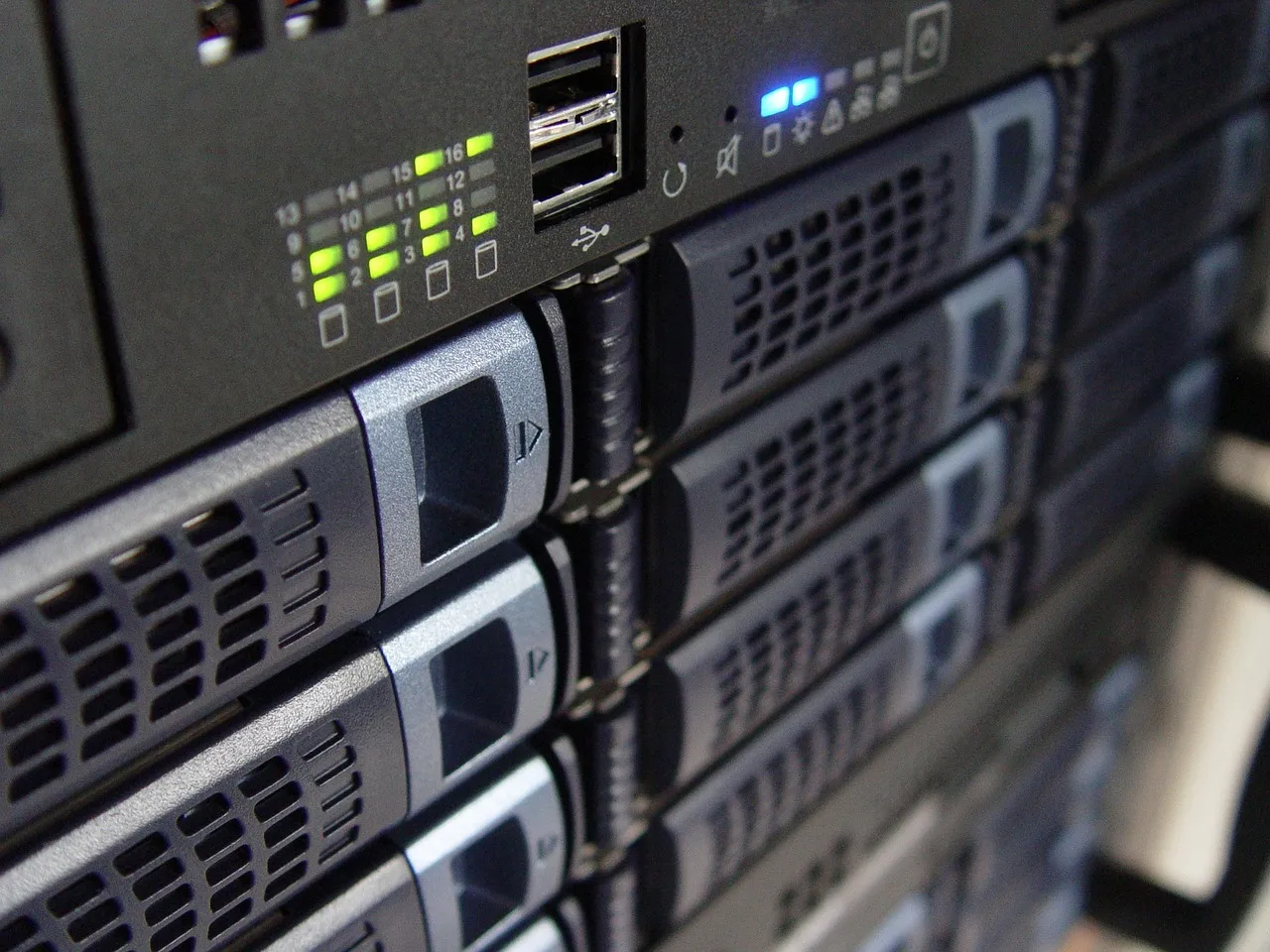
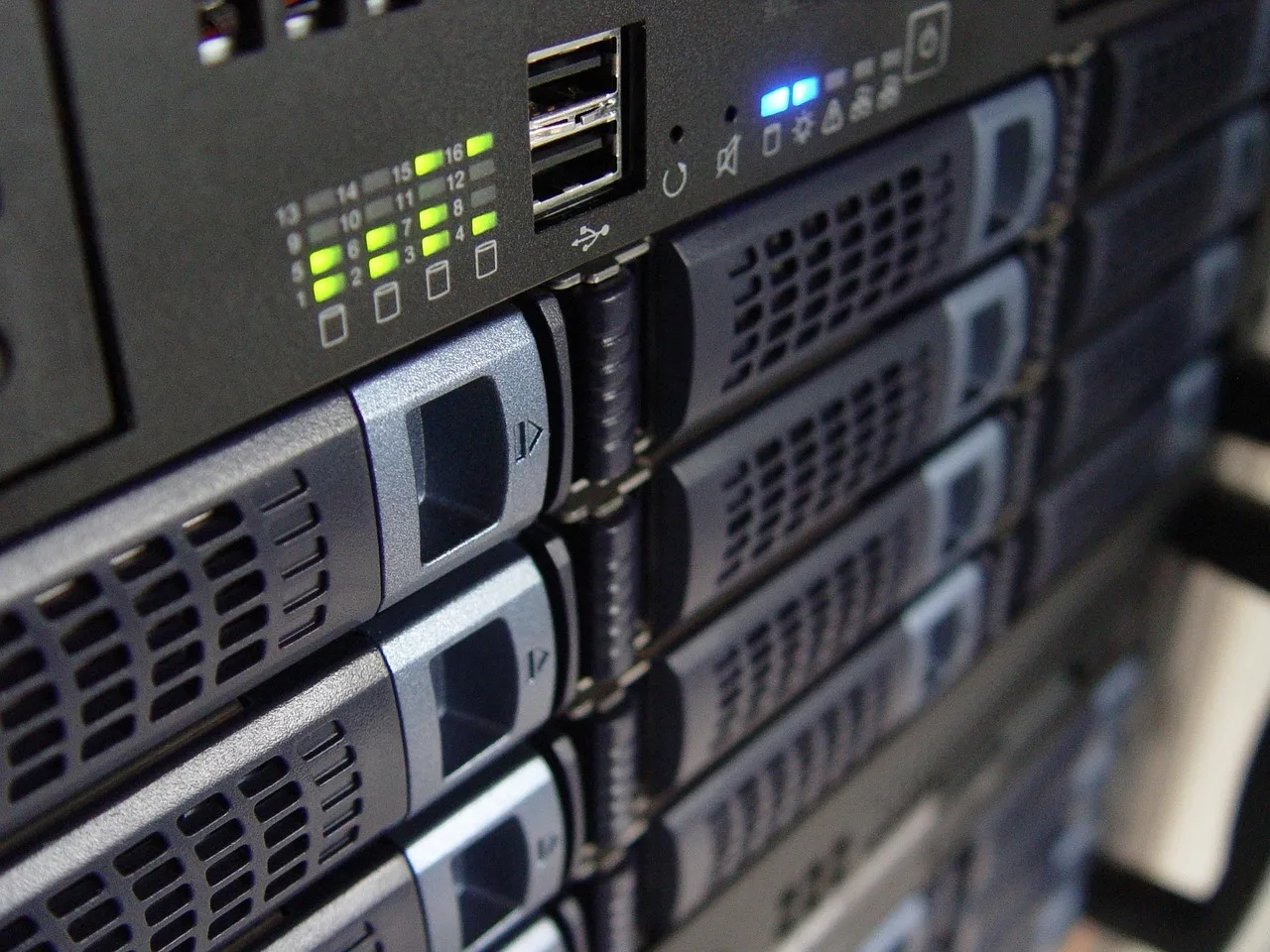
Illustration: Hosting Capacity Planning for Viral AI-Driven Traffic SpikesAuto-Scaling Strategies That Actually Work for Spike Scenarios
Auto-scaling is the infrastructure capability most frequently cited as the solution to traffic spikes, but standard auto-scaling implementations fail catastrophically during AI-driven spike events because they are designed for the wrong problem. The typical auto-scaling configuration — trigger a scale-up event when average CPU utilization exceeds 70% for 5 minutes, provision a new instance (which takes 60-120 seconds), wait for health checks to pass (another 30 seconds), and add it to the load balancer — operates on a timescale of 2-5 minutes from detection to capacity addition. During a spike that materializes fully within 15 seconds and saturates server resources within 30 seconds, this lag means that auto-scaling completes its first response somewhere between the moment your server starts returning 503 errors and the moment the spike has already begun to subside. The auto-scaling system works exactly as designed; the problem is that the design assumptions — gradual traffic growth, early-warning indicators, and minutes of headroom — do not hold for the spike profile that AI-driven traffic creates.
Effective capacity planning for AI-driven spikes requires a fundamentally different auto-scaling architecture built around three principles: pre-warmed standby capacity, sub-minute scaling triggers, and predictive scaling informed by external signals. Pre-warmed standby capacity means maintaining a pool of already-provisioned, already-configured, already-health-checked application server instances that are running but not yet receiving traffic — essentially, the infrastructure equivalent of a hot spare that can be activated by flipping a load balancer configuration rather than waiting for a provisioning pipeline to complete. This standby pool costs money — you are paying for idle compute capacity — but it is the only way to add meaningful capacity in under 30 seconds, and for sites where AI-driven spikes are a realistic risk (any site producing high-quality content that could be surfaced as an authoritative answer for popular queries), the standby cost is an insurance premium against the revenue loss and reputation damage of being offline during your moment of peak visibility.
Sub-minute scaling triggers replace the traditional average-CPU-over-5-minutes metric with faster signals that detect the onset of a spike before resources are saturated. Request queue depth — the number of incoming connections waiting for an available server worker — is one of the most effective early-warning signals because it spikes almost instantly when traffic arrives faster than workers can process it, often 10-20 seconds before CPU utilization reaches saturation. Connection rate, measured as new TCP connections per second, provides a similarly fast signal, as does the rate of 5xx error responses. The most effective architectures combine these fast signals with a graduated response: when request queue depth exceeds a threshold, activate pre-warmed standby instances within 10 seconds; when connection rate exceeds a higher threshold, begin shedding non-critical traffic (static asset requests, API endpoints that can be gracefully degraded); and only when these measures prove insufficient, serve a lightweight static "high traffic" page that acknowledges the visitor load while preserving the origin server's ability to recover. The W3C's work on web standards includes performance and infrastructure specifications that inform how modern hosting architectures should handle these scaling challenges.
CDN as the First Line of Defense Against AI Traffic Surges
A properly configured Content Delivery Network is the single most effective defense against AI-driven traffic spikes, and in many cases the difference between a site that survives a viral event and one that collapses is not the origin server's capacity but the CDN's cache hit ratio. The CDN acts as a shock absorber between the spike and your origin infrastructure: every request served from the CDN's edge cache is a request that never reaches your application server, never consumes a PHP worker, never opens a database connection, and never contributes to the resource exhaustion cascade described earlier. The mathematical relationship is straightforward — if your CDN serves 95% of spike traffic from cache, your origin server only needs to handle 5% of the spike volume, effectively multiplying your infrastructure's spike capacity by 20x without adding a single server. This is why sites that survive massive traffic events almost universally have CDN configurations that achieve cache hit ratios above 90% for anonymous traffic.
Achieving those cache hit ratios during AI-driven spikes requires CDN configuration decisions that go well beyond the default settings most site owners deploy. The CDN must be configured to cache HTML pages — not just static assets like images and CSS — for anonymous visitors, because the page HTML is exactly what both AI systems and human visitors request first. Cache TTLs (Time to Live) for HTML should be set aggressively (15-60 minutes for content that changes infrequently, 5-15 minutes for more dynamic sites) and combined with a stale-while-revalidate strategy that serves the cached version while asynchronously fetching a fresh copy, ensuring that cache expiration spikes do not create thundering-herd problems where dozens of simultaneous requests all bypass cache and hit the origin simultaneously. Query string handling is equally critical: CDNs should be configured to strip or normalize marketing query parameters (UTM tags, session IDs, click tracking tokens) from cache keys, because failing to do so means that every unique marketing URL generates a separate cache miss even though the underlying page content is identical — a common failure mode during AI-driven spikes where each incoming link may carry different tracking parameters.
Advanced CDN configurations for spike resilience also include origin shield or intermediate caching tier features, where a designated CDN node acts as an additional caching layer between the edge nodes and your origin server. In a typical CDN architecture, if an edge node in Tokyo receives a cache miss, it requests the content directly from your origin server in Virginia; if an edge node in London simultaneously receives a cache miss for the same content, it also requests from your origin, effectively doubling the origin load for a single cacheable resource. An origin shield node sitting between the edge nodes and your origin consolidates these requests — only the shield node requests from your origin, and all edge nodes request from the shield — dramatically reducing the origin load during the critical first seconds of a spike when caches are cold and every edge node is independently requesting content. Hosting Captain's managed hosting plans include pre-configured CDN integration with origin shield enabled and HTML caching policies tuned for WordPress, WooCommerce, and other common platforms, so that clients are protected against spike scenarios from day one without needing to become CDN configuration experts. For insights into how AI overviews are reshaping traffic patterns to hosting sites specifically, our analysis of AI overviews and CTR provides detailed data on the traffic composition changes driving the need for these infrastructure adaptations.
Load Testing for AI-Scale Traffic: Methods That Reveal Real Capacity
Standard load testing practices are dangerously inadequate for evaluating hosting capacity against AI-driven spike scenarios because they test the wrong traffic patterns at the wrong ramp rates against the wrong success criteria. The typical load test script ramps virtual users from 0 to a target concurrency level over 5-10 minutes, holds at the target for a specified duration, and measures average response time and error rate — a methodology that tells you how your infrastructure handles gradual, sustained load but reveals nothing about its behavior during the sub-30-second spike that characterizes AI-driven traffic events. A site that passes a 500-concurrent-user test with a gradual ramp can fail catastrophically at 200 concurrent users when those users arrive within 15 seconds, because the rapid arrival rate triggers connection pool exhaustion, thread pool saturation, and memory allocation spikes that never materialize during a gradual ramp even at higher absolute concurrency levels.
Effective spike load testing for AI-era hosting requires a fundamentally different methodology: shock testing, where the full target concurrency load is applied within 5-15 seconds with no ramp period, simulating the arrival pattern of an AI-driven traffic event. The tooling matters — Apache JMeter and Locust can be configured for shock testing with appropriate thread settings, but purpose-built tools like k6, Vegeta, and Artillery are better suited to this testing paradigm because they are designed for high-throughput, low-latency request generation that more accurately simulates the distributed nature of actual spike traffic. The test must generate traffic from multiple geographic regions through a CDN proxy (not directly to the origin) because during a real spike, the CDN handles the vast majority of requests; testing that bypasses the CDN measures origin capacity in a scenario that will never occur in production and produces misleadingly pessimistic results. The success criteria must also evolve: instead of measuring average response time (which obscures the tail latency that spike victims experience), measure the 95th and 99th percentile response times and, critically, the time to first error — how many seconds after the spike onset does the infrastructure begin returning 5xx errors or connection timeouts.
Capacity Headroom Planning: From Theoretical to Operational
Translating load test results into actionable capacity plans requires understanding the relationship between tested capacity, baseline traffic, and spike magnitude in terms that inform provisioning decisions. The fundamental metric is headroom ratio: your infrastructure's tested spike capacity divided by your peak baseline traffic. If shock testing reveals that your current infrastructure can handle 800 requests per second before error rates exceed 1%, and your peak daily traffic reaches 200 requests per second, your headroom ratio is 4x — meaning you can absorb a spike of up to 4x your current peak before performance degrades. For sites at risk of AI-driven spikes, Hosting Captain recommends maintaining a headroom ratio of at least 10x, because the traffic multiplier from an AI overview citation can easily reach 20-50x baseline for short durations, and the CDN's cache hit ratio typically absorbs 80-95% of that multiplier (effectively reducing the origin multiplier to 1-10x of baseline). A headroom ratio of 10x tested against your origin, combined with a CDN achieving 90% cache hit ratio on HTML, provides effective protection against spikes of up to 100x baseline traffic — a scenario that covers the vast majority of AI-driven spike events observed in 2026.
Capacity headroom must be planned per-resource, not just in aggregate, because spikes rarely saturate all resources simultaneously — they almost always exhaust one specific resource (memory, database connections, PHP workers, or disk I/O) before the others, and that single bottleneck triggers the cascade failure. Your load testing must therefore measure per-resource utilization during spike scenarios: how close does memory usage come to the server's physical limit? How many of the available database connections are consumed at peak? What is the PHP-FPM pool utilization percentage? The resource that approaches its limit first during testing is your binding constraint, and increasing capacity for that specific resource (more RAM, a larger database connection pool, more PHP workers) yields disproportionate improvements in spike resilience compared to across-the-board capacity increases. Hosting Captain's infrastructure monitoring tools provide per-resource utilization dashboards that make it straightforward to identify binding constraints before they cause production incidents, and our capacity planning consultations help clients translate their specific traffic patterns into provisioning decisions that prioritize the resources that matter most for their application stack. For a broader perspective on how AI is being deployed to protect hosting infrastructure, our analysis of AI-driven website security examines the defensive applications of the same technology creating these traffic patterns.
Real Examples: Sites That Survived and Sites That Didn't
Abstract capacity planning principles become tangible when examined through the lens of real traffic events, and the contrast between sites that absorbed AI-driven spikes gracefully and those that collapsed reveals patterns that every site owner should internalize. In early 2026, a medium-sized SaaS company's documentation page was cited as the definitive answer to a technical query in a major AI-powered search platform, generating approximately 45,000 requests within a 90-second window — roughly 60x their baseline traffic rate for that specific URL. The page was served from a CDN configured to cache HTML for 30 minutes with stale-while-revalidate enabled, the origin server was running on a managed cloud hosting plan with 4 pre-warmed standby instances, and the infrastructure monitoring system detected the connection rate spike within 8 seconds, activating the standby instances before any origin server resource reached 60% utilization. The site experienced a brief latency increase — 95th percentile response time rose from 120 ms to 380 ms — but served zero errors, maintained full functionality for logged-in users (who could not be served from cache), and saw a sustained 30% increase in trial signups in the week following the spike. The total additional infrastructure cost for the standby capacity that made this possible was approximately $85 per month — less than the value of a single enterprise customer acquired through the exposure.
In the same quarter, an e-commerce store specializing in niche hobby products experienced a similar AI-driven spike when their category page was surfaced as a recommended source for a popular gift-buying query. The site was hosted on a mid-tier shared hosting plan with a basic CDN configuration that cached images and CSS but explicitly excluded HTML from caching to ensure that inventory counts remained accurate — a reasonable concern that created a catastrophic vulnerability. When the spike hit, every request for the category page generated a full WordPress page render, a database query for product inventory, and a PHP session initialization, consuming approximately 80 MB of RAM and one database connection per concurrent request. The shared hosting server's per-account memory limit was reached within 12 seconds, PHP processes began being terminated by the kernel, and the site served 503 errors for the next 45 minutes — exactly the window during which the vast majority of AI-referred visitors attempted to access the site. The store lost an estimated $12,000 in potential revenue based on their normal conversion rate applied to the traffic volume, and it took three weeks for their search rankings to recover from the user experience signals generated by the prolonged outage. The monthly cost difference between their shared hosting plan ($9.99) and a managed cloud hosting plan with the CDN and standby capacity configuration described in the first example ($79) was approximately $69 — less than the profit from a single average transaction volume day for the store.
These examples illustrate a pattern that Hosting Captain has observed consistently: sites that survive AI-driven spikes invest in three specific capabilities — CDN HTML caching with aggressive TTLs, pre-warmed standby capacity or containerized auto-scaling with sub-minute provisioning, and monitoring that triggers capacity activation based on fast signals (connection rate, queue depth) rather than slow signals (average CPU). Sites that collapse during spikes invariably share one or more of these vulnerabilities: HTML excluded from CDN caching, reliance on slow auto-scaling triggers, or infrastructure provisioned so close to baseline demand that there is no headroom to absorb even a 3-5x spike. The financial analysis is almost always unambiguous: the monthly cost of spike-resilient infrastructure is a fraction of the revenue at risk during a single viral event, and for any site that produces content capable of ranking in AI-generated search features, the probability of eventually experiencing such an event is high enough to justify the infrastructure investment. For sites evaluating when to upgrade from shared to more resilient hosting tiers, our complete guide to VPS hosting explains the resource allocation differences that directly impact spike resilience.
Progressive Degradation: Staying Partially Online When Capacity Is Exceeded
No amount of capacity planning can guarantee that your infrastructure will never be overwhelmed — there is always a spike magnitude beyond your provisioned headroom — which is why a comprehensive spike resilience strategy must include progressive degradation: the ability to serve a degraded but functional experience when full functionality cannot be maintained. The core principle is to identify which parts of your website are critical to serving visitors during the spike and which can be temporarily sacrificed to preserve resources for those critical functions. For a content site experiencing an AI-driven spike, the critical function is serving the content that the AI system cited — the specific article, product page, or resource that generated the traffic. Everything else — comments, related posts, live chat widgets, analytics tracking, recommendation engines, social sharing buttons — can be disabled temporarily without preventing visitors from consuming the content that brought them to the site, and disabling these non-critical features can reduce per-request resource consumption by 40-60%.
Implementing progressive degradation requires architectural decisions made before the spike, not during it. The most effective pattern is to embed degradation logic in a reverse proxy layer (Nginx, HAProxy, or a CDN edge worker) that can make per-request decisions about which features to enable based on current system load, without requiring changes to application code. When the origin server reports high load — either through explicit health check responses or through connection-level signals like TCP RST rates or response latency — the proxy layer can route requests to a lightweight static version of the page that includes the core content but strips out comments, recommendations, and third-party embeds. This static version can be pre-generated and stored in the CDN, served instantly with near-zero origin server involvement, and updated asynchronously when load returns to normal levels. The visitor sees the content they came for — just without the interactive bells and whistles — and the origin server stays alive, preserving the ability to serve authenticated users and critical dynamic functionality.
For e-commerce sites, progressive degradation is more nuanced because the checkout flow — the one truly critical function — is inherently dynamic and cannot be served from a static cache. The degradation strategy for commerce sites focuses on preserving checkout capacity by shedding everything else: disabling product recommendations, turning off live inventory display (replacing it with a static snapshot), serving category and product pages from cache with a short TTL, and routing all available server resources to the cart, checkout, and payment processing endpoints. Some e-commerce platforms have built dedicated checkout infrastructure that runs on separate, overprovisioned server pools specifically to survive scenarios where the browsing infrastructure is overwhelmed — a pattern that Hosting Captain implements for high-volume WooCommerce clients through dedicated checkout application servers that are isolated from the content-serving infrastructure and never receive traffic from non-checkout URLs. The investment in checkout isolation typically pays for itself during a single successful spike event, because a site that stays online for browsing but goes down for checkout generates all the traffic of the spike with none of the revenue.
Post-Spike Analysis: Learning From Every Traffic Event
Every AI-driven traffic spike — whether survived gracefully or endured painfully — generates data that can improve your capacity planning for the next event, but only if you have the instrumentation in place to capture it and the process to act on it. The minimum viable post-spike analysis requires three data sources: web server access logs with sub-second timestamp granularity, infrastructure resource utilization metrics (CPU, memory, disk I/O, network throughput) sampled at 5-10 second intervals, and CDN analytics showing cache hit ratios, origin offload rates, and geographic request distribution. These data sources together answer the critical questions: what was the actual peak request rate and how quickly did it ramp? Which resources were the binding constraints on capacity? What was the actual CDN cache hit ratio, and which specific URLs generated cache misses that reached the origin? Which user agents and IP ranges generated the most traffic, and were any of them identifiable as AI crawlers that could be handled differently in the future?
The post-spike analysis should produce a concrete action plan that translates observations into infrastructure changes, not a postmortem document that sits unread in a shared drive. If the CDN cache hit ratio was lower than expected for HTML, update the caching rules to include the specific URL patterns that generated miss traffic, add cache warming for related pages that the AI system might surface next time, and configure query string normalization to prevent tracking parameters from fragmenting cache entries. If a specific resource (database connections, PHP workers) was the binding constraint, tune that resource's configuration — increase the connection pool size, adjust worker timeouts, add a read replica — and then re-test with a shock load to verify the improvement. If certain traffic patterns were clearly non-human (AI crawlers making hundreds of requests per second from a small IP range), add those patterns to your rate-limiting configuration with appropriate thresholds. The goal is to ensure that the exact same spike scenario, if it recurs, would produce a measurably better outcome — higher cache hit ratio, lower origin load, faster recovery — because in the AI era, recurrences are not hypothetical; they are the expected consequence of producing content that AI systems find valuable enough to cite.
Frequently Asked Questions
What is the most important thing to know about hosting capacity planning for AI-driven traffic spikes?
This guide covers the practical strategies — auto-scaling, CDN configuration, load testing, and progressive degradation — based on current 2026 data and the real traffic patterns our infrastructure team has observed at Hosting Captain. The single most critical concept is that AI-driven spikes materialize in seconds, not minutes, which means traditional auto-scaling that requires 2-5 minutes to add capacity arrives too late to prevent the outage. Effective spike resilience requires CDN HTML caching with aggressive TTLs (serving 90-95% of spike traffic from edge caches), pre-warmed standby capacity that can be activated in under 30 seconds, and monitoring that triggers capacity responses based on fast signals like connection rate and request queue depth rather than slow signals like average CPU utilization. Sites that implement these three capabilities survive spikes that would otherwise produce prolonged outages, and the monthly infrastructure cost of implementing them is almost always a small fraction of the revenue at risk during a single viral event.
How much does spike-resilient hosting infrastructure typically cost in 2026?
Pricing varies by provider and configuration; see the CDN and capacity planning sections above for specific recommendations. A spike-resilient hosting configuration for a typical content site or small e-commerce store — managed cloud VPS with 2-4 pre-warmed standby instances, CDN with HTML caching and origin shield enabled, and infrastructure monitoring with fast-signal alerting — typically costs between $70 and $200 per month depending on baseline traffic volume and the standby capacity provisioned. This compares to $10-30 per month for shared hosting or a single basic VPS without spike resilience features. The cost premium of $40-170 per month should be evaluated against the revenue or reputation at risk during a single viral event: for any site that generates more than a few thousand dollars in annual revenue or whose content has a realistic chance of being cited by an AI system, the insurance value of spike resilience almost always justifies the infrastructure premium. Hosting Captain offers tiered managed hosting plans that make spike resilience accessible at price points appropriate for sites at every scale.
What should site owners check before their next potential traffic spike?
Verify that your CDN is configured to cache HTML pages (not just static assets) for anonymous visitors, and confirm the cache TTL settings — if HTML is not cached, no amount of origin server capacity will save you from a 50x traffic spike. Run a shock load test (full target concurrency applied within 15 seconds, not a gradual ramp) against your production configuration including the CDN, and observe what breaks first — the specific resource that fails is your binding constraint and should be addressed immediately. Check your monitoring and alerting configuration to ensure it triggers on fast signals (connection rate, 5xx error rate, request queue depth) at intervals of 30 seconds or less, not on 5-minute average CPU utilization. Review your CDN analytics for the past 90 days to identify any URL patterns that are generating unusually low cache hit ratios, and investigate whether those patterns indicate content that should be explicitly included in caching rules. Finally, calculate your current headroom ratio by dividing your tested spike capacity by your peak daily traffic, and if the ratio is below 10x, prioritize increasing it through CDN caching improvements or origin capacity additions before the next spike catches you unprepared.
Arjun Mehta is a cloud infrastructure consultant specializing in bare-metal architectures, network routing, and high-traffic database clustering.
Frequently Asked Questions
This guide covers the practical decision points — pricing, performance, and when it makes sense for your situation — based on current 2026 data.
Pricing varies by provider and plan tier; see the cost breakdown section above for current ranges and what's actually included at each price point.
Look closely at uptime guarantees, renewal pricing (not just the first-year discount), and how responsive support actually is — all covered in detail in this article.
Hosting Captain has been exceptional for my e-commerce store in Pune. The NVMe SSD speed is
noticeable, and their support team responds within minutes. Highly recommended for any
Indian business!
Ryan John, Pune
Great Value for Money
Switched from a US-based host to Hosting Captain and my website loads 3x faster for Indian
visitors. The free SSL and cPanel are great, and the pricing is unbeatable. Very satisfied
customer!
Priya Mehta, Mumbai
Reliable VPS Hosting
I've been using their VPS plan for 2 years now. 99.9% uptime is not just a claim — it's
reality. My client projects run without interruption. The KVM virtualization gives me full
control I need.
Amit Kumar, Bangalore
Excellent 24/7 Support
The support team helped me migrate my entire WordPress site at 2 AM without any downtime.
This level of service is rare in Indian hosting. Worth every rupee!
Sunita Patel, Ahmedabad
Perfect for Startups
As a startup, budget matters. Hosting Captain's Business plan covers everything we need —
multiple websites, free SSL, daily backups — at a fraction of what international hosts
charge.
Vikram Singh, Delhi
Professional Dedicated Server
Our high-traffic news portal needed a dedicated server. Hosting Captain's DS Business plan
handles 100K+ daily visitors effortlessly. Their team provisioned everything within 4 hours!
Meena Krishnaswamy, Chennai
Trusted Technologies & Partners
Start Your Website with Hosting Captain
From personal blogs to enterprise solutions, we've got you covered!